
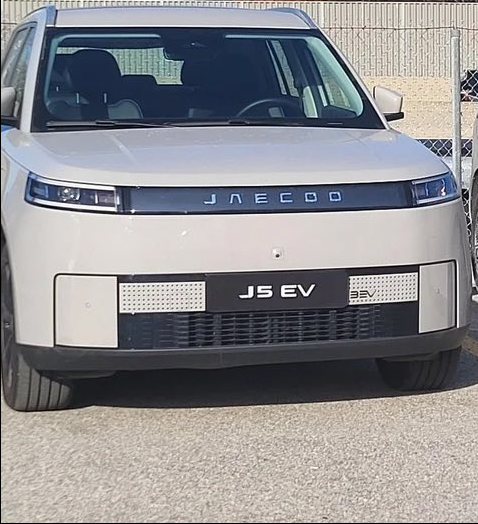
A former Canadian diplomat with decades of experience studying China is urging Parliament to take a harder line on Chinese electric vehicles, arguing that Beijing’s motivation for selling them cheaply in Western markets has little to do with profit and everything to do with global dominance.
Charles Burton, a senior fellow at the think tank Sinopsis and a former diplomat posted to China, appeared before the House of Commons science and research committee on April 20, where he laid out what he described as a deeply underappreciated security threat hiding in plain sight on Canadian roads.
“The regime can compel manufacturers to embed spyware into their vehicles and leverage massive state subsidies to flood Western markets with EVs at prices below production costs,” Burton told MPs. The low sticker price, he argued, is not a sign of Chinese manufacturing efficiency it is a calculated investment in something far more consequential than market share.
Ottawa imposed a 100 percent tariff on Chinese electric vehicles in 2024, citing concerns about state-subsidized competition and the threat it posed to Canada’s fledgling domestic EV industry. But that posture shifted considerably in January, when the Liberal government struck a deal with Beijing to slash that surtax down to 6.1 percent on an initial 49,000 Chinese vehicles, in exchange for China easing certain tariffs on Canadian agricultural and seafood exports.
The government framed the agreement as a practical win better EV affordability for Canadian consumers alongside new market access for Canadian farmers and fishers. Burton sees it differently.
In his assessment, Canada quietly set aside legitimate concerns about security, foreign interference, and transnational repression in exchange for a trade concession of questionable long-term value while simultaneously risking friction with the United States, Canada’s most consequential trading partner.
Burton’s testimony went well beyond concerns about data privacy or unfair trade. He argued that Chinese EVs must be understood within the broader framework of Beijing’s long-term strategic ambitions a plan, he said, to emerge as the world’s dominant power by 2050, pursued through a doctrine that deliberately blurs the line between commercial and military interests.
“I cannot think that their strong desire to have EVs running in Canada is not part of their overall foreign policy and defence agenda,” he said.
The vehicles themselves, Burton noted, are equipped with an extensive array of sensors cameras, microphones, GPS systems, and connectivity hardware that continuously collect data on drivers, passengers, and surrounding environments. Under Chinese law, companies operating in China can be compelled to hand that data over to state intelligence agencies, a legal reality that Burton said should give Ottawa serious pause.
Burton reserved his most striking warnings for what he called the “darker concern” the possibility that Beijing could one day turn Chinese EVs into instruments of disruption in a conflict scenario.
Modern electric vehicles depend on software that can be updated remotely. Burton warned that this architecture, controlled ultimately by manufacturers answerable to the Chinese Communist Party, creates a vulnerability that could be exploited at a strategically chosen moment.
He described a hypothetical but, in his view, plausible situation in which Chinese EVs across a city or a country are simultaneously disabled, grinding transportation networks to a halt. “Chinese EVs pose a security threat to Canada, maybe not today or tomorrow, but certainly when the time is right,” he said, pointing to a potential future conflict involving China and the United States or their allies as the kind of trigger that could activate such a scenario.
Burton was not alone in raising alarms. Representatives from both the Canadian Vehicle Manufacturers’ Association and Global Automakers of Canada testified alongside him, calling on Ottawa to follow through on earlier commitments to regulate Chinese hardware and software in connected vehicles. They pointed to the United States, which moved ahead with related legislation and regulations in 2025, as a model Canada has yet to match.
On the regulatory side, Privacy Commissioner Philippe Dufresne revealed to MPs on April 16 that he had not been consulted on the Chinese EV file a disclosure that raised fresh questions about how thoroughly Ottawa had assessed the privacy implications before striking its January deal.
Canada’s electronic intelligence agency, the Communications Security Establishment, declined to speak specifically to the threat posed by Chinese EVs, offering only a general statement that standard cybersecurity principles apply to connected vehicles regardless of their country of origin.
Burton, for his part, believes Canada already has a template for how to handle the situation it simply hasn’t applied it here. Ottawa banned Chinese telecom giants Huawei and ZTE from its 5G networks over espionage concerns and shut down surveillance equipment maker Hikvision’s Canadian operations on similar grounds. In Burton’s view, Chinese EVs warrant the same response: not a tariff, but a ban.
Whether Parliament will move in that direction remains to be seen. For now, the debate over Chinese electric vehicles in Canada is no longer just about trade policy. It is becoming, increasingly, a conversation about national security.

