
The United States has launched a wide-ranging trade investigation covering 60 countries, including Canada, to examine how effectively these nations are preventing goods made with forced labour from entering their markets. The move comes shortly after the U.S. Supreme Court invalidated several tariffs introduced during President Donald Trump’s administration.
On March 13, the Office of the United States Trade Representative (USTR) announced that it had opened formal inquiries into the trade policies of dozens of economies. The investigation will assess whether their laws and enforcement efforts related to forced labour are inadequate or discriminatory and whether such shortcomings are harming American trade and businesses.
U.S. Trade Representative Jamieson Greer said the probe aims to determine whether governments around the world are doing enough to stop products linked to forced labour from being traded internationally.
In a statement, Greer noted that while most countries publicly oppose forced labour, many have failed to implement or enforce strict measures to prevent these goods from reaching their markets. According to him, such gaps can disadvantage U.S. workers and companies that follow labour standards.
Trade analysts believe the investigation could eventually provide a legal pathway for the Trump administration to introduce fresh tariffs.
The announcement follows a major court ruling earlier this year. On February 20, the U.S. Supreme Court struck down several tariffs imposed under the International Emergency Economic Powers Act (IEEPA), concluding that the president had exceeded his authority in using the law to justify those measures.
After the ruling, Trump signalled a new approach by announcing a 10 percent global tariff, saying it would be implemented using Section 122 of the Trade Act of 1974. However, goods that comply with the Canada-U.S.-Mexico Agreement (USMCA) would be exempt from this tariff.
In addition to those plans, the administration has already imposed tariffs on certain Canadian sectors under Section 232, targeting industries such as steel, aluminum, and automobiles.
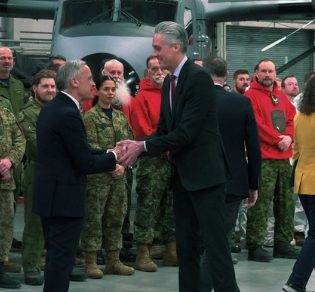
Responding to the new investigation while speaking to reporters in Norway on March 13, Canadian Prime Minister Mark Carney said he supports efforts to address labour abuses but stressed that Canada already has strong legal safeguards.
Carney explained that Canada has a detailed legal system designed to prevent products made through forced labour from entering the country. He added that authorities take action when violations are detected.
He also pointed out that although the USMCA includes labour protections, Canadian domestic laws contain even stricter rules against forced labour.
The development comes as the United States, Canada, and Mexico prepare for a scheduled review of the USMCA trade agreement in July.
Canada’s international trade minister, Dominic LeBlanc, recently said he remains hopeful that the agreement will continue as a three-country partnership.
If the three nations agree to renew the pact during the review, the deal will remain in effect until 2032. However, if renewal is delayed or rejected, the agreement could move into a phase of annual reviews, or the countries may pursue separate bilateral trade arrangements.

