
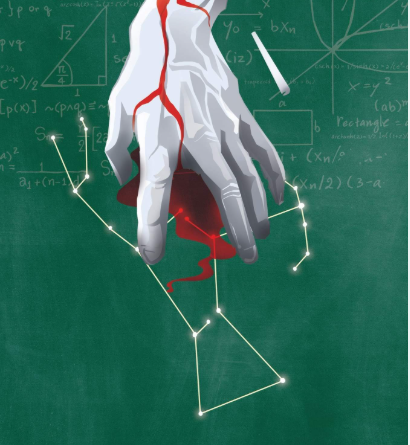
I have read several novels by Samaresh Majumdar. Among them, Kalbela had a profound impact on me for a long time. In fact, its influence still lingers. Among the three volumes—Kalbela, Uttaradhikar, and Kalpurush—for some reason, Kalbela left the deepest impression on my mind. Since I read these volumes long ago, my knowledge of the trilogy is somewhat vague.
Since my student days, I have had a particular inclination toward leftist politics. So, while reading Kalbela, I felt quite a thrill. In the 1960s, the Naxalbari movement took a significant turn. Under the leadership of Maoist Charu Majumdar, the Naxalbari movement spread across various parts of India. Charu Majumdar was a follower of the Chinese Communist Party leader Mao Zedong. He believed that India’s farmers and poor people needed to follow in Mao Zedong’s footsteps, identify class enemies, and engage in armed struggle against them. According to him, these enemies were the ones who exploited the proletariat, including farmers and workers. Through his writings, he expanded the Naxalbari movement across the country. His famous work, Historic Eight Documents, formed the ideological foundation of the Naxal movement.
In the 1960s, many brilliant students became involved in this movement. Even children from wealthy families did not hesitate to dedicate themselves to the cause. They believed that revolution could establish a classless society. They envisioned a society without disparities between the rich and the poor, where all citizens would have equal rights over the state’s resources. They believed that it was possible to establish this classless society by abolishing private property and individual capital.
Inspired by this dream, thousands of revolutionaries spread across different parts of India in the 1960s. The then Congress government, alarmed by the intensity of the movement, adopted severe repressive measures. Thousands of Naxalites were arrested, thrown into prison cells, and subjected to inhuman torture. Many Naxalites became permanently disabled due to the brutal repression. Some succumbed to their injuries, while others remained imprisoned for years.
The central character of Kalbela, Animesh, was a Naxalite. He, too, was captivated by the dream of a classless society and dedicated himself to the Naxal movement. During his student life, while involved in the movement, he met Madhabilata. Amidst a crowded classroom, Animesh’s eyes would always seek out Madhabilata’s deep black eyes. The love between Animesh and Madhabilata was marked by a strong commitment—they vowed never to be separated, never to lose faith in each other, no matter the circumstances.
Animesh was eventually arrested and subjected to brutal torture in prison, leaving him nearly paralyzed. Despite his prolonged imprisonment and suffering, Madhabilata never lost patience. Given the extent of his torture, it would not have been surprising if Animesh had died. Yet, Madhabilata waited for him until the very end.
Over time, the Naxal movement lost its momentum, and the Naxalites became scattered. Many Naxalites, struggling for survival, turned to terrorism. Due to the lack of proper leadership, revisionist leftists took control in West Bengal and abandoned the path of armed revolution. In 1977, they came to power through elections under the Left Front government.
Eventually, the Left Front government in West Bengal granted general amnesty to the Naxalites. Under this amnesty, Animesh was released. The nearly paralyzed Animesh was received at the prison gate by Madhabilata. Her long wait had finally ended. Their vow to never be separated was fulfilled.
Through the character of Animesh in Kalbela, Samaresh Majumdar depicted the turbulent historical backdrop of the Naxalbari movement in the 1960s. At the same time, through Madhabilata’s sacrifice and deep love for Animesh, he portrayed the eternal spirit of Bengali women.
Among Samaresh Majumdar’s many literary creations, Kalbela‘s Animesh and Madhabilata remain two beloved characters for countless readers. The mere mention of their names evokes a sense of thrill and deep emotion.
Samaresh Majumdar is no more, but his characters Animesh and Madhabilata will remain alive in the hearts of readers forever.
In May 1967, the movement was led by Communist leaders Charu Majumdar, Kanu Sanyal, Jangal Santhal, and several other revolutionaries. Today, none of them are alive. But the ideals and theories of the Naxalbari movement still endure. The houses of leaders like Kanu Sanyal and Jangal Santhal stand as silent witnesses to history in the village of Shibdalla, Naxalbari.
Scarborough, Canada

