
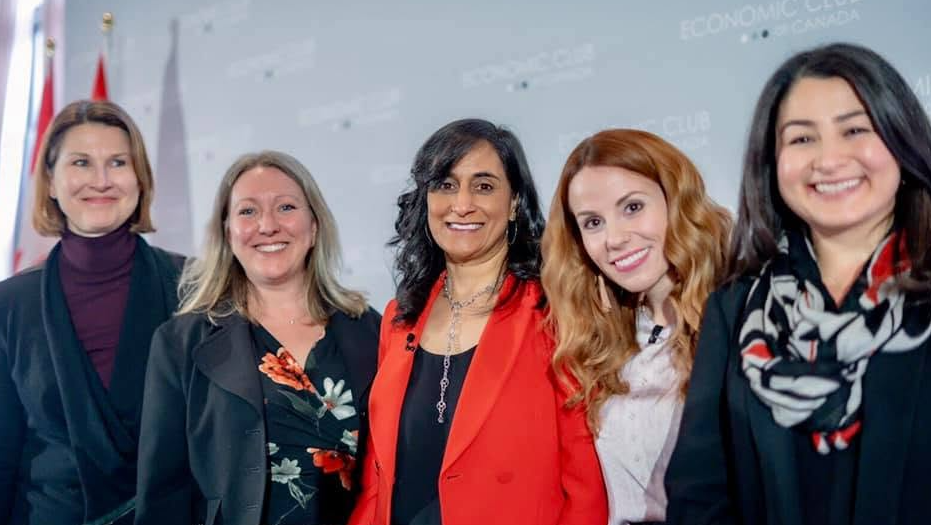
Canada’s top diplomat welcomed her Mexican counterpart to the capital this week for talks aimed at deepening trade and defence cooperation between the two countries, even as questions swirl over whether Washington might try to strike separate deals with each of its North American neighbours.
Foreign Affairs Minister Anita Anand hosted Mexican Foreign Secretary Roberto Velasco in Ottawa, with officials from both sides describing the visit as an opportunity to reinforce ties beyond the trilateral trade file that has dominated headlines in recent months.
The gathering took place several weeks after a July 1 deadline tied to reviewing the Canada-United States-Mexico Agreement passed without formal action, and amid growing signs that Mexico’s negotiations with the U.S. have moved further along than Canada’s.
Speaking with journalists on July 17, Anand pushed back on the idea that the two countries’ progress could be measured against each other in any straightforward way, noting that Canada and Mexico are each dealing with separate sets of issues in their conversations with Washington. She said the trade and investment relationship with both the U.S. and Mexico remains central to Canada’s approach, describing her government as committed to reinforcing those ties on both a bilateral and trilateral basis.
Following their meeting, Anand also unveiled roughly $12.1 million in Canadian funding earmarked for initiatives across Mexico and other parts of Latin America.
Asked directly whether Mexico might pursue a bilateral arrangement with Washington that would sideline Canada, Velasco shook his head in response. He told reporters the three countries appear aligned on preserving the trilateral structure, while acknowledging that each nation still has its own set of trade disputes to iron out under the existing agreement. Further three-way talks, he added, would take place once the timing made sense.
Velasco also touched on the contentious question of Chinese-made electric vehicles entering the North American market, confirming it remains part of Mexico’s discussions with U.S. officials. He noted, however, that Mexico currently has little presence from Chinese vehicle manufacturers within its borders.
That issue has been a particular sticking point for Canada. Ottawa announced in January that it would scale back its tariff on Chinese-made EVs from 100 percent to 6.1 percent, applying the lower rate to roughly 279,000 vehicles over a five-year span. In exchange, Beijing agreed to ease tariffs on Canadian farm and seafood exports. American officials have since criticized the arrangement, warning it could pose security concerns and work against broader North American efforts to curb reliance on China’s auto industry while shielding domestic production.
Canada and Mexico have both pushed for CUSMA to be extended for another 16 years, but the United States has signalled it isn’t interested in renewing the pact in its present form. Should the agreement not be extended, it would stay in effect until 2036 unless a member country chooses to withdraw first. Washington has indicated it intends to keep negotiating to address what it considers flaws in the deal.
Meanwhile, tensions surfaced elsewhere in the Canada-U.S. relationship this week when U.S. Trade Representative Jamieson Greer suggested on July 15 that Canada shouldn’t expect praise for economic concessions made since President Donald Trump returned to office in early 2025.
Greer’s remarks came in response to a question about Canada’s decision to scrap its Digital Services Tax and to ask broadcast regulator CRTC to reconsider its move to triple the levy on major streaming platforms. Greer said he welcomed the reversal but suggested Canada shouldn’t get “credit” for correcting a policy he characterized as ill-conceived in the first place.
Another concession attributed to Ottawa involves the Gordie Howe International Bridge connecting Windsor, Ontario, and Detroit, Michigan. Canada agreed to revisit the revenue-sharing terms for the crossing after Washington pushed back the bridge’s opening in recent weeks.

