
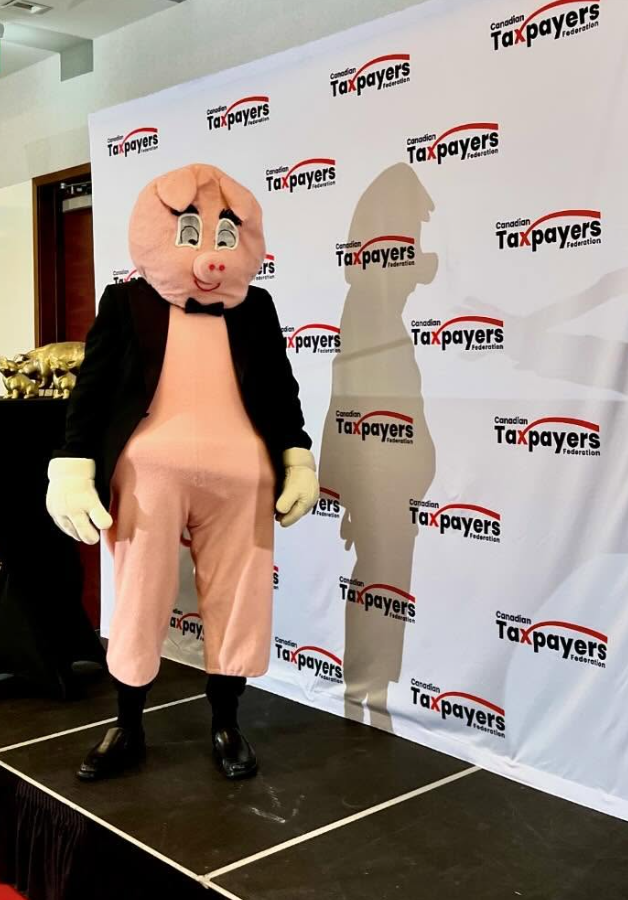
It doesn’t show up as a line item on your pay stub, and Ottawa will never send you a bill for it. But according to a taxpayer advocacy group, every man, woman, and child in Canada is effectively shouldering roughly $1,400 this year simply to cover the interest on the federal government’s mounting debt.
The Canadian Taxpayers Federation (CTF) arrived at that figure using projections from the Office of the Parliamentary Budget Officer (PBO), and the number is not a one-off. It’s a floor, not a ceiling.
The PBO’s latest report paints a picture of an interest burden that, while broadly consistent with Budget 2025 forecasts, remains firmly on an upward path. Public debt charges are projected to climb from 10.6 percent of federal revenues in 2025–26 to 13.2 percent by 2030–31. Put plainly: more than one in every eight dollars Ottawa collects will go straight toward paying interest not toward building anything, funding anyone, or fixing anything.
On a per-person basis, that means the $1,409 debt servicing cost projected for 2026–27 is expected to balloon to $1,901 by the end of the decade, driven by a combination of slow population growth and a debt stock that refuses to stop expanding.
CTF Federal Director Franco Terrazzano didn’t mince words. “That’s $1,400 that the government is taking from each Canadian that can’t be used to hire nurses, fix potholes or lower taxes because the government is wasting that money paying interest on the debt,” he said.
The federation also drew a pointed comparison using figures from the Spring Economic Update: this year’s debt interest bill of $58.7 billion will actually exceed what Ottawa transfers to the provinces for health care $57.4 billion and dwarf the $53.4 billion it expects to collect through the GST. In other words, Canadians are now effectively paying more in debt interest than the federal government contributes to keeping hospitals running.
The PBO report notes that the federal debt has continued to rise despite some improvement in the government’s operating balance compared with earlier projections. Part of the continued borrowing stems from recent policy decisions, including the temporary suspension of the federal fuel excise tax on gasoline, diesel, and aviation fuel a politically popular move with a real fiscal cost.
There is a silver lining buried in the report, though it requires patience. The PBO projects Canada’s debt-to-GDP ratio will decline gradually, reaching 25.1 percent by 2060–61a level the International Monetary Fund considers fiscally sustainable. That suggests the country has some breathing room, at least over the very long run.
But the IMF isn’t entirely reassured. The fund has recommended that Canada reinstate the debt-to-GDP ratio as its primary fiscal anchor, arguing the move would strengthen budgetary discipline and policy credibility. The PBO echoes that caution, warning that its long-term projections don’t fully account for all planned government expenditures defence spending being a notable gap which means the outlook could look considerably worse once all the numbers are in.
For now, the CTF’s message to Ottawa is straightforward: the tab is growing, Canadians are the ones picking it up, and no amount of deferred projections changes what’s happening today.

