
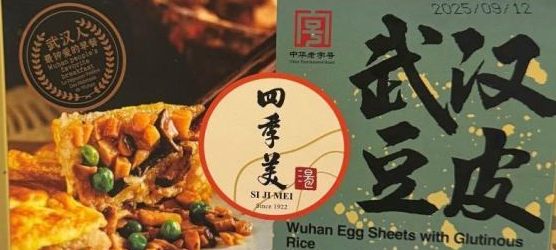
Food recalls have become so frequent that many of us barely pause when we hear the word “salmonella” on the evening news. But the recent recall of Si Ji Mei brand Wuhan Egg Sheets with Glutinous Rice in British Columbia and Alberta should give consumers real pause not just because people have reportedly fallen ill, but because it highlights deeper cracks in our food safety system.
According to the Canadian Food Inspection Agency (CFIA), the recalled product (580 g, UPC: 6 977013 950971, best-before date 2025/09/12) carries a Class 2 risk, meaning consumption could lead to short-term or non-life-threatening illness. That classification may sound reassuring on paper, but for families with young children, elderly parents, pregnant women, or immunocompromised members, “moderate risk” is hardly comforting.
What makes this situation more troubling is how invisible the danger is. Salmonella doesn’t announce itself with mold, foul smells, or obvious spoilage. A product can look perfectly fresh and still carry bacteria capable of sending someone to the hospital. This reality turns everyday eating into a gamble one consumer should never have to take.
The timing of this recall also raises uncomfortable questions. It follows closely on the heels of a nationwide salmonella outbreak linked to pistachios and pistachio-based products, which has already caused 155 illnesses and 24 hospitalizations across six provinces. The CFIA’s decision to impose a temporary ban and tighter licensing on companies importing Iranian pistachios is a necessary step, but it also underscores a reactive pattern: action often comes only after people get sick.
From a consumer’s perspective, that’s not good enough.
Food safety shouldn’t rely on recalls after the damage is done. It should be built on prevention, stronger oversight, and stricter accountability especially for imported foods and complex supply chains where contamination risks multiply. When companies initiate recalls themselves, as in this case, it may signal responsibility, but it also hints that unsafe products made it to store shelves in the first place.
The health impact of salmonella is not trivial. While many recover within a week, some people face severe complications, hospitalization, or long-term conditions like reactive arthritis. These outcomes rarely make headlines, but they change lives.
For now, consumers are being advised to check their refrigerators and discard or return the recalled product sound advice, but again, it puts the burden on individuals rather than the system meant to protect them.
At the end of the day, food safety is about trust. When recalls pile up and outbreaks span provinces, that trust erodes. Canadians deserve more than advisories and after-the-fact investigations. They deserve confidence that the food they bring home won’t make them sick.
Until that confidence is restored, every recall like this one serves as a reminder: vigilance at the dinner table has become an unfortunate necessity.

