
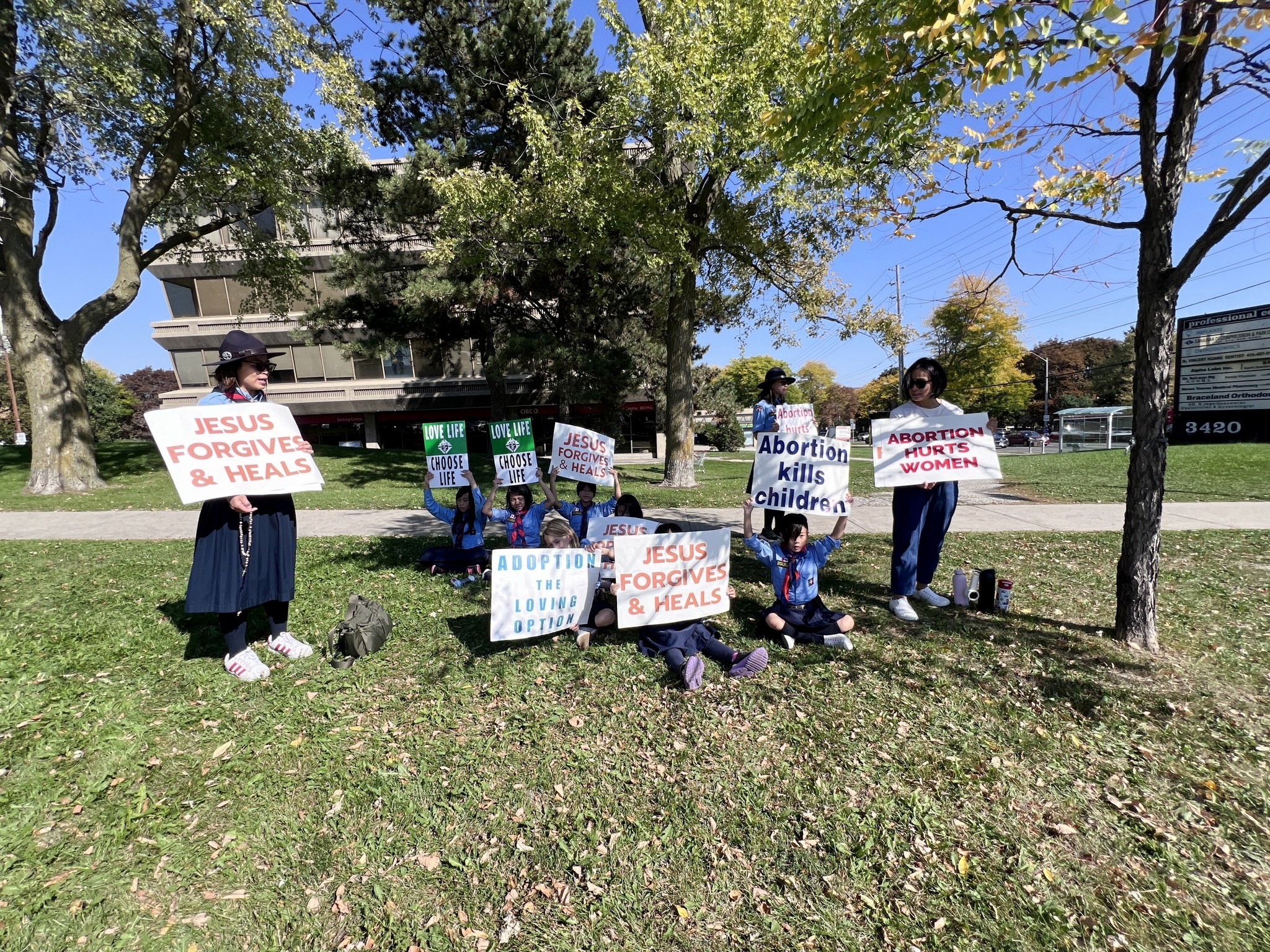
Every year, on the first Sunday of October, thousands of Canadians quietly line the streets holding simple signs with powerful messages “Choose Life,” “Adoption: A Loving Option,” and “Human Rights for All Human Beings.” To some, it’s just another demonstration. But to those who take part, Life Chain is a deeply personal act of compassion, conviction, and conscience.
On Oct. 5 this year, people gathered in more than 300 locations across the country for the 35th annual Life Chain event, a peaceful, prayerful stand for the protection of human life at every stage. It’s not loud or confrontational there are no chants, no megaphones, no angry slogans. Just people standing shoulder to shoulder, quietly holding signs and hoping to make others stop and think.
Life Chain began in the United States in 1987 and came to Canada in 1991 through Campaign Life Coalition (CLC), a national pro-life organization. Since then, it has become one of the largest coordinated pro-life demonstrations in the country. This year, Ontario saw the biggest turnout, with over 200 separate gatherings across cities, towns, and rural communities.
In the small town of Bracebridge, Ontario, local organizer Jenna DeRoy says she brought the event home because she believes the conversation about abortion “is not over.” For her, it’s about giving a voice to those who don’t have one. “Babies and people that aren’t born yet—they don’t have a voice,” she said. “Because we do, we have the honour of standing up and saying these people need help protect them.”
DeRoy’s words carry a quiet power. She speaks not with judgment, but with empathy for both mother and child. She knows how difficult and lonely an unexpected pregnancy can feel, and she wants women to know that support exists. There are crisis pregnancy centres, adoption options, financial aid programs, and communities ready to help. “I would want to do everything I could to help them make a good decision one where both parties can live, baby and mom,” she said.
It’s easy to dismiss pro-life activism as outdated or out of touch, but Life Chain reminds us that this issue continues to touch hearts and homes across Canada. For many, it’s not about politics it’s about humanity. It’s about the simple belief that every life, no matter how small or vulnerable, has inherent value.
Campaign Life Coalition’s communications director, Pete Baklinski, put it bluntly: “This is a national crisis and a profound injustice.” He notes that nearly 5 million preborn children have been lost to abortion in Canada since 1969 roughly 300 every day. That number isn’t just a statistic; it represents millions of lives never lived, families never formed, and futures never realized.
Critics may call Life Chain a relic of a bygone era, but maybe it’s something else entirely a quiet reminder that compassion doesn’t have to shout. It can stand silently, with a sign in hand, offering hope to those who feel trapped by circumstance and forgotten by society.
Whether you agree or disagree with its message, Life Chain continues to ask an uncomfortable but necessary question: What does it mean to value life? And in a world that often prizes convenience over conscience, that question is worth asking again and again.

