
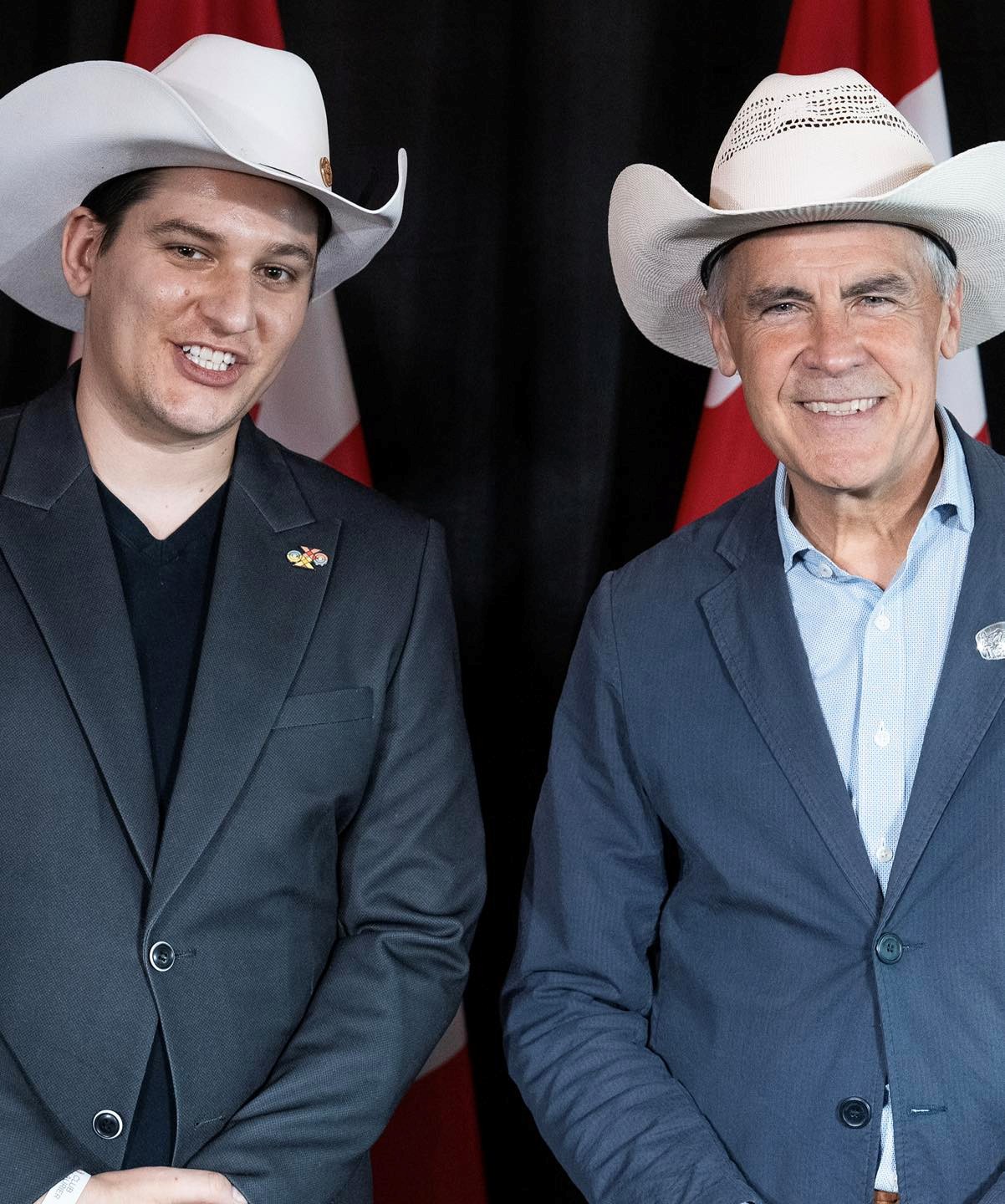
Prime Minister Mark Carney’s recent remarks at the Calgary Stampede might just mark a pivotal moment in Canada’s energy narrative — one that blends pragmatism with political finesse, and oil with innovation. Speaking to the Calgary Herald, Carney made it clear: a new pipeline from Alberta to the B.C. coast is “highly likely,” thanks in large part to the newly minted Bill C-5, the One Canadian Economy Act.
Though couched in cautious optimism — “highly, highly likely” being the operative phrase — Carney’s message to Albertans was unambiguous: the door to new energy infrastructure is not only open but being actively held for the private sector to walk through.
To be sure, Bill C-5 is no small shift. Passed into law on June 26, the legislation promises to streamline the process for projects deemed in the “national interest” with a clear two-year window for regulatory decisions. It’s a signal that the federal government is ready to move beyond bureaucratic delays and toward a model that embraces economic opportunity, provided it meets a new five-point litmus test that includes sustainability, Indigenous priorities, and national security.
This is where things get interesting.
Carney isn’t just talking about any pipeline — he’s talking about decarbonized barrels. He’s envisioning a future where carbon capture and storage (CSS) goes hand-in-hand with oil exports. Specifically, he pointed to the Pathways Alliance proposal — a collaboration of six major oil sands producers planning a 400-kilometre carbon pipeline and underground storage facility near Cold Lake, Alberta.
Pairing this with a new export pipeline isn’t just good optics; it’s smart policy. It acknowledges the continued global demand for oil, while also preparing for a world that increasingly demands cleaner, lower-emission energy sources. It’s the kind of “yes, and” thinking Canada has needed for a long time — yes to economic growth, and yes to environmental responsibility.
Of course, Carney is right to temper his enthusiasm. “There’s not a specific proposal in front of us right now,” he said, underscoring that the federal government won’t dictate terms from Ottawa. Instead, it will rely on the private sector to lead — with support, not interference, from the top.
This measured tone seems designed to bridge the ever-present East-West divide over energy policy in this country. Alberta Premier Danielle Smith, often a fierce critic of federal overreach, responded positively to Carney’s comments. “That’s what I’ve been hoping to see,” she said, even suggesting that a CSS-pipeline combo is the kind of deal she can get behind.
The tone from Energy Minister Tim Hodgson also struck a collaborative note. “Private sector leadership and private sector capital” will be key, he emphasized, while also highlighting the role of Indigenous partners in shaping what qualifies as a national interest project.
This isn’t just political triangulation; it’s a recalibration. Canada is finally inching toward an energy strategy that doesn’t rely on choosing between the economy and the environment. Carney’s remarks, while not a formal policy declaration, lay down a vision: one where federal legislation provides structure, the provinces offer resources, and the private sector brings innovation and execution.
To critics, this might look like a rebranding of old oil ambitions in greener packaging. And yes, skepticism is warranted. But let’s be honest — the existing Trans Mountain Pipeline Expansion is already nearing capacity. If we want to meet global demand while leading on decarbonization, the alternative isn’t no pipeline — it’s a smarter pipeline.
For the first time in a long time, Canada’s energy conversation is beginning to sound less like a shouting match and more like a strategy session. Carney’s optimism may not be a guarantee, but it’s a clear signal that Ottawa is ready to work with, not against, the provinces and industry leaders.
If the rhetoric becomes reality, we may soon find ourselves exporting not just oil — but a blueprint for how a resource-rich democracy can responsibly navigate the road to net zero.

