
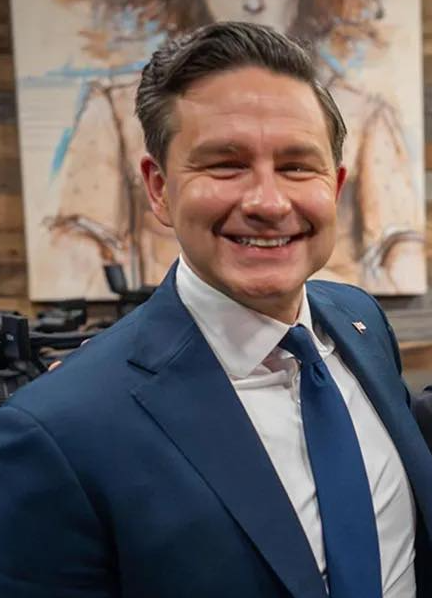
Conservative Leader Pierre Poilievre has unveiled a proposal for a new “tariff-free auto pact” with the United States, aiming to eliminate existing tariffs on vehicles and significantly increase automobile production across North America.
Speaking at an announcement in Windsor, Ontario, on March 15, Poilievre outlined a plan he believes would benefit both Canadian and American industries. He emphasized that the proposal is designed not as a goodwill gesture, but as a mutually advantageous economic strategy.
According to Poilievre, the agreement would be structured around a “one-for-one” production-to-sales ratio. This would allow automakers to sell one vehicle made in the United States or Mexico in Canada duty-free for every vehicle they produce in Canada. The goal, he said, is to encourage manufacturers to shift more production back to Canadian facilities.
A key feature of the proposal includes removing the Goods and Services Tax (GST) on all Canadian-made vehicles. Poilievre argued that this would make domestically produced cars more affordable and competitive, giving consumers a strong incentive to buy Canadian-built vehicles.
The plan also maintains existing North American trade rules, including the requirement that at least 75 percent of a vehicle’s content originate within the continent. It proposes new measures such as harmonized cybersecurity and data standards across North America, along with restrictions on vehicles using software linked to China or Russia. Additionally, the proposal aligns with broader efforts to impose tariffs on Chinese imports.
Poilievre also signaled a shift in domestic policy by pledging to eliminate the current federal electric vehicle mandate and associated rebates. He criticized these programs, claiming they primarily benefit foreign manufacturers rather than supporting Canadian industry.
The Conservative leader expressed confidence that the United States would be open to such an agreement, arguing that it would increase American auto production from 11 million to 13 million vehicles annually. He framed the plan as aligned with U.S. priorities of boosting domestic manufacturing.
Highlighting the deep integration of the Canadian and American auto sectors, Poilievre noted that roughly 90 percent of vehicles produced in Canada are exported to the United States. He stressed that access to the U.S. market is essential for the survival of Canada’s auto industry.
The proposal draws inspiration from the 1965 Canada–U.S. Auto Pact, which Poilievre credited with significantly increasing Canada’s vehicle production in the past. He pointed out that current production levels remain far below historical peaks.
Poilievre also used the announcement to criticize Prime Minister Mark Carney’s approach to trade. He accused the government of conceding to U.S. tariffs and pursuing alternative trade partnerships, including recent agreements with China aimed at reducing tariffs on electric vehicles and agricultural goods.
The Conservative leader argued that maintaining strong trade ties with the United States is crucial not only for Canada’s economy but also for attracting foreign investment. He cited concerns from international partners who view access to the U.S. market as a key factor in investing in Canadian manufacturing.
The proposal comes amid ongoing tensions between Canada and the United States over trade policies. The U.S. imposed a 25 percent tariff on Canadian vehicles and auto parts last year, creating significant challenges for the industry.
Poilievre’s announcement followed a recent visit to Detroit, where he met with U.S. officials and auto industry leaders. He reported that many stakeholders on the American side also support removing tariffs and expanding production.
As part of his broader U.S. trip, Poilievre is scheduled to meet with energy and business leaders in Texas before concluding with a keynote address in New York focused on Canada–U.S. relations.
The proposed auto pact is expected to become a central element of the Conservatives’ economic platform, particularly as trade and manufacturing remain key issues in Canada’s evolving relationship with the United States.

