
After months of trade tension and political back-and-forth, Ottawa’s latest decision to extend tariff exemptions for certain steel and aluminum imports from not just the United States, but China as well marks a curious shift in Canada’s trade strategy. The move, framed by the Department of Finance as “relief” for Canadian firms caught in the crossfire of international trade disputes, reveals more than just economic pragmatism. It exposes a government trying desperately to walk a tightrope between two of the world’s largest economies each with its own set of demands, and each ready to punish noncompliance.
Let’s be clear: relief for struggling Canadian manufacturers makes sense. Many companies depend on specialized U.S. or Chinese steel and aluminum products that can’t easily be sourced domestically. Ottawa’s updated remission orders, detailed in Customs Notices 25-19 and 25-05, acknowledge these realities, offering exemptions to businesses that can prove contractual obligations or short supply. From a strictly economic standpoint, this offers breathing room to industries under immense cost pressures.
But the politics are another matter.
On one hand, Canada continues to face a barrage of tariffs from Washington under President Donald Trump’s revived protectionist agenda. Despite repeated talks, the U.S. has maintained or even raised tariffs on steel, aluminum, autos, and softwood lumber. Yet instead of responding with equal force, Prime Minister Mark Carney’s government has chosen diplomacy over confrontation. “Now is the time to talk,” Carney said this month, signaling his preference for negotiation over retaliation.
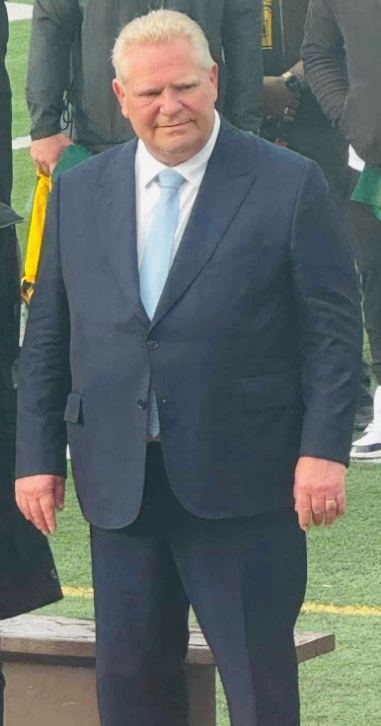
That’s a noble sentiment but also a risky one. Ontario Premier Doug Ford’s fiery response reflects a growing frustration among domestic industries, especially those in steel-heavy provinces. When Ford says, “If [the prime minister] can’t get a deal, we have to hit back,” he’s channeling the anger of producers who feel abandoned by Ottawa’s soft approach.
The Canadian Steel Producers Association, led by Catherine Cobden, didn’t mince words either. Calling it “inconceivable” that Ottawa would offer exemptions benefiting Chinese imports, Cobden warned that domestic producers are being squeezed from both sides locked out of the U.S. market while competing with cheaper Chinese steel at home. It’s hard to argue with her logic.
The inclusion of China in this latest exemption package is especially contentious. Just last year, Canada imposed tariffs on Chinese steel and aluminum, accusing Beijing of unfair trade practices. Now, exemptions are being quietly expanded for companies that “had contractual obligations prior to August 2024” or face “exceptional circumstances.” It’s a bureaucratic way of saying that Canada is willing to bend the rules when it’s convenient.
Of course, trade policy isn’t black and white. The global economy is interlinked, and retaliatory tariffs often hurt the enforcer as much as the target. But Ottawa’s piecemeal, reactionary strategy risks sending mixed signals: to Washington, that Canada will tolerate punishment without serious reprisal; and to Beijing, that Canada’s commitment to “fair trade” is negotiable.
Foreign Affairs Minister Anita Anand’s meeting with her Chinese counterpart, Wang Yi, this month underscores this balancing act. The two sides discussed agricultural and agri-food issues, with both agreeing to “regular and candid communication.” That’s diplomatic speak for: we’re talking, but don’t expect much yet.
The question is whether Ottawa’s current approach appeasing both powers while trying to shield domestic industries can actually hold. For now, it buys time. But time won’t fix the structural problem: Canada’s heavy dependence on both the U.S. and China, two partners increasingly at odds with each other.
Carney may be right that now is the time to talk. But talk without leverage rarely leads to respect or results. Ottawa needs a clearer, more assertive strategy that protects Canadian industries while maintaining room for diplomacy. Otherwise, we risk being everyone’s polite trading partner, but nobody’s equal.

