
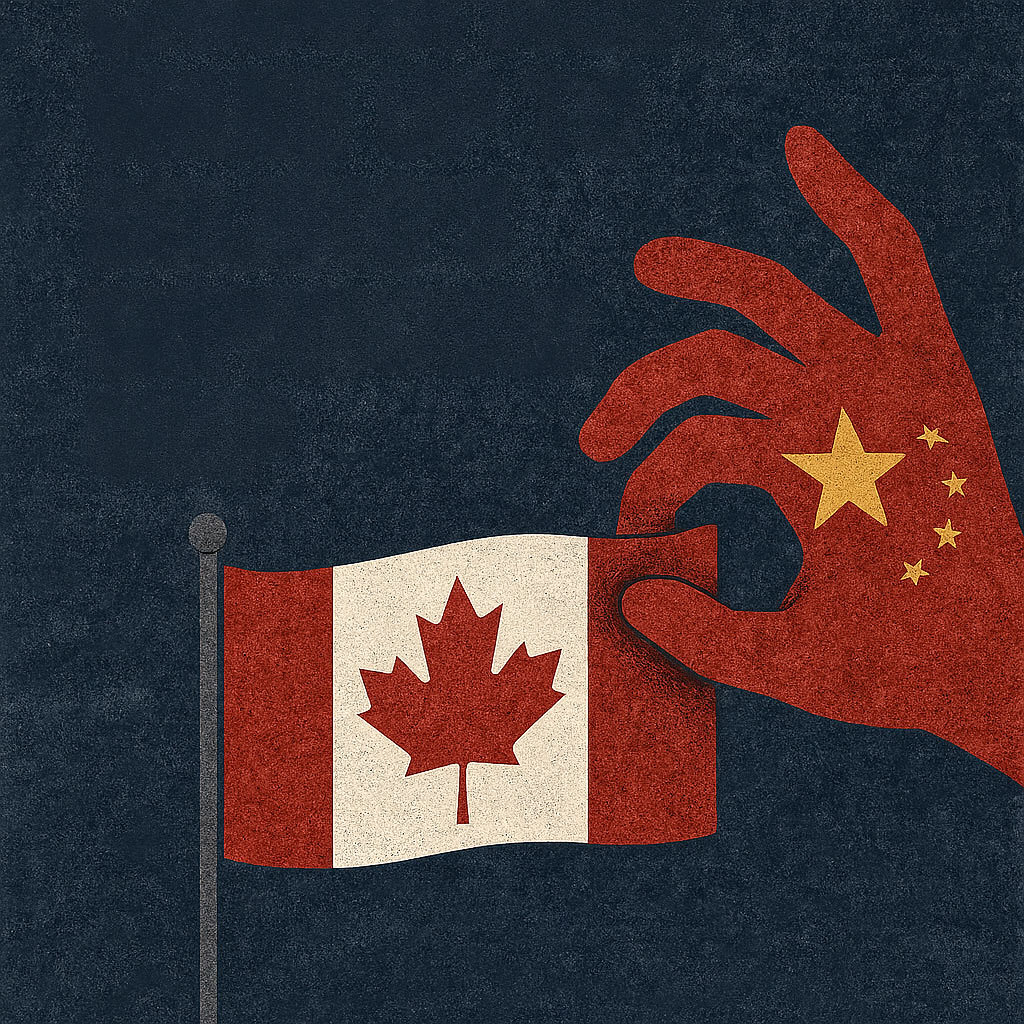
Canada is underestimating the challenge posed by the Chinese Communist Party (CCP). At a recent Reclaiming Conference in Calgary, China scholar Charles Burton laid out a case that should unsettle every Canadian who values freedom and prosperity: Beijing’s influence here isn’t just economic it’s political, strategic, and deeply personal.
Burton warned that Canada’s engagement with China’s tightly woven mix of business interests, military ambition, and one-party autocracy will shape our future more than many realize. His point was simple: reclaiming Canada’s independence requires confronting uncomfortable truths about a regime that does not play by our rules.
During a panel moderated by Jan Jekielek, Burton and Indo-Pacific expert Cleo Paskal described a government that thrives on deception and coercion. Jekielek noted that while the West often describes China as merely “authoritarian,” the CCP’s record of crushing grassroots movements reveals something closer to totalitarianism. He cited the persecution of Falun Gong practitioners and research alleging forced organ harvesting charges that, if true, represent crimes of staggering cruelty.
Paskal echoed these concerns, pointing to a chilling recent conversation between Xi Jinping and Vladimir Putin about harvesting organs to extend life. Her conclusion was blunt: the CCP is signaling to other authoritarian regimes that human life is expendable if it serves their interests.
Burton focused on the subtle, often invisible, levers of power Beijing uses abroad. Canada, for example, hosts an extraordinary 176 accredited Chinese diplomats far more than comparable nations like Japan or India. According to Burton, as many as 70 percent may be engaged in espionage or intimidation of people of Chinese heritage living here. Meanwhile, Canadian politicians and senior civil servants are sometimes drawn to lucrative post-retirement opportunities in China-friendly firms, a carrot-and-stick system that rewards compliance and punishes dissent.
Ottawa’s 2024 foreign influence law and plans for a public registry are steps in the right direction, but Burton argues the government is moving far too slowly. Jekielek adds that elite capture politicians quietly building ties to Beijing or accepting foreign funds remains a major vulnerability.
Crucially, none of this criticism is aimed at Chinese Canadians. As Burton stressed, most people of Chinese origin in Canada do not support the CCP. Beijing’s propaganda deliberately blurs the line between the party and the people, making criticism of the regime appear racist. Canadians must reject that false equivalence and stand with those Chinese and non-Chinese alike who value democratic freedoms.
Examples of Beijing’s reach aren’t limited to Canada. Paskal cited the case of Daniel Suidani, a provincial premier in the Solomon Islands who resisted CCP-linked business interests. According to her, Chinese operatives worked relentlessly to destroy his political career, even allegedly blocking medical care and bribing officials to force him from office. It’s a sobering reminder that Beijing’s influence operations are global.
The message from this panel is clear: Canada cannot afford complacency. Safeguarding our democracy demands more than new laws. It requires an informed public, leaders with backbone, and a willingness to name and confront the CCP’s tactics whether economic, political, or criminal.
Ignoring the threat won’t make it go away. Beijing is betting that Canadians would rather look the other way. We shouldn’t give them the satisfaction.

