
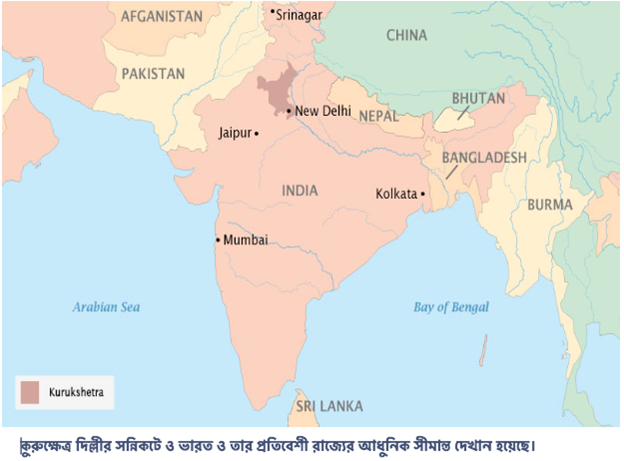
The map above shows the modern borders of India with its neighboring kingdoms, with the Kurukshetra region near Delhi highlighted.
Thousands of years ago, the Bhagavad Gita was written as part of a larger epic poem, between 400 BCE and 400 CE, when Kurukshetra was a kingdom ruled by a powerful king, with no other dominant, powerful empire capable of taking it over.
The establishment of this dynasty, and the various events that had to be fought over in the midst of indescribable chaos, left the protagonist of the original Gita, Arjuna, with questions about maintaining peace in the midst of unspeakable chaos. Over time, a complex social evolution of many elements took place—until the British Empire defeated the local powers in the late 1700s. For centuries after the time mentioned in the Gita, empires fought for control of the land, with various powers at home and abroad. The Indian nation emerged from its divided empires in the 1940s as a unified nation.
The timeline of this article highlights both the written history of the Bhagavad Gita and the history of Indian politics and religion that influenced the story.
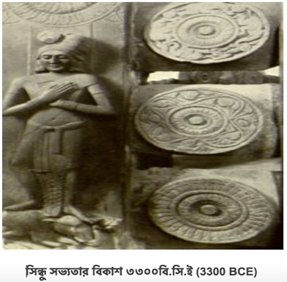
(Image-1) Development of the Indus Valley Civilization 3300 BCE
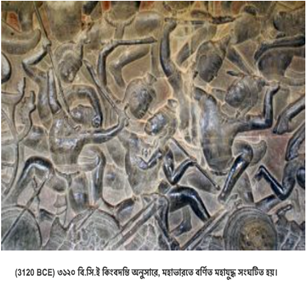
(Image-2) (3120 BCE) According to legend, the story and great war described in the Mahabharata took place in 3120 BCE.
Indo-European languages developed in Central Asia, 3000 BCE. The Indo-European or Indo-European language family includes Albanian, Armenian, Germanic, Italian, Aryan, Persian, etc.
The Indus script developed between 2800-2600 BCE.
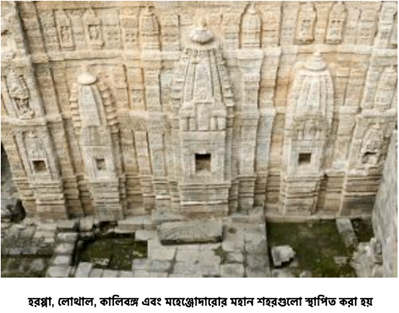
The great cities of Harappa, Lothal, Kalimpong, and Mohenjodaro were founded. The Harappan civilization flourished in the region that includes present-day Pakistan, northwestern and western India, and parts of Afghanistan and Iran by 2600 BCE.
The Indus Valley Civilization ended when the Indo-Aryans came to India from the west and settled in a different form around 1700 BCE.
In the conventional view, the Aryans were the speakers of the ‘Indo-European’ language. According to most historians, the Aryans were tall, fair-skinned and handsome. They were a foreign race to India — originally from Central Asia or southern Russia or the vast territories of Austria, Hungary or Czechoslovakia in Europe.
Aryans were a respected or honourable or trustworthy people, the inhabitants of Aryavarta. One who is faithful to his country and religion.
Aryavarta (Sanskrit: आर्यावर्त, Aryabhyrty, Sanskrit pronunciation) refers to the northern part of the Indian subcontinent. The word Aryavarta literally means “land of the Aryans”.
Sanskrit is a classical language belonging to the Indo-Aryan branch of the Indo-European languages, nominally Sanskrit, which originated in South Asia in the late Bronze Age, after the spread of ancestral languages from the northwest.
The ancient Aryans were a group of people from Central Asia who settled in northern India. There they established the Vedic religion, which has continued to be practiced in the form of Hinduism ever since.
The current classification of Aryan languages is:
Northern Aryan, with Nepali as the main language of this group.
Northwestern Aryan, Punjabi, Sindhi and Dogri belong to this family. Central Aryan, the Hindustani languages belong to this family.
Eastern Aryan, Bengali, Rajbangshi, Assamese, Oriya, and Bhojpuri belong to this family.
The Indo-Aryan branch is bifurcated.
Southern Aryan.
Western Aryan.
The early Vedic period, when the four Vedas (oral scriptures) were written in Sanskrit, began around 1500–800 BCE.
The Rigveda was written in Sanskrit around 1000 BCE.
The Upanishads were written in Sanskrit around 800–500 BCE.
The Indo-Aryans began to rule over 16 Mahajanapadas or “great kingdoms” in northern India, from the Indus River to the Ganges River, by 750 BCE.
The Hindu caste system originated around 700 BCE.
Siddhartha Gautama, the founder of Buddhism, was born in 563 BCE (d. 483 CE) into a family of Sakya rulers in present-day northern Bihar and southern Nepal.
Cyrus the Great, founder of the Persian Empire, conquered the northwestern part of the Indian subcontinent in 538 BCE.
The Persian emperor Darius conquered the Indus Valley region and ruled it as a province of his empire from 517–509 BCE.
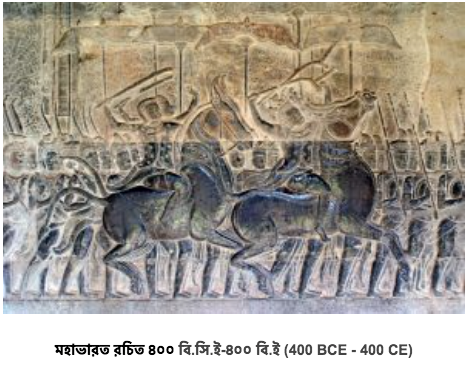
The Mahabharata was composed between 400 BCE and 400 CE; the Gita is part of the Bhishma chapter of this long epic.
Alexander the Great defeated Darius III, and India was ruled by Persia. Some parts fell to the Greeks in 333 BCE.
Before its collapse in 184 BCE, the Mauryan Empire encompassed almost the entire Indian subcontinent and parts of present-day Pakistan, Nepal, Bhutan, Bangladesh, and China.
The greatest of the Mauryan emperors, Ashoka the Great, reigned from 273–232 BCE.
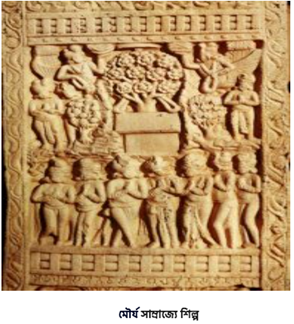
The Mauryan dynasty ended when its last ruler, Brihadratha, was assassinated; he ruled as the last ruler of the Mauryan Empire from 187 to 184 BCE. Brihadratha was killed by his own general, Pushyamitra Sunga, who then founded the Sunga Empire and followed it with the Sunga dynasty.
The Bhagavad Gita was composed in the first century CE.
Later, the Shunga Empire came to an end when the Kanva dynasty became the king of Magadha.
The Kanva dynasty was the eighth dynasty of ancient Magadha. Vasudeva Kanva founded this dynasty by defeating the king of the then Shunga Empire. This dynasty ruled the kingdom from 73 BCE to 28 BCE. The last dynasty of ancient times was the Gupta Empire.
Over time, the Kamboja, Pala, Sena dynasties and later the Mughal and Islamic empires were established in India during the Middle Ages, before the beginning of colonial British rule.
Toronto, Canada

