
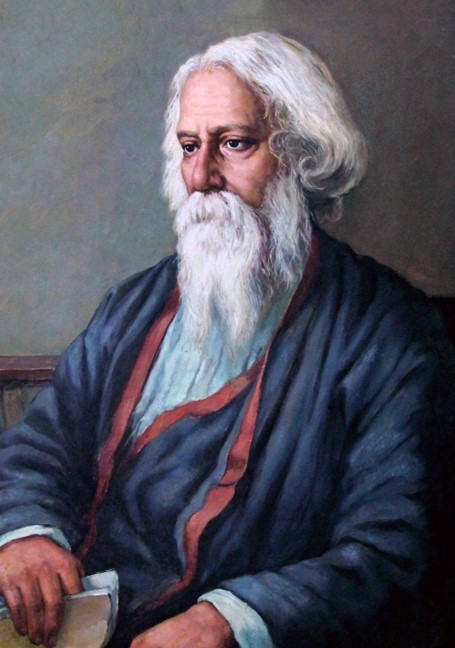
In the context of his own thoughts on the Canadian visit and the presentation he made in 1929 examining special educational priorities, India, Italy, Japan and New Zealand also highlighted Tagore in their articles. As seen in general it briefly touched everyone deeply.
One of the conference narratives that Tagore highlighted during his trip was freedom in education, which he also discussed in an interview en route to Canada.
He first preached about freedom of education in a speech in 1892. When he argued for the need for physical freedom; By creating resilience for young children to explore their environment, as well as aspirations. The potential freedom or liberating importance of free and multifaceted education in a child’s creative development was a theme repeated in discussions and interviews throughout his visit. Not a sign of escapism or uncontrollable egoism but a need for dedication and sacrifice. It means freedom from poverty and illiteracy.
Apart from the free and intensive expansion of education among the lower classes, no factor can be seen to lighten India’s burden. In such a program I look to the aid of America and Canada, since in these countries education has attained its highest form and the student body the greatest freedom.
Analysis of own family and cultural background:
One can begin with a brief description of the material at the conference before moving on to further discussion of Tagore’s presentation in Vancouver. His background will help put forward the perspective of educational priorities. Tagore was born in 1861 in a leading family of Bengal. A family whose role in shaping Bengali culture was comparable to that of the Medici family in Europe, {The Medici family ruled the Italian city of Florence throughout the Renaissance. They had a major influence on the flourishing of the Italian Renaissance through their patronage of the arts and humanism.} Rabindranath, the youngest of fourteen children, grew up in a family environment that welcomed new cultural influences, and the social family, rejecting sectarian barriers, provided the impetus for much of Bengal’s cultural roots.
Rabindranath’s grandfather Dwarkanath Tagore was involved in almost every aspect of social reform during his time, supporting hospitals, educational institutions, the arts and social reforms. As well as for a free press. Rabindranath’s father, Devendranath Tagore, led the Brahmo Samaj to stamp out superstitions in Hindu rituals.
He was also a leader of social and religious reforms. Fostered a multicultural exchange at the family palace, Jorasanko. Rabindranath’s thirteen siblings included mathematicians, journalists, novelists, musicians and artists. His first cousins who shared the family palace included leaders of theatre, science and a new art movement. The intense movement and cultural richness of the family home allows young Ravi to learn unconsciously at his own pace; gave him a dynamic open model of education, which he later tried to re-implement in his school at Santiniketan.
Not surprisingly, he found formal education outside of it unnatural and boring. And after brief exposure to several schools, he refused to go to school. In fact, he never thought of the only degrees obtained in the Vidyayatan as the end of life; In fact he earned many honorary degrees in life instead. His experience at Jorasanko gave him a lifelong conviction and satisfaction of the importance of freedom in education. He deeply realized the importance of the arts for developing empathy and sensitivity and the need for a close relationship with one’s cultural and natural environment.
By participating in the universal activities of the family, he was able to reject parochialism in general, and any kind of parochialism in particular, which separates one man from another. He saw education as a vehicle for realizing the richest aspects of other cultures while maintaining one’s own cultural identity. During his 1929 tour, he spoke of the influence of his close upbringing; “I grew up in an environment of ambition, a desire to expand the human spirit.
We want freedom of energy in our language at home, freedom of imagination in our literature, freedom of spirit in our religious beliefs, and freedom of mind in our social environment. Such an opportunity gave me confidence in the power of education which is one with life and which alone can give us true freedom. What is demanded of man is the highest, the freedom of his moral communication in the human world.
I try to emphasize in my words and deeds that the only meaning and purpose of education is freedom – freedom from ignorance of the laws of the universe and freedom from the passions and prejudices of our contact with the human world. In our institution I have tried to create an atmosphere of normality in our relations with strangers and the spirit of hospitality which is the first quality in man which has given place to civilization.”

