
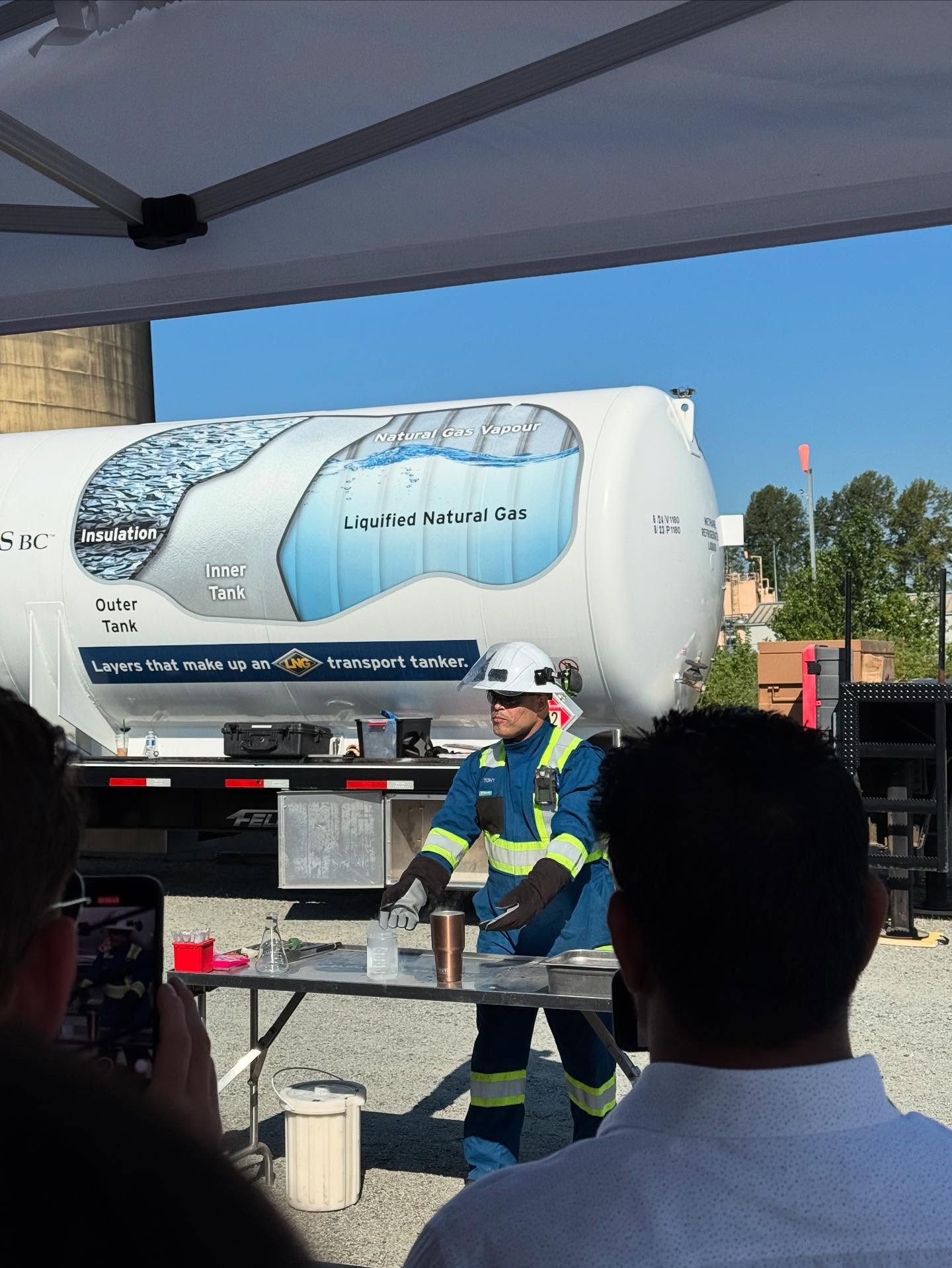
The provincial government has given FortisBC a clear runway to move ahead with a major expansion of its Tilbury liquefied natural gas facility, sidestepping a regulatory step that would typically apply to projects of this scale.
Through an Order in Council, British Columbia has exempted the Phase 1B expansion of the Tilbury LNG plant from having to secure a Certificate of Public Convenience and Necessity, a requirement normally imposed on public utilities under the province’s Utilities Commission Act. The decision, announced in a government release on July 24, effectively removes one of the key regulatory hurdles standing between FortisBC and construction.
Officials framed the move as a win on two fronts: economic growth and cleaner energy options for the marine sector. The upgraded facility will boost Tilbury’s LNG output, and the province says the added supply could serve as a lower-emission alternative to traditional ship fuels for vessels currently reliant on diesel or heavy fuel oil.
The numbers behind the project are substantial. According to the province, the construction phase alone is projected to: Generate more than $800 million in GDP, Produce roughly $260 million in tax revenue, Support 1,100 jobs annually over a four-year building period.
The Tilbury facility already plays a significant role in regional fuel supply, providing LNG to both domestic and international shipping operators including BC Ferries and Seaspan making the expansion a direct extension of infrastructure those companies already depend on.
Beyond greenlighting construction, the Order in Council also introduced regulatory changes that pave the way for an ownership partnership between FortisBC and the Musqueam Indian Band. The new framework allows the two parties to structure an equity stake in the project together, folding Indigenous economic participation directly into the facility’s ownership model rather than treating it as a separate arrangement.
Despite the exemption, Phase 1B isn’t free of oversight entirely the project will still need to clear all other standard regulatory approvals before any construction begins. Provincial officials indicated that groundbreaking could happen as early as mid-2027, with the expanded facility potentially operational by 2031.
Meanwhile, a separate and larger phase of the project Phase 2 is currently working through an environmental assessment. The province says a decision on that stage isn’t expected until late 2026, meaning Tilbury’s long-term expansion story is still very much unfolding.
For now, though, Phase 1B has cleared its first major regulatory checkpoint, putting FortisBC one step closer to expanding one of the region’s key LNG supply hubs.

