
The federal government took a significant step this week toward shielding young Canadians from the darker corners of the internet, tabling a sweeping piece of legislation that would bar anyone under the age of 16 from holding a social media account.
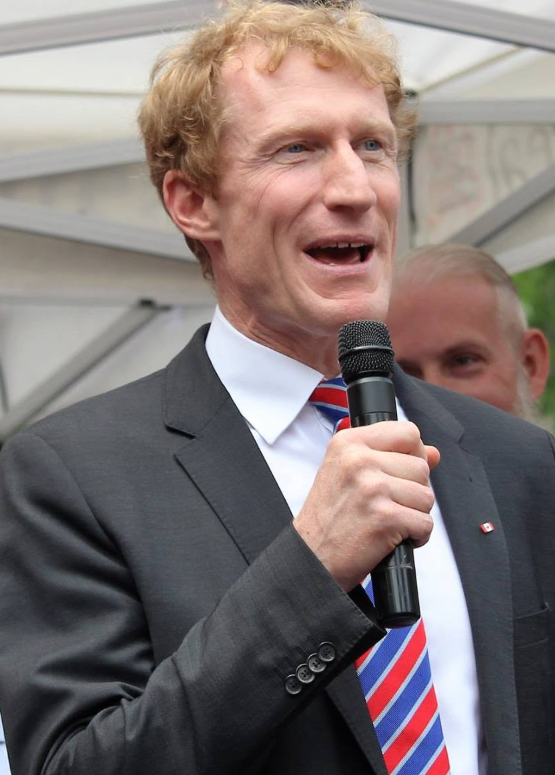
Minister of Canadian Identity and Culture Marc Miller introduced Bill C-34, dubbed the Safe Social Media Act, at a press conference Tuesday alongside mental health advocates and government officials. The bill marks one of the most ambitious attempts by Ottawa to regulate what children can access online and it arrives at a moment when the harms of social media on youth mental health have become impossible for policymakers to ignore.
“As a society, we must act,” Miller told reporters. “As parents, as doctors, as a government, we are all responsible for protecting our children. We have to be honest: We are behind. Canada is behind.”
Miller said the legislation was shaped by months of conversations with parents, pediatricians, mental health professionals, and children themselves. Time and again, he said, one question kept surfacing: what is the government doing to keep kids safe online?
The Safe Social Media Act proposes setting the minimum age for social media account ownership at 16. However, platforms that can demonstrate they are “safe by design” may be eligible for exemptions a provision that hands tech companies a carrot alongside the stick.
To enforce the new rules, the bill would create a Digital Safety Commission of Canada, a regulatory body tasked with overseeing compliance, processing complaints, and penalizing platforms that fail to meet the law’s requirements. Companies found to be in violation could face fines of up to three percent of their global revenues a figure significant enough to get the attention of even the largest tech multinationals.
Miller said the commission should be up and running within roughly 18 months, though he was clear that platforms won’t be able to use that timeline as cover. “They have to take the appropriate measures to limit kids under 16 from opening social media accounts as soon as the law comes into force,” he said.
The legislation goes further than simply locking minors out of platforms. It would require social media companies to remove child sexual exploitation material and non-consensual intimate images including AI-generated deepfakes within 24 hours of being flagged.
Platforms would also be legally required to reduce users’ exposure to a defined list of harmful content categories, including material that promotes hatred, incites violence, or supports terrorism and violent extremism.
On the question of age verification widely seen as the bill’s most complicated technical challenge Miller acknowledged the limits of what any system can accomplish. “You’re talking about the age verification process, which uses a probabilistic system,” he said. “Perfection is impossible, but we can do better.”
Privacy advocates have taken note. Digital policy legal scholar Michael Geist has raised concerns that mandatory age verification could create serious privacy risks, particularly for minors whose data must be collected and processed in order to confirm their age. Those worries were echoed by Conservative MP Roman Baber, who pointed to what he characterized as a pattern of Liberal legislation that trades civil liberties for regulatory control.
One notable gap in the bill is its exclusion of artificial intelligence chatbot services. Miller defended the decision by arguing that the research on AI-related harms in young people remains less developed than the extensive body of evidence on social media’s impact.
“We have to admit that chatbots are not as well studied as the harms created by online platforms,” he said, adding that AI tools also play a legitimate role in education and align with Canada’s broader AI development ambitions.
The omission, however, is hard to separate from a tragedy that shook a small British Columbia community earlier this year. In February, a gunman killed eight people in Tumbler Ridge before being killed himself. Investigators later confirmed that the shooter, Jesse Van Rootselaar, had used OpenAI’s ChatGPT to discuss gun violence in the year before the attack and that despite having his account suspended in the summer of 2025, he was able to create a new one without detection.
OpenAI has since publicly apologized for not alerting Canadian authorities when it deactivated Van Rootselaar’s original account.
While the Safe Social Media Act stops short of restricting minors’ access to AI chatbots entirely, it does propose requiring those platforms to take steps to reduce the risk of harmful interactions and to establish clearer protocols when a user expresses intent to harm themselves or others.
For anyone tracking Ottawa’s attempts to regulate online harms, Bill C-34 carries a sense of déjà vu. It is the Liberal government’s third attempt to establish a comprehensive federal framework for digital safety.
The first, Bill C-36, was introduced in 2021 and died when Parliament dissolved ahead of that year’s federal election. The second, Bill C-63, the Online Harms Act, proposed a range of measures targeting exploitative content and extremism online, but also included controversial provisions that would have imposed heavy fines on individuals for hateful speech. That bill died on the order paper when Parliament was prorogued in January 2025.
Bill C-34 drops several of the more contentious elements from its predecessor. Notably absent are the individual hate speech penalties that drew criticism from across the political spectrum. What remains is a more narrowly focused effort centered on protecting children.
The bill’s introduction drew a mixed political reception. Child protection organizations voiced quick and enthusiastic support. Conservative Leader Pierre Poilievre said he would withhold judgment until he had reviewed the legislation. His colleague Roman Baber, however, was more outspoken in his skepticism, warning that the bill could open doors to censorship and privacy erosion.
The NDP has yet to take a formal position, though the party has previously expressed support for stronger online safety measures in principle.
The Safe Social Media Act arrives less than a week after Prime Minister Mark Carney and AI Minister Evan Solomon unveiled a national AI strategy framed under the banner of “AI for All.” That plan included references to strengthened privacy protections and safeguards for minors though critics from both the Conservatives and NDP said the strategy was short on regulatory specifics.
Bill C-34 passed its first reading on June 10. With the Liberals holding a majority in Parliament, its path through the House may be smoother than its predecessors, though the hard questions around enforcement, verification, and privacy rights are far from settled.
For now, the government’s message is straightforward: the platforms have known about these harms for years, and the time for waiting is over.

