
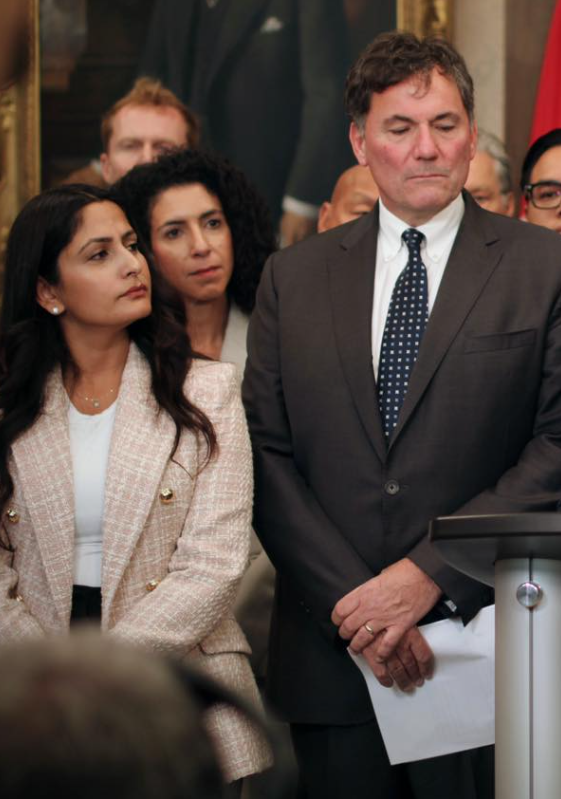
Canada has reaffirmed its commitment to advancing negotiations on the United States-Mexico-Canada Agreement (USMCA), with Trade Minister Dominic LeBlanc stating that Ottawa will not be responsible for any slowdown in the process.
Speaking to reporters on April 16 after a session of the House of Commons standing committee on international trade, LeBlanc emphasized Canada’s readiness to move forward. He noted that the government is actively working toward a deal and has already submitted multiple proposals to U.S. negotiators. According to him, discussions between the two countries remain constructive and ongoing at various levels.
LeBlanc also revealed he recently held a “positive” 45-minute conversation with U.S. Commerce Secretary Howard Lutnick, though he declined to share specifics of their discussion.
However, questions from opposition members highlighted concerns about the pace and substance of negotiations. Conservative MP Jacob Mantle referenced earlier remarks by U.S. Trade Representative Jamieson Greer, who had suggested that progress with Mexico had outpaced talks with Canada and claimed there had been little meaningful engagement for several months.
LeBlanc dismissed these assertions, insisting Canada remains actively engaged at the negotiating table. When pressed to outline specific sticking points, he declined to provide detailed disclosures, citing the sensitive nature of ongoing discussions.
Another Conservative MP, Jason Groleau, questioned whether Canada’s supply management system could be compromised in negotiations. LeBlanc firmly rejected that possibility, stating that the system covering dairy, poultry, and eggs would not be sacrificed. The U.S. has long criticized this framework, particularly due to high tariffs imposed once import quotas are exceeded.
Beyond supply management, the United States has also raised concerns about Canadian provincial restrictions on American alcohol products and federal “Buy Canadian” policies, labeling them as barriers to trade.
Meanwhile, Greer recently indicated that resolving all outstanding issues before the upcoming July 1 review deadline may be challenging, although he acknowledged that both sides are making progress on several fronts.
The July talks are crucial for the future of the USMCA. A successful renewal would extend the agreement until 2032. Failure to reach consensus, however, could lead to annual reviews or even the possibility of countries withdrawing and pursuing separate bilateral trade agreements.
Despite lingering tensions, Canada maintains an optimistic outlook, signaling its intention to secure a timely and mutually beneficial outcome.

