
Prime Minister Mark Carney has indicated that his government is closely monitoring rising fuel prices and exploring ways to ease the financial burden on Canadians, as global oil markets react sharply to escalating geopolitical tensions.
Speaking to reporters in Brampton on April 7, Carney acknowledged public concern over surging gasoline costs, particularly given Canada’s status as a major oil producer. He emphasized, however, that crude oil prices are determined on the global stage and are beyond the control of any single nation.
Benchmark West Texas Intermediate (WTI) crude, which hovered around US$65 per barrel before the outbreak of conflict involving Iran, has now surged past US$110. The sharp increase follows heightened tensions after military actions involving the United States and Israel, and disruptions near the strategically vital Strait of Hormuz.
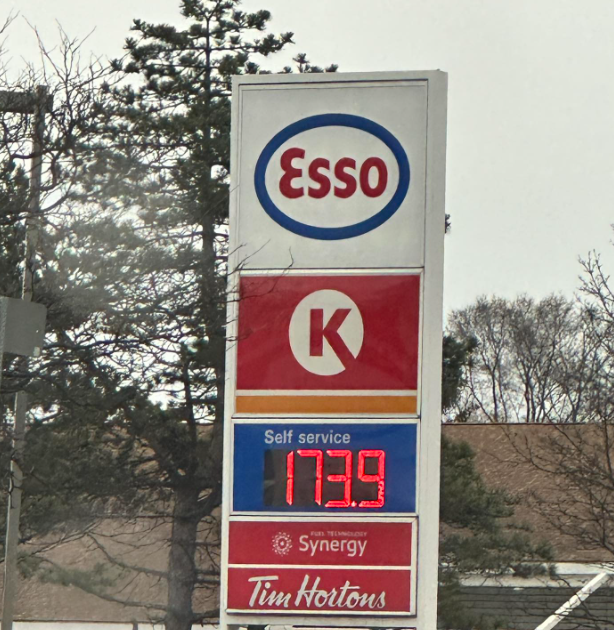
The impact is being felt directly by consumers. According to government data, the national average price of gasoline has jumped by approximately 50 cents in just one month, reaching $1.91 per litre. In Vancouver, prices have remained above $2 for several weeks, with current levels around $2.18 per litre.
“And so, the question becomes how long this situation will last, and what actions we can take to soften the impact for Canadians,” Carney said. He did not outline specific measures under consideration but stressed that affordability remains a key priority.
The remarks come amid mounting political pressure. Conservative Leader Pierre Poilievre has urged the federal government to suspend fuel-related taxes for the remainder of the year, arguing that such a move could reduce pump prices by up to 25 cents per litre.
In an open letter to the prime minister, Poilievre proposed using a portion of increased government revenues estimated at $9 billion due to higher oil prices to provide tax relief. He called for the temporary removal of federal excise taxes and GST on gasoline and diesel, as well as the permanent elimination of Clean Fuel Regulations.
Industry data suggests that more than half of the price Canadians pay at the pump is made up of taxes imposed at various levels of government.
Carney’s administration has already introduced measures aimed at easing cost-of-living pressures, including an enhanced GST credit rebranded as the Canada Groceries and Essentials Benefit targeted at low- and moderate-income households. The program received support across party lines in Parliament.
Meanwhile, global tensions continue to fuel uncertainty in energy markets. Iran’s effective closure of the Strait of Hormuz through which roughly 20 percent of global oil shipments pass has intensified supply concerns.
U.S. President Donald Trump has issued strong warnings to Iran, threatening further military action if the waterway is not reopened. While diplomatic efforts are ongoing, including mediation attempts by Pakistan, no resolution has yet been reached.
Carney refrained from commenting directly on the rhetoric but emphasized the importance of international law and the protection of civilians. He also noted that public statements during conflicts often differ from behind-the-scenes negotiations.
As the crisis unfolds, Canadians are bracing for continued volatility at the pump, with the federal government weighing its options to provide relief in an increasingly uncertain global energy landscape.

