
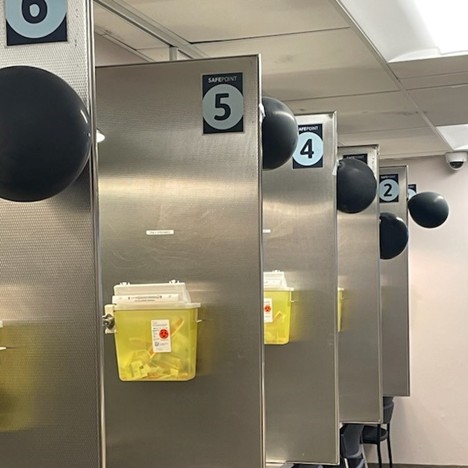
The Ontario government is moving ahead with the closure of 10 supervised consumption and treatment sites across the province, rejecting recommendations from two government-commissioned reports that called for keeping the sites open and strengthening safety measures instead.
Health Minister Sylvia Jones announced this week that Ontario will ban supervised consumption sites located near schools and prohibit the opening of any new sites in the future. Premier Doug Ford defended the decision on Wednesday, saying the province is shifting toward a treatment-focused approach and away from supervised consumption.
The move comes despite findings from two separate reviews that concluded existing sites should remain open and receive increased funding. The reports recommended stabilizing staffing levels, hiring permanent and properly trained security guards, and improving communication with local communities to address safety concerns.
“These sites are a necessary public health service, implemented to save lives and prevent accidental overdose deaths,” wrote Jill Campbell, the former chief nursing executive at the Centre for Addiction and Mental Health, in a report submitted to the province earlier this year.
Campbell was appointed last fall to oversee operations at the South Riverdale Community Health Centre in Toronto’s Leslieville neighbourhood, where a fatal shooting occurred in July 2023. Karolina Huebner-Makurat, a local resident, was killed after a fight broke out between three alleged drug dealers near the site.
In her report, Campbell recommended expanding harm reduction services, including supervised consumption sites and safer drug supply programs, alongside increased funding for security guards at sites located within 200 metres of schools. She also urged the province to invest more in recruiting and retaining staff and to expand the number of treatment beds, which remain in high demand.
A separate review conducted by Unity Health Toronto, which operates two major hospitals, also supported maintaining funding for the South Riverdale site. The review found a clear need for the service based on the number of clients served and the wide range of health care referrals provided through the community health centre.
However, the Unity report acknowledged longstanding concerns from local residents, including complaints about open drug use, discarded paraphernalia, fights, and safety issues for children. It also found that security guards hired after the 2023 shooting lacked proper training in de-escalation and non-violent conflict resolution, and that the site struggled to retain registered nurses and other staff.
Jones said the government’s decision was driven by concerns from parents and neighbours, as well as crime data. “Open drug use should not happen near schools and daycares,” said her spokeswoman, Alexandra Adamo. “Communities, parents and families across Ontario have made it clear that the presence of drug consumption sites near schools and daycares is leading to serious safety problems.”
Adamo cited Toronto police data that she said shows higher crime rates near consumption sites located within 200 metres of schools compared to other parts of the city.
Premier Ford echoed that view, calling the supervised consumption model a failure. “It’s a failed policy, simple as that,” he said. “We’re making a better policy.”
Healthcare organizations, including the Registered Nurses’ Association of Ontario, have warned that shutting down supervised consumption sites could lead to preventable deaths.
Ontario first introduced the consumption and treatment services model in 2018, capping the number of provincially funded sites at 21. To date, only 17 have received funding. Several federally approved sites have operated without provincial support, and two sites in northern Ontario recently closed due to a lack of funding.
The closures come as Ontario continues to grapple with the opioid crisis. Opioid-related deaths surged during the COVID-19 pandemic, peaking in 2021 at 19.3 deaths per 100,000 people, or 2,858 deaths. While the mortality rate declined to 17.5 deaths per 100,000 people in 2023, it remains significantly higher than pre-pandemic levels. Nearly 70 per cent of opioid toxicity deaths occur in private homes, according to the Office of the Chief Coroner.
Ontario’s Chief Medical Officer of Health also conducted a third review of consumption and treatment sites, but that report has not been released publicly.

