
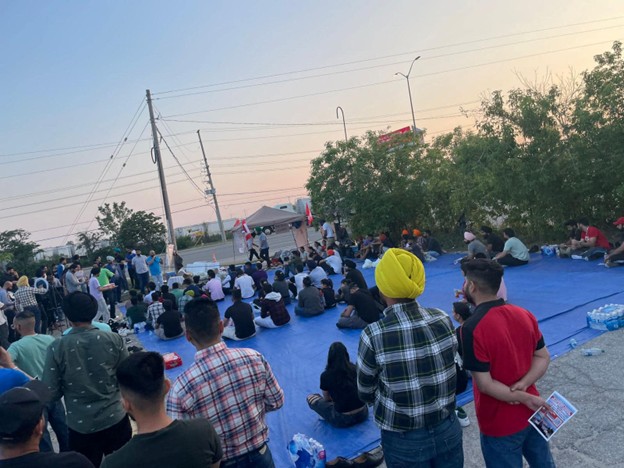
Canada is witnessing growing nationwide protests as more than 70,000 international student graduates face the prospect of deportation following recent changes to federal immigration policies. With work permits set to expire by the end of the year, many graduates say their hopes of building a future in Canada are now hanging by a thread.
Student advocacy groups, including the Naujawan Support Network, warn that thousands of international graduates are at risk of losing legal status when their post-graduation work permits expire. The situation has been intensified by the federal government’s decision to cap study permits and tighten immigration pathways, a move officials say reflects changing economic priorities.
For many students, the impact has been devastating. After investing years of their lives and often their families’ life savings into Canadian education, graduates who planned to apply for permanent residency now find themselves burdened with debt and uncertainty.
Although studying in Canada has never been a guaranteed pathway to permanent residency or citizenship, it has long been used as a stepping stone toward settlement. What makes the current situation unprecedented, advocates say, is the sheer number of temporary residents whose work permits are expiring at the same time.
Speaking at the Liberal cabinet retreat in Halifax, Prime Minister Justin Trudeau acknowledged that international students and foreign workers played a critical role in addressing labour shortages during the COVID-19 pandemic. However, he noted that Canada’s economic needs have since shifted. The federal government maintains that alternative pathways to permanent residency remain available and directs applicants to official resources on the Government of Canada’s website.
Amid mounting anxiety, international students and graduates have taken to the streets across the country. In Prince Edward Island, a group of students has maintained an encampment outside the provincial legislative assembly for more than three months, protesting overnight to draw attention to their plight.
Students say recent provincial decisions to cut permanent residency nominations by 25 per cent have left many unexpectedly vulnerable to deportation. Similar protests have emerged in Ontario, Manitoba and British Columbia, where rallies have drawn hundreds of participants.
“I exhausted the most vital six years of my life taking many risks to come to Canada,” said Mehakdeep Singh, a former international student now facing expulsion.
Singh, like many others, spent his family’s savings on overseas education in Canada. With his work permit nearing demise, he says there is no clear path to constant residency.
“There isn’t stability anymore,” stated immigration consultant Kanwar Sierah. Now, there’s no clarity on when the next draws will happen, and backlogs keep growing.”
In cities such as Brampton, international students and immigrant workers have rallied against narratives that blame them for housing shortages and job competition. Advocacy groups, including the International Sikh Student Organization, argue that these challenges stem from broader policy failures rather than the presence of international students.
Protesters are calling on the federal government to extend post-graduation work permits and introduce clearer, more consistent pathways to permanent residency. They emphasize that international students contribute significantly to Canada’s economy through tuition fees, taxes and essential labour.
As protests continue, students say they feel caught between hope and despair. After years of study and work in Canada, many are now being told to return home often while carrying massive debts and uncertain futures.
Advocacy groups warn that without meaningful policy changes, Canada risks losing not only a large segment of its skilled workforce but also its reputation as a welcoming destination for international students.
For now, thousands remain in limbo, waiting for clarity from a system they once believed would reward their commitment and contribution.

