
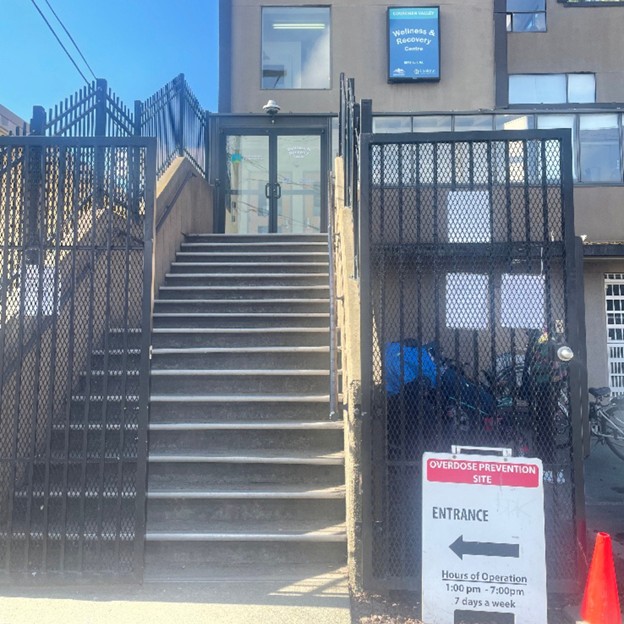
Ontario’s proposal to close several supervised drug consumption sites is drawing sharp criticism from public health experts, legal advocates, and community organizations, who warn that the move could lead to more fatal overdoses and may not withstand a constitutional challenge.
A review of federal data suggests the impact could be far greater than initially expected. The sites targeted for closure those located within 200 metres of a school or daycare help prevent, on average, more than three overdose deaths every day in Toronto and nearly six per day across Ontario. Experts say these numbers offer a sobering estimate of how many lives could be lost if the services disappear.
“As a public health researcher, I feel quite confident in saying that if we cut supervised injection and consumption sites in Ontario, we will see an increase in fatal overdoses,” said Dr. Gillian Kolla, an assistant professor and researcher in harm reduction. “The evidence is very clear that these services save lives.”
Kolla noted that roughly 22 people die from overdoses every day in Canada, with the figure fluctuating based on the toxicity of the unregulated drug supply. She said the presence of trained staff able to administer oxygen or naloxone dramatically reduces the risk of death.
This week, the Ontario government announced that 10 supervised consumption sites including five in Toronto will be forced to close by March 31, 2025. Under the new rules, sites within 200 metres of schools or daycares will not be allowed to relocate and reopen.
The province says it will instead invest $378 million into new Homelessness and Addiction Recovery Treatment (HART) hubs, which it argues will better address addiction and homelessness.
The policy shift follows the death of 44-year-old Karolina Huebner-Makurat, who was struck by a stray bullet during a gunfight outside a supervised consumption site in Toronto’s east end in July 2023. However, neither of the two reviews commissioned after that incident recommended shutting sites down. One called for enhanced security, while the other suggested expanding supervised consumption services.
The proposed rules may also affect two of the four supervised consumption sites located inside Toronto homeless shelters, known as Urgent Public Health Needs Sites. These facilities are accessible only to shelter residents.
At a Homes First shelter on Lakeshore Boulevard West, clients use a small, monitored room equipped with stainless steel desks, where staff stand ready to respond to overdoses.
Potvin warned that without supervised sites, people will use drugs in bathrooms, alleyways, or alone places where overdoses are far more likely to be fatal. He added that supervised sites also ensure proper needle disposal, reducing the risk of discarded needles in public spaces.
“No one has ever died in our supervised consumption site,” Potvin said. “Keeping people alive is the first step toward stabilizing them and helping them access treatment.”
Federal data shows the 10 sites slated for closure refer about 131 people every day to treatment, recovery, and other support services.
The closures may also face serious legal scrutiny. In 2011, the Supreme Court of Canada ruled unanimously that Vancouver’s Insite supervised consumption site must remain open, stating that it saved lives and improved health without increasing crime. The court found that shutting it down would violate users’ Charter rights.
Michael Feder, a Vancouver-based lawyer who represented the Canadian HIV/AIDS Legal Network in that case, said Ontario will need strong, evidence-based justification to defend its plan.
Feder said that “If you’re going to cut people off from something that reduces disease and death, you’d better have a solid explanation,”. “It’s going to be an uphill battle.”
In a statement, a spokesperson for Ontario’s health minister cited rising crime around some supervised consumption sites, though the government did not provide details on how those figures were calculated. The statement emphasized protecting children and said any site that fails the new criteria whether initially identified or not will be required to close.
The statement read “Open, taxpayer-funded drug utilization should not be happening on the same block as schools and daycares, “This step will help protect the public, especially Ontario’s children.”
One of the sites set to close is in Kensington Market, largely because it operates near a daycare run by the same organization, The Neighbourhood Group (TNG). The site has functioned for nearly six years without incident.
“We were shocked that our proximity to our own daycare is what shut us down,” said Bill Sinclair, TNG’s CEO. He noted that the building also hosts English classes for refugees and employment programs.
Sinclair said that “The professional advice is clear we need more of these services, not less,”. “Health care clinics and community hubs are located where people live. And where people live, there are schools and childcare centres. These services can co-exist safely.”
As the March 2025 deadline approaches, critics warn that Ontario’s plan could reverse years of progress in overdose prevention, leaving thousands of vulnerable people at greater risk and setting the stage for a major legal battle.

