
The Canada Revenue Agency’s effort to recover billions of dollars in COVID-era benefits may be legally justified, but it is also a stark reminder of how emergency policymaking can leave long-lasting scars especially for ordinary Canadians.
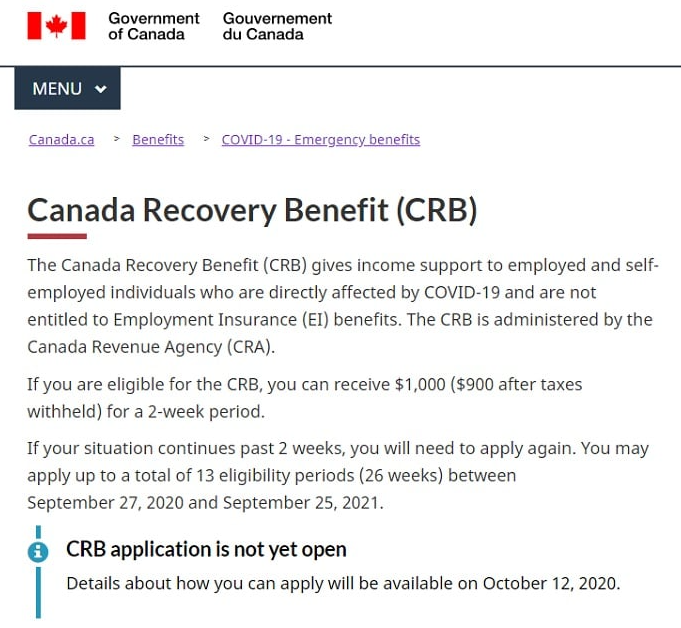
According to the CRA, roughly $14 billion in pandemic benefits were paid out to people later deemed ineligible for programs such as the Canada Emergency Response Benefit (CERB) and the Canada Recovery Benefit (CRB). So far, about $4 billion has been recovered, leaving close to $10 billion still outstanding. For an agency now warning of wage garnishments, benefit offsets, and legal action, the message is clear: the bill for pandemic speed is coming due.
There is no denying the context. In 2020, Canada faced an unprecedented economic shutdown. Millions lost jobs overnight, and the federal government chose speed over strict verification. The CRA itself says it is “proud” of how quickly it delivered emergency support, and many Canadians would agree. CERB prevented mass poverty and stabilized households when the economy was frozen.
But speed has consequences.
Canadians were asked to self-attest eligibility, with the understanding that verification would come later. Years later, that “later” has arrived. As of late 2025, the CRA reports $5.4 billion in CERB debt, $3.2 billion related to CRB, and billions more tied to other pandemic benefits. Nearly 1.4 million Canadians have already repaid more than $3.3 billion, proof that many are trying often painfully to settle what they owe.
The problem is not just repayment; it’s timing and capacity. Inflation, housing costs, and stagnant wages have left many households financially stretched. Asking people to repay thousands of dollars years after the crisis sometimes based on eligibility rules they misunderstood, or marginal income thresholds feels punitive, even if technically correct.
The CRA insists it uses a “progressive recovery model,” emphasizing payment plans based on ability to pay. That is reassuring on paper. But the agency also makes it clear that those who do not cooperate could face aggressive enforcement: garnished wages, seized refunds, or legal action. For struggling Canadians, that threat alone adds stress to already fragile finances.
Compounding the issue is service quality. The CRA has admitted its call centres hit “rock bottom,” prompting a 100-day action plan and the hiring or rehiring of 1,700 call centre workers. If Canadians are expected to navigate complex repayment rules and negotiate payment plans, the agency must be accessible, responsive, and fair. Anything less risks eroding public trust.
Ultimately, this recovery effort highlights a broader lesson: emergency programs save lives and livelihoods, but accountability cannot be an afterthought. Governments must balance compassion with clarity especially when the consequences surface years later.
Recovering ineligible payments may protect taxpayers and public finances, but how the CRA handles this process will determine whether Canadians see it as responsible governance or as a delayed penalty for surviving a crisis.

