
The Bank of Canada’s decision to hold its policy interest rate at 2.25 percent may not sound dramatic, but in today’s turbulent global environment, it speaks volumes. At a time when trade tensions, especially with the United States, continue to cloud Canada’s economic outlook, the central bank has chosen stability over haste and that choice deserves careful consideration.
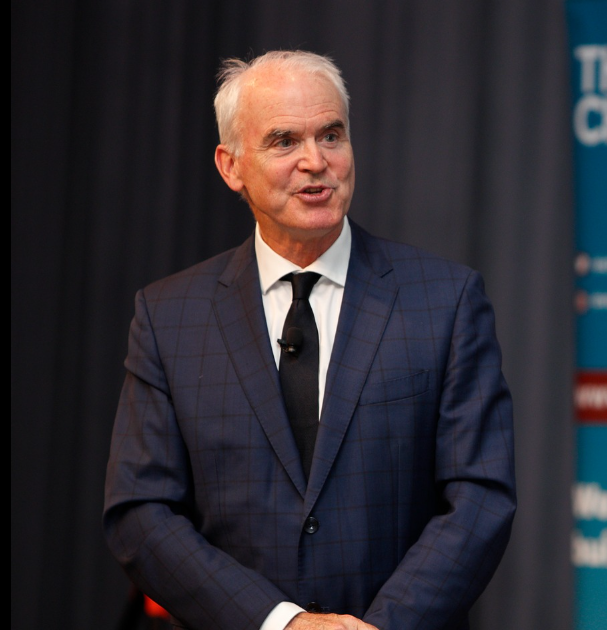
Governor Tiff Macklem’s message on Dec. 10 was measured but clear: Canada’s economy has shown more resilience than many expected, even as U.S. tariffs continue to disrupt trade flows. At the same time, uncertainty remains unusually high. In such conditions, maintaining the current rate appears less like indecision and more like prudent restraint.
From an inflation perspective, the Bank’s stance seems justified. Consumer price inflation has hovered close to the 2 percent target for most of the year, easing to 2.2 percent in October thanks largely to lower gasoline prices and slower food inflation. While inflation may tick up in the near term due to technical factors like the end of last year’s GST holiday, there is little evidence of runaway price pressures that would demand immediate tightening.
Economic growth tells a similar story. The surprisingly strong 2.6 percent expansion in the third quarter of 2025 suggests that Canada’s economy entered this year on firmer footing than previously believed. Revisions by Statistics Canada to growth data from earlier years reinforce the idea that both demand and supply were stronger before tariffs took effect. That underlying strength may help explain why the economy has absorbed recent shocks better than feared.
Still, the picture is far from rosy. Domestic demand remains fragile, net exports are weakening, and sectors exposed to trade disputes particularly those tied to U.S. markets are struggling. While unemployment has eased to 6.5 percent, hiring intentions remain soft, signaling caution among employers. These are not conditions that call for aggressive rate hikes, nor do they necessarily justify sharp cuts.
Macklem’s emphasis on the “lower end of the neutral range” is telling. The Bank is trying to strike a balance: providing enough support to help the economy navigate a structural transition driven by trade realignments, while keeping inflation expectations firmly anchored. In this context, holding rates steady is a way of buying time time to see how fiscal measures, such as increased military spending and investment incentives from the federal budget, filter through the economy.
Perhaps the most realistic part of the Bank’s messaging is its acknowledgment of limits. Monetary policy cannot undo the damage caused by tariffs or fully offset job losses tied to trade conflicts. What it can do is preserve confidence in price stability and smooth the adjustment process. That role, though less visible, is crucial during periods of global upheaval.
As Canada looks ahead to a potential USMCA review in 2026 and continued unpredictability in U.S. trade policy, the range of possible economic outcomes remains wide. In such an environment, a steady hand at the central bank is not a sign of complacency it is a signal that policy is grounded in evidence, not panic.
For now, the Bank of Canada appears to be doing exactly what it should: holding the line, watching the data closely, and staying ready to act if the outlook changes. In uncertain times, that kind of cautious confidence may be the most responsible policy of all.

