
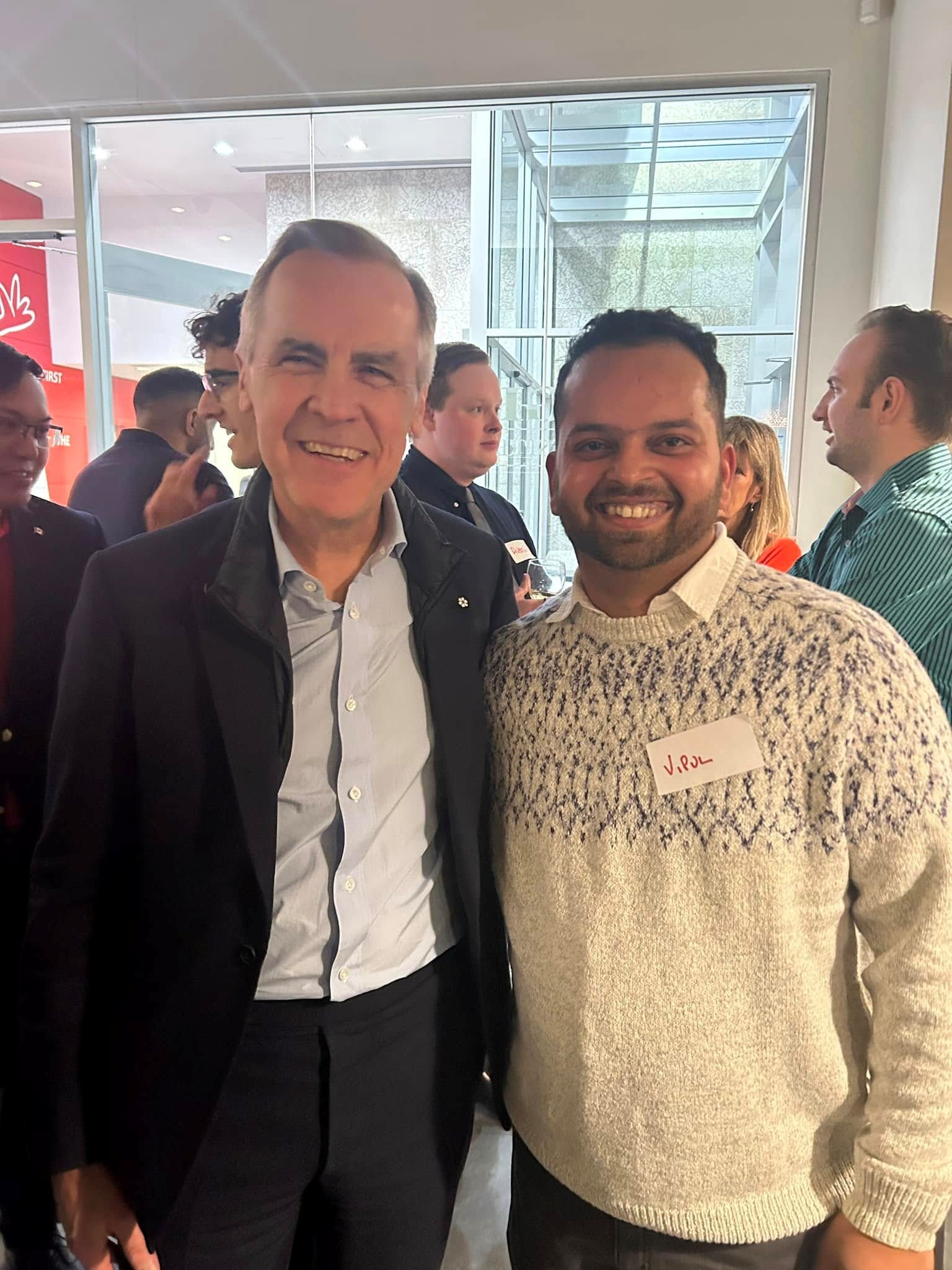
As Prime Minister Mark Carney steps onto the European stage for his first NATO summit, he carries a vastly different Canada than the one that showed up last year. After years of dragging its heels on defence spending, Ottawa is now racing to meet NATO’s long-standing 2 percent GDP benchmark—something it has historically failed to do.
It’s a political about-face that seems tailored not only for NATO’s evolving threat landscape but also for the return of Donald Trump to the world stage.
Carney’s recent $9 billion defence package isn’t just a numbers game—it’s a message. A message that Canada wants to be taken seriously as a partner in global security. From billions allocated to recruitment and defence R&D to strategic investments in equipment and radar systems, the spending is ambitious, arguably overdue, and a calculated effort to repair Canada’s reputation within the alliance.
And the timing is no accident.
This year’s summit is about more than reaffirming past commitments—it’s about shifting goalposts. NATO Secretary General Mark Rutte’s proposal to raise the spending target to 5 percent of GDP is a bold new frontier. That number may sound like a moonshot, but in a world reeling from rising tensions in Europe, the Middle East, and Asia, the idea no longer seems unthinkable.
The war in Ukraine continues to be the most visible flashpoint, but Rutte’s comments made it clear: NATO sees a multi-front challenge ahead—from Russia, sure, but also from a global coalition of autocracies, including China, Iran, North Korea, and Belarus. The “peace dividend” era is over, and the alliance knows it.
Still, Carney’s carefully plotted entrance into NATO’s good graces comes at a time when the room’s loudest voice is again Donald Trump. And Trump’s voice, as history has shown, tends to shake the furniture.
Trump’s disdain for NATO is no secret. His infamous remark encouraging Russia to “do whatever the hell they want” to under-spending allies still lingers like a bad smell. And even now, as all NATO countries scramble to hit the 2 percent bar, Trump is moving the goalpost, insisting it should be 5 percent—though with a telling caveat that the U.S., in his view, already does more than enough.
His view of Canada hasn’t softened either. Despite Carney’s new commitments, Trump recently singled out the country as “just about the lowest” in terms of defence spending. That’s no longer accurate—but accuracy was never the point. For Trump, it’s about optics, dominance, and leverage.
That leverage may come into play in the form of the so-called “Golden Dome”—a Trump-backed missile defence project that could cost Canada a jaw-dropping US$71 billion to join. It’s unclear how realistic that price tag is, or how much of it is bluster, but it underscores something critical: the rules of engagement have changed. It’s not enough to meet expectations. In the Trump era, allies are expected to overperform.
So where does this leave Canada?
Carney’s recent moves—the 2 percent pledge, the new defence treaty with the EU, and participation in the $1.25 trillion ReArm Europe initiative—are significant. They show vision, strategy, and a willingness to lead. But as NATO’s tone shifts from defence cooperation to something resembling economic brinkmanship, Carney may soon find himself negotiating on terrain where dollars aren’t the only currency—ego is.
Whether Canada joins Trump’s Golden Dome or not, the broader issue remains: NATO is entering an arms race not just with its adversaries, but with its own expectations. And countries like Canada—historically cautious on military spending—must now sprint just to keep pace.
This summit may mark a turning point. For NATO, it’s the beginning of a more muscular, more costly, and potentially more divided alliance. For Carney, it’s the start of a high-stakes diplomatic dance—with Trump as his most unpredictable partner.
Let’s hope Canada’s $9 billion bet buys more than just good optics.

