
In a world weary of endless Middle East wars, President Donald Trump’s new 20-point plan to end the Israel-Hamas conflict may seem almost too ambitious to succeed. Yet, for all its boldness, the plan has managed to achieve something rarely seen in recent history near-universal attention and cautious support from major players across the globe.
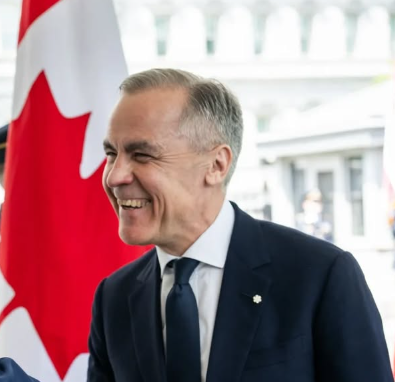
Canadian Prime Minister Mark Carney’s endorsement of the plan marks a significant shift in Ottawa’s foreign policy tone. In his September 29 statement, Carney called Trump’s proposal “historic” and urged all sides to help it “realize its full potential.” Coming from a leader who recently recognized Palestinian statehood at the UN breaking from Canada’s traditionally neutral stance this is a noteworthy alignment with Washington’s new diplomatic push.
The plan itself is sweeping in scope. It calls for Hamas to release all remaining hostages within 72 hours of Israel’s acceptance. In return, Israel would free over 1,900 Palestinian prisoners and repatriate the remains of 15 Gazans. It also demands Hamas disarm entirely, offering amnesty and relocation for those who renounce violence. In theory, this could mark the first genuine roadmap toward a demilitarized and politically viable Gaza.
But theory and reality are often worlds apart in this region. Hamas has not yet responded to the plan, while its ally, Palestinian Islamic Jihad, has outright rejected it branding it a “recipe for blowing up the region.” Trump, never one to mince words, has set a firm deadline, warning Hamas that refusal will lead to Israel resuming full-scale military operations with U.S. backing.
Critics might dismiss this as another heavy-handed American attempt at peace, but the difference this time lies in the breadth of international buy-in. Saudi Arabia, Egypt, Turkey, and even the Kremlin have all expressed support for the initiative. Such convergence of interests among rivals is rare and could create a diplomatic window that hasn’t existed since the early 1990s.
Carney’s response deserves attention too. His government, while often critical of Israel’s handling of humanitarian aid in Gaza, appears ready to play a constructive role in post-conflict rebuilding. Canada has already organized aid drops and now promises to help coordinate large-scale relief efforts if the deal takes hold. This could be a defining moment for Canada’s return to meaningful peacekeeping a role it once led proudly on the world stage.
Still, the plan is not without its risks. It places heavy faith in Trump’s ability to manage an interim technocratic government for Gaza, and in the willingness of Arab states to fund reconstruction without political strings attached. The creation of an “Arab and international force” to secure Gaza is another gamble; multinational forces in the Middle East have a checkered record at best.
Yet perhaps this is exactly the kind of gamble the world needs. Decades of diplomacy, half-hearted truces, and cyclical wars have only deepened despair. The recognition of a Palestinian state by countries like Canada, France, and the UK signals a growing impatience with the status quo and a belief that bold moves, however controversial, are better than endless waiting.
Carney put it aptly when he said, “The next few weeks could be decisive.” For once, that doesn’t sound like political hyperbole. Whether this peace plan succeeds or collapses will shape the Middle East for a generation. And if it does succeed, it may just remind the world that even in the most entrenched conflicts, hope is still worth betting on.

