
When migrating clouds float in the autumn sky, when the gentle breeze blows, bathed in mist, when the green leaves are dressed in colorful colors in winter sleep, then it seems that this is the puja! The melodious sound of the dhaka rang in the mind, the vast forest of the river bank floated, and the mother’s gaze across the horizon.
How long have I left the country? It has been two decades since I built a house abroad. But even today, the rain falls in my mind, the fog falls in the new forest, I become that little teenage boy, picking the flowers of the shefali with my bare feet. I remember my teenage life full of inadequacies. The old me who waited all year for a new dress, new shoes. Big memorable days! When will the busy khalifa make my clothes, when will the potter give it to the clay idol with the touch of cotton – what restless waiting those days would pass! As I grew up as a teenager, I lost those teenage emotions as absolutely unnecessary. But today I wonder if nothing is lost. Although I didn’t make much of a secret of what I brought with me to Pearson Airport, I didn’t even know that I had hidden in my heart my culture, my heritage, my traditions.
More than two decades ago, when I left my native land and set foot on Canadian soil in search of fortune, I discovered their presence in my heart. Sisters used to call from the country with the news of Bhai Phonta. How long have I been looking at the water of the unknown flowers that bloomed like the flowers of the brother-in-law on the banks of the river, the leaves of the birch like the leaves of the banyan tree swayed in the gusty wind, how long I have sat under its shade thinking of the birch as a banyan tree. I thought they were my own! Later I realized that this feeling of mine, this lamentation of mine, originated from my close attachment to my own culture.
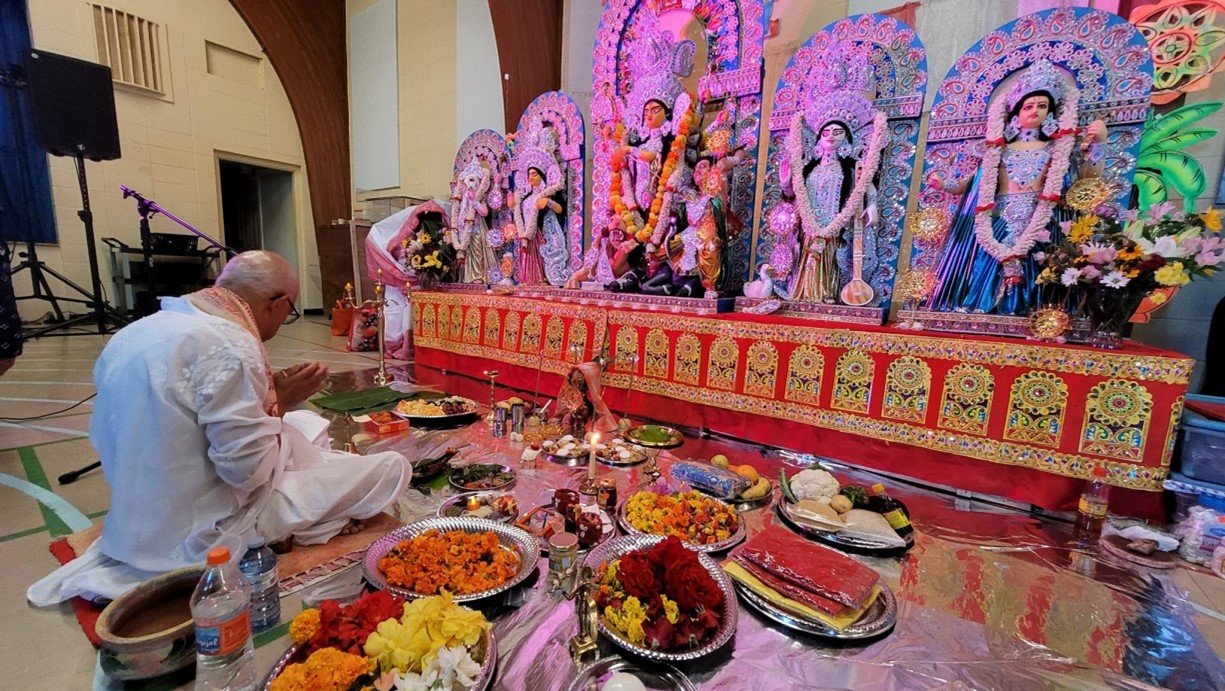
So displaced migrants like me hear the arrival of spring in the snow-covered nature, the bone-chilling cold air burns in the heat of summer. Sing – come O Baisakh, come come. I see the presence of thousands of people in the worship of Toronto. On the occasion of worship, forgetting the differences of religion and caste, it seems to see thousands of souls unite – how well-developed is our existence among the diverse population of Canada!
I would like to get to know those who are constantly trying to keep their culture alive in the next generation in this foreign land. Over time I became associated with a cultural group called KWGC that developed in Waterloo, Kitchener. KWGC is the Kitchener, Waterloo, Guelph, Cambridge Cultural Group. It can be said that Waterloo Metropolitan, consisting of Waterloo, Cambridge, Kitchener and some of its adjacent townships, is a particularly prosperous township in the western, southwestern region of the province of Ontario, Canada.
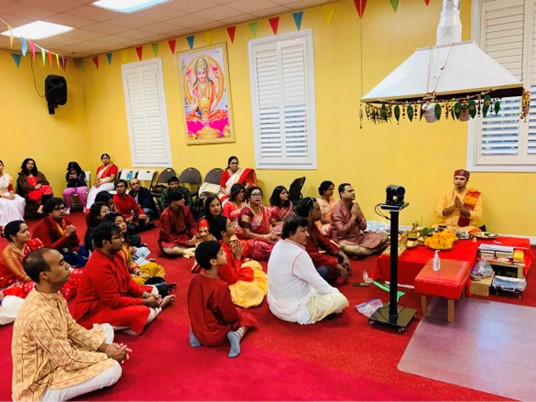
Composed of a diverse population, the region is particularly known for its rich technology, innovative sector, world-class educational institutions, manufacturing, healthcare and various industrial establishments. Among the growing population in the region, the number of Bengali speakers is not significant but not less. With that in mind, in 2010, Uta Chatterjee, Robin Chatterjee and some of their friends came forward to celebrate Durga Puja, one of the most celebrated festivals in Bengali culture. The great initiative of Durga Puja, the festival of Bengali life, was later created by a cultural group called KWGC Cultutal Group. Recently the symbolic idol has been replaced by a giant mother idol. Today, more than three hundred Bengali speakers have gathered under the banner of this cultural group. Although KWGC has no temple of its own, two major Bengali festivals like Durga Puja and Saraswati Puja are celebrated with great pomp and ceremony in the local church every year amidst puja-parban and cultural events.
Also joined another self-made cultural group called SBCA. In addition to KWGC, another group called SBCA (Sanatan Bengali Cultural Association) has been formed with the increasing arrival of Bengali speakers and their association with Canadian values, whose purpose is not limited only to worship. SBCA is today a registered organization to be involved in all major Sanatan religious festivals – such as Janmashtami, Durga Puja, Lakshmi Puja, Diwali (Kali Puja), Saraswati Puja as well as other social activities like food drive, cloth drive to help the underprivileged, homeless, drug addicted population of the society. The journey of SBCA began with the celebration of Lakshmi Puja. After the break during the Corona period, SBCA is going to celebrate Durgotsava for the first time after successfully celebrating Lakshmi Puja, Saraswati Puja with the active participation of hundreds of Bengali speakers. SBCA is making relentless efforts to introduce the new generation to our Sanatan Dharma and Bengali cultural heritage.
Also, I developed a relationship with some Bengali cultural activists from other parts of Bengal who are responsible for their own culture. I eagerly listen to the history of their immigration to Canadian soil half a century ago when Canada was only open to Europeans. Subsequently, Pierre Trudeau’s new immigration policy gave Asians a foothold on Canadian soil. Racism comes up in words. Back then, any housewife wearing a sari would be pelted with stones by overzealous Canadians of different races. Even if the police saw it, they would remain calm. In the 1980s, this situation gradually changed. Saraswati Puja started in Waterloo’s sister city of Cambridge in the early eighties with the help of a European teacher. At that time there were only eight to ten Bengali families in Waterloo, Kitchener, Cambridge and Guelph. In the course of time, hundreds of Bengali speakers are resounding in the puja today. Here the young and the old sit side by side. Today, our new generation stands on the stage with us, they recite Ravithakur’s poems, ballads. Today their voices resound with the traditions of their culture –
সর্বমঙ্গলা মঙ্গল্যে
শিবে সর্বার্থসাধিকে
শরণ্যে ত্র্যম্বকে গৌরী
নারায়ণি নমোহস্তুতে

