
Ontario’s latest hiring freeze across all 143 provincial agencies, boards, and commissions feels less like a bold fiscal strategy and more like a political reflex a move designed to look decisive without truly addressing the province’s long-term financial challenges.
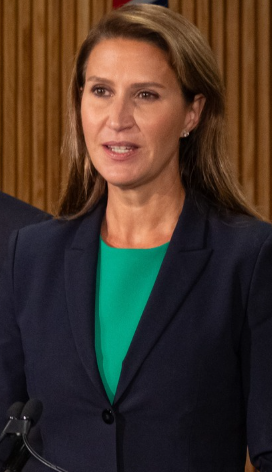
Treasury Board President Caroline Mulroney’s announcement on September 26 came wrapped in the language of “discipline” and “responsibility,” pointing to the need to rein in public spending as agency payrolls have ballooned at five times the rate of the Ontario Public Service (OPS) since 2023. On paper, that sounds like a reasonable step toward efficiency. But when you dig deeper, it’s hard not to see this as yet another temporary patch on a system that keeps growing faster than the government’s willingness to modernize it.
This hiring moratorium, effective September 27, mirrors the one Premier Doug Ford implemented in 2018 after his Progressive Conservatives came to power a freeze that, tellingly, remains in effect today. The déjà vu is striking. If the first freeze was supposed to streamline bureaucracy, why is there now a need for another one?
Mulroney insists the move won’t affect public services, pointing out that roughly 100,000 people are already employed across the affected agencies. That might be true in the short term, but anyone familiar with public administration knows freezes tend to have ripple effects. Positions go unfilled, workloads increase, and the quality of service can quietly erode over time. “Business-critical” roles can still be filled with government approval but bureaucratic approval processes rarely move quickly, especially under a hiring freeze.
Critics, including Ontario Liberal MPP Stephanie Bowman, argue that the government’s approach is more optics than substance. “Their solution? A vague promise to ‘freeze’ hiring – with no details on savings,” she said, adding that Ontario’s ballooning debt now nearing half a trillion dollars continues unabated. It’s a fair point. A freeze saves some dollars today, but it does little to curb the structural spending that drives debt tomorrow.
It’s also hard to ignore the timing. The announcement came on the heels of the government revealing a surprisingly small $1.1 billion deficit for the 2024-25 fiscal year, far below the forecasted $9.8 billion. While that may look like good news, it raises questions about whether the hiring freeze is a genuine cost-control measure or simply a political signal meant to reinforce the image of a fiscally disciplined government.
And then there’s the context of workplace policy. Just weeks before this freeze, the Ford government ordered all public servants back to the office full-time by January 2026. Combined, these two decisions paint a picture of a government eager to tighten its grip on a sprawling public sector less flexibility, more control.
Ontario’s agencies, from Ontario Health and Legal Aid Ontario to Metrolinx and Infrastructure Ontario, deliver vital services and manage massive projects that shape daily life in the province. A freeze on “independent hiring” risks slowing innovation and burdening those who remain. Yes, some restraint may be necessary, but it’s worth asking whether a one-size-fits-all freeze is the smartest way to achieve it.
Ontario doesn’t just need fewer hires it needs smarter management, long-term fiscal planning, and genuine efficiency reforms. Otherwise, this latest freeze will end up just like the one before it: a symbolic gesture that melts away the moment real challenges heat up.

