
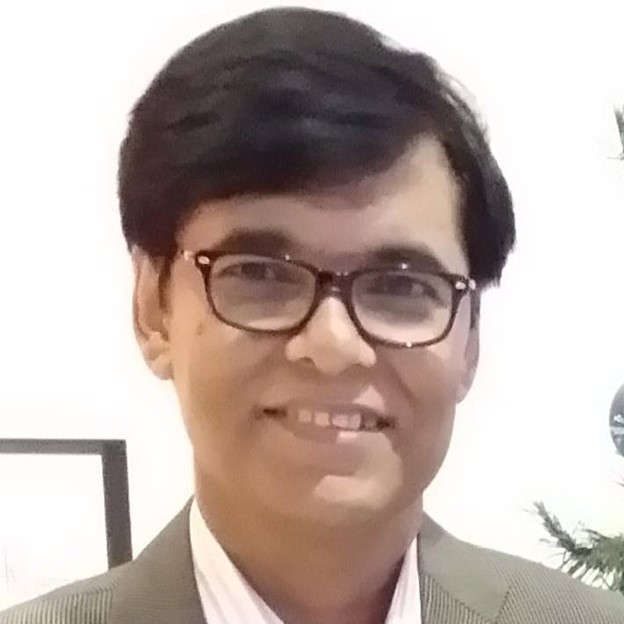
About the second half of the seventies. I was working in Chittagong daily freedom. Literary Mahbub-ul Alam, novelist Sucharit Chowdhury, Dilara Hashem and many others used to write in our newspaper. The editor was the Governor General Abdullah-al Haroon of Chittagong North District who was declared a pure politician of those days. Although Harunbhai was an Awami politician, politicians from all walks of life used to visit his office. Especially left wing writers. Dhaka journalist Samiul Ahmed Khan, poet Arunabh Sarkar and many others used to send writings to ‘Swadhinta’. It was 45 years ago – so I can’t remember everyone’s names. After joining the American multinational Pfizer in 1980, I was almost cut off from the world of literature and journalism during my stay in Rajshahi. However, while working at Pfizer I started editing medical magazines published by Cancer Shelter and Heart Foundation from Rajshahi. Besides, I had to regularly take care of the editorial care of Rotary Club souvenirs. Returning to Dhaka at the end of the last century, he got involved in editing the annual magazine of the Institute of Personnel Management.
I came to Canada with immigration in 2006. In the city of Toronto, on the occasion of the autumn Durga Puja, two annual magazines called ‘Neelkamal’ of Dharmashram and ‘Chinmayi’ of Cultural Temple were regularly published. I was surprised to see that the writings of these memoirs were based on religious issues. Community papers, but there was no scope for literary practice in these papers. I felt pain, and when I saw that there is no separate department for children and teenagers, there is no initiative. Until 2009, I abstained from writing in these memoirs.
Then I looked at my past. When I was a teenager myself; In 1972, while studying at Chittagong College, I edited a wall magazine called ‘Ayna’. This ‘mirror’ is my entry into the world of editing. In 1973, when Nobel laureate Pablo Neruda was killed in Chile by the US conspiracy, a memoir called ‘Usago’ was published by our Village Cultural Group (Usago) under my editorship. From the North Amirabad MB High School of the same village, the first and last literary magazine of the memory period, ‘Prarthit Anangwa’, was published in 1978 under my editorship.
In the midst of my thoughts of the past, one day a favorite face of the local community – freedom fighter Sanjit Das – suddenly entered. He was then the founder president of Baba Loknath Ashram (BLA). After meeting and befriending him, volunteering in his organization somehow got me involved with BLA. BLA mouthpiece ‘Anjali’ debuted in 2009 on the occasion of Tirodhan Divas of Loknath Brahmachari. As the community’s first literary magazine, the wisdom of ‘Anjali’ has inspired readers. William Blake’s ‘Ah! My editorial with reference to the poem ‘Sunflower’ caught the attention of literary critics. People of the intellectual genre gradually got involved in the spiritual bond with ‘Anjali’. For the last fourteen years, ‘Anjali’ has been published every year in June, keeping the form and character of a literary magazine intact, eschewing the status of a memoir on the occasion of Tirodhan Divas of a Brahmachari.
In 2009, Kajal Chowdhury of Dharmashram spoke to me after receiving the publication of ‘Anjali’. He asked me to write for the Sharad issue of ‘Neelkamal’ to be published in September of the same year. I give him an essay on spirituality in the poetry of TS Eliot. In 2010, he called me Dr. Along with Arun Bhowmik and others, he was included in the editorial board of ‘Neelakamal’. In 2011, I took over the responsibility of editing ‘Neelkamal’ with the full cooperation of Kajal Chowdhury. Everyone concerned expressed satisfaction with the magazine’s cover, body-decoration, posture, decoration and content. Respecting the sincere requests of the readers and Dharmasram leaders, I have been editing ‘Neelakamal’ ever since.
It is time to change the day. “Neelkamal” has now crossed the stage of “memoir” and is elevated to the stage of literary magazine. This paper now prints the writings of all Bengali writers including Hindus, Muslims, Buddhists, Christians. Any writing that undermines communal harmony will not be accepted in this magazine. In addition to autumnal culture-based writing, ‘Neelkamal’ is open to any type of free-spirited writing, including short stories, poems, essays, fiction, travelogues, book-discussions, science, research.
There is a separate section called ‘Chotpur’ for children and teenagers. Almost all of them write in English. Some draw pictures. They write on various topics including health, science, space, Indian mythology. There is no excuse for neglecting them because they are small. The writings of the elder as well as the younger are now included in the index of ‘Neelakamal’ with great intellectual dignity and respect. All author’s writings are published with author’s photos.
There are many writers in the Toronto community now. The picture was different for the first year after taking charge of editing ‘Neelakamal’. There was a considerable shortage of quality writing. No one was interested in writing. It took a long time to create a target list and go after different people. One of the people I have brought into the writing world has already had two books published. A local weekly writes. An accountant is now writing regularly in ‘Neelkamal’. A lady visited Shanti Niketan. Using some notes taken from him, I wrote a text and printed it once. Many have praised the article. Told another accountant. He also never wrote. He had just completed his daughter’s marriage and arrived at a social function. When I met him, I found out that although his daughter’s marriage was completed in Toronto, he missed his father in Bangladesh very much. I said to him, write a letter telling your father that you missed his granddaughter’s wedding. A few weeks later, he handed me a letter addressed to his father. When that letter was made into an article and printed in ‘Neelkamal’ magazine, the writer himself danced with joy and wonder. I have not revealed anyone’s name so far. Now let’s talk about one. He is the late Rabindra researcher Dr. Karunamaya Goswami’s wife Shipra Devi. I folded my hands and said to Didi, why don’t you write in the past, you should write about some of Sir’s achievements. He kept his word. He gave me a wonderful writing that day. Pranam to Didi.
The number of authors has increased. A new problem has started. Although it is said to write within 1,900 words, some writers write more than 5,000 words. When called, the writer politely said that it is not possible for them to do this difficult task. Therefore, hours upon hours are spent adjusting the message of the article and adjusting the editing criteria to bring the text to a certain size. Pay attention to grammar, punctuation, standard spelling and other embellishments. The level of editorial pain is heightened when an author sends me a Google translation. Then you can’t read, you can’t bear it. My past came to the fore again. I remember, while working as a feature editor in daily freedom, I threw some writers into the garbage because their writings were not up to standard. When I came to do unpaid community work in immigration, I realized that there is no achievement in moving. Google Translate is a bad word for ‘non-food’. The unlucky editor has to take the responsibility of elevating the Googled ‘non-food’ to the level of ‘food’ for the enlightened reader while keeping the nutritional value, taste, color and smell unchanged.
Along with pain there is also joy. In the beginning, a writer wrote some of his writing on the back of a no-frills grocery bill. I did not suffer then. While working in a newspaper office, I saw the writer Mahbub-ul Alam once pin some of his writings on the reverse side of a small bus ticket and food thong. Margaret Atwood, however, before the advent of computers, used to take notes on paper towels while sitting in a restaurant; He used to use the notes on the typewriter while sitting at night.
Our community scholars Dr. I would like to present an observation of Dilip Chakraborty to the reader. In 2022, CEO of NRB Television, Shahidul Islam Mintu, after the unveiling ceremony of ‘Neelkamal’ autumn issue. Chakraborty spoke to NRB Television. Author Tasmina Khan was doing the interview. Dr. in response to a question. Chakraborty said, he first went to the editorial column with ‘Neelkamal’ in hand. This column is an exceptional attraction for him. Note that each of our editorials is constructed at the intersection of literature and mythology. Dr. is in the editorial board. Arun Bhowmik and Ashish Roy. Chitta Bhowmik works tirelessly with advertisers as a business editor. There is technical editor Samarendra Ghosh. The writings of writers from different countries including Canada, Bangladesh, India, United Kingdom, United States, Germany continue to enrich our literary magazine; We are very grateful to them. I am grateful to Subrata Kumar Das, Editor-in-Chief of the Special Autumn Issue of BanglaMail, who took the initiative to document my editorial experience in a concise manner.

