
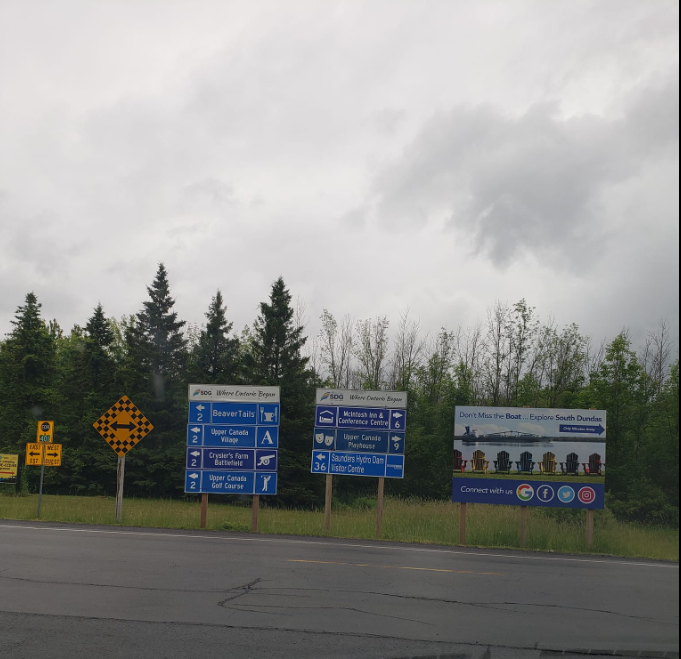
Canada’s next chapter is not being written in glass towers or downtown boardrooms. It is taking shape along gravel roads, in small towns, and across rural regions that were once considered peripheral to the country’s economic story.
What began as a cascade of crises the COVID-19 pandemic, a worsening housing affordability breakdown, and the rapid rise of artificial intelligence has unexpectedly opened the door to a national rebalancing. Across the country, Canadians are leaving major cities in significant numbers, reshaping where people live, how they work, and what it means for Canada to remain resilient in an increasingly uncertain world.
The pandemic did more than disrupt daily life. It exposed structural weaknesses that had accumulated over decades. When global supply chains seized up, Canada found itself dependent on foreign producers for essentials ranging from medical equipment to pharmaceuticals and industrial inputs.
Factories abroad shut down. Shipping routes stalled. Shortages followed.
For many policymakers, the moment marked a hard lesson: a country that cannot produce critical goods within its own borders is vulnerable not just economically, but strategically. Economic sovereignty, once an abstract concept, became a matter of public safety and national security.
At the same time, something else was unfolding inside Canada’s borders. Remote work, lockdowns, and skyrocketing housing costs triggered one of the largest internal migration shifts in modern Canadian history.
Between 2019 and 2023, hundreds of thousands of residents moved out of Canada’s largest metropolitan areas and into smaller cities, towns, and rural regions. What had once been a slow trickle became a surge.
In cities like Toronto and Vancouver, the cost of homeownership climbed to levels that put detached houses far beyond the reach of median-income families. Younger Canadians, facing limited prospects and shrinking living space, began looking elsewhere not for novelty, but for viability.
That “elsewhere” increasingly meant rural Canada.
This migration has been reinforced by a deeper change in the labour market. For decades, Canada encouraged white-collar career paths, while skilled trades quietly declined in social status and enrollment.
Artificial intelligence is now reversing that trend.
Many office-based roles once seen as secure are among the most exposed to automation. Tasks in coding, analysis, and documentation are increasingly handled by AI systems that work faster and at lower cost.
By contrast, the skilled trades are gaining renewed importance. Construction, welding, electrical work, heavy equipment operation, and power systems maintenance require physical presence, judgment, and hands-on problem-solving skills that machines cannot easily replace.
These are also precisely the skills Canada needs to rebuild manufacturing capacity, expand energy infrastructure, and address chronic housing shortages.
Rural and mid-sized communities offer advantages that major cities are struggling to match. Land is more affordable. Housing is attainable. Space is available for energy-intensive and industrial projects that face resistance or prohibitive costs in dense urban cores.
These regions are also becoming magnets for families seeking stability. Lower population density, reduced congestion, and access to nature are increasingly linked to better mental well-being. Community life tends to be more interconnected, fostering social trust and shared responsibility.
For many newcomers, rural living is not about isolation. It is about participation becoming visible contributors to local economies, schools, and civic life.
Canada’s long-term prosperity still depends on productivity, and productivity depends on people who can build, repair, and operate real-world systems. Power grids, farms, mines, factories, and homes cannot be automated away.
As the digital economy evolves, the physical economy is reasserting its importance. Food security, energy independence, and domestic manufacturing capacity are no longer niche policy concerns they are central to national resilience.
Increasingly, the workforce capable of sustaining those systems is choosing to live beyond the big cities.
Canada did not plan this transformation. It was accelerated by crisis. But the direction is now clear.
The country faces a choice: attempt to preserve an urban-centric economic model under growing strain, or lean into a more dispersed, resilient, and productive national framework that includes its rural heartlands as central players.
The “Rural Renaissance” is not a retreat from modern life. It is an adaptation to economic reality, technological change, and geopolitical risk.
The opportunity it presents is substantial. And as the past few years have shown, the path to national renewal may run not through the skyline but through the countryside.

