
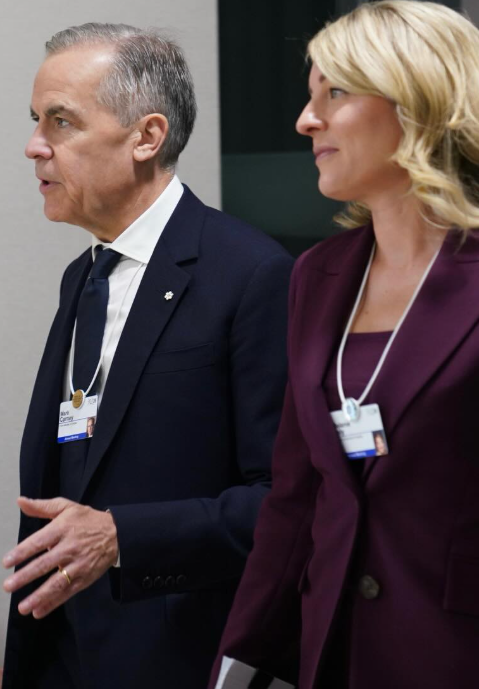
Canadian Prime Minister Mark Carney is set to address Australia’s Parliament during an official visit in March, Australian Prime Minister Anthony Albanese confirmed on January 24.
Albanese revealed the plan during a television interview with the Australian Broadcasting Corporation, describing Canada as a “like-minded” partner whose democratic values and global outlook closely align with Australia’s. While he did not outline the specific agenda for the visit, Albanese suggested that discussions would take place against the backdrop of rapidly changing international politics.
The Australian leader also praised Carney’s recent foreign policy speech delivered at the World Economic Forum in Davos on January 20. In that address, Carney warned that the long-standing rules-based international order is giving way to heightened rivalry among major powers, with trade, tariffs, and supply chains increasingly used as strategic tools.
“Economic integration is being weaponized,” Carney said in Davos, cautioning that countries can no longer assume mutual benefit when integration becomes a source of vulnerability or pressure.
Albanese noted that Carney’s remarks echoed themes from his own speech at the United Nations General Assembly last September, emphasizing the growing role of “middle powers” in promoting stability through cooperation. “We need greater collaboration as the global balance continues to shift,” Albanese said, adding that Australia remains deeply engaged with international partners, including Canada.
However, Carney’s comments drew sharp criticism from U.S. President Donald Trump, who referenced both Canada and its prime minister during his own Davos appearance on January 21. Trump claimed that Canada benefits disproportionately from its relationship with the United States and suggested Carney should be more appreciative.
Carney pushed back a day later in a nationally televised address from Quebec, stating that Canada’s success is rooted in its own institutions, people, and identity, not dependence on any other country.
Tensions escalated further when Trump later withdrew Canada’s invitation to join a U.S.-led “Board of Peace,” a multinational initiative that includes representatives primarily from Asia and parts of Europe and Latin America. Carney was the only leader publicly informed that his invitation had been revoked.
Back home, Carney also faced criticism from Conservative Leader Pierre Poilievre, who acknowledged the prime minister’s eloquence but questioned the tangible results of his international outreach. Poilievre urged the government to prioritize domestic concerns, including energy infrastructure, defence spending, crime, housing affordability, and economic pressures.
In response, Carney said the new parliamentary session would focus on strengthening economic cooperation between federal, provincial, and territorial governments. He also outlined plans to reform the criminal justice system, enhance border security, and invest more heavily in defence and artificial intelligence.
As Carney prepares for his address in Canberra, his visit is expected to underscore closer Canada–Australia ties at a time when both countries see a growing need for cooperation among mid-sized powers navigating an increasingly competitive global landscape.

