
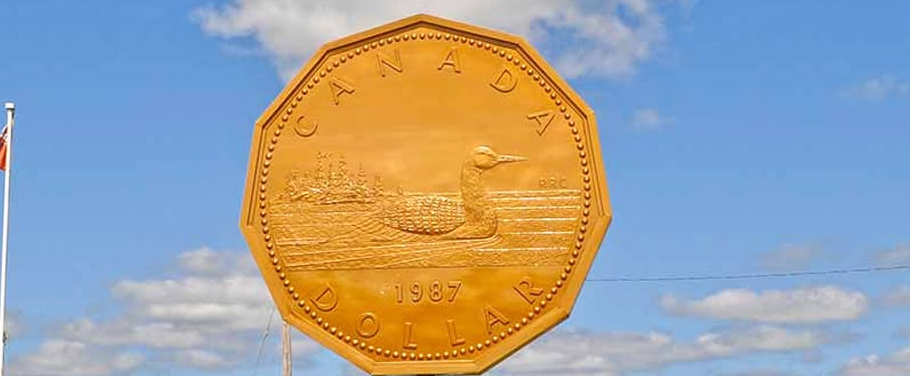
The loonie’s latest dip reflects a perfect storm of trade tensions, rising inflation, and a central bank caught between competing crises.
The Canadian dollar has quietly slipped back to some of its weakest territory in over a year, closing at around 70 cents to the U.S. dollar last week a level that’s stirring fresh anxiety among economists and everyday Canadians alike.
The currency, widely known as the loonie, hovered at that mark on both June 25 and 26, echoing the turbulence of early 2025 when the greenback’s surge first rattled the country’s financial markets. Back in February, the dollar had dipped even lower to 68 cents as Washington rolled out sweeping protectionist trade measures targeting Canadian exports. Those wounds, it seems, have not fully healed.
Part of what’s pushing the Canadian dollar down isn’t just domestic trouble it’s the American dollar pulling ahead. The U.S. dollar hit a one-year high this week, driven largely by signals coming out of the Federal Reserve. At a June 17 news conference, Fed Chair Kevin Warsh made clear that taming inflation remains the central bank’s top priority. The Fed held interest rates steady for now, but the mere hint of future hikes was enough to send the greenback climbing. Higher interest rates, after all, tend to attract foreign investment and push a currency upward.
American inflation stood at 4 percent in May still elevated while Canada’s own inflation came in at 3.2 percent the same month.
Bank of Canada Governor Tiff Macklem didn’t mince words at the bank’s June 10 rate decision. He acknowledged that persistently high energy prices could force the bank’s hand toward raising rates a move that would help shore up the loonie but at the same time, new U.S. tariffs on Canadian goods are squeezing economic growth in a way that might actually demand rate cuts.
The two pressures, he said, pull in opposite directions. It’s a bind few central bankers would envy.
Macklem’s comments came just days after Statistics Canada published figures showing the economy had contracted for two consecutive quarters on an annualized basis a milestone that meets the widely accepted textbook definition of a technical recession.
That said, the C.D. Howe Institute’s Business Cycle Council the body considered the final word on recession calls in Canada urged caution, saying it was still too soon to draw firm conclusions about whether a full recession had taken hold.
For ordinary Canadians, a weaker dollar means their purchasing power shrinks imported goods from the United States become more expensive, from groceries to electronics. Cross-border shopping trips become a harder sell.
But there’s a flip side. A lower loonie makes Canadian goods and services cheaper for foreign buyers, which could give a boost to manufacturers looking to compete in export markets. It also makes Canada a more attractive destination for American and international tourists, who suddenly find their money stretches further north of the border.
Whether that silver lining is enough to offset the broader economic headwinds remains to be seen and with trade tensions still simmering and central banks walking a tightrope, few are predicting smooth waters ahead.

