
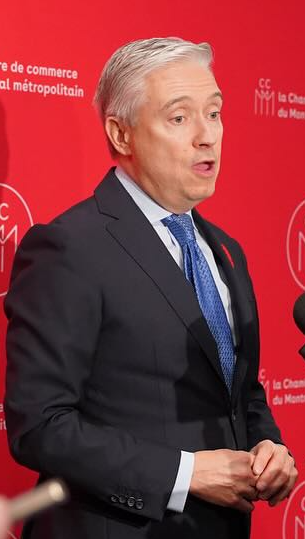
Finance Minister François-Philippe Champagne’s visit to Washington, D.C., this Sunday and Monday may not dominate headlines, but it speaks directly to one of the most consequential economic and geopolitical issues of our time: who controls the future supply of critical minerals.
According to the federal government, Champagne is meeting with his G7 counterparts and other “like-minded countries,” including participating in a finance ministers’ meeting on critical minerals supply chains hosted by the U.S. Treasury Secretary. On the surface, this sounds like routine diplomatic engagement. In reality, it is part of a much larger global race one Canada cannot afford to lose.
Critical minerals such as lithium, nickel, cobalt, and rare earth elements are the backbone of clean energy technologies, electric vehicles, advanced manufacturing, and national security. At present, China dominates both extraction and, more importantly, refining and processing. This dependence has become an uncomfortable vulnerability for Western economies, particularly as geopolitical tensions rise.
Champagne himself acknowledged this urgency in December, arguing that it is time for Canada to move decisively on the extraction and refining of critical minerals. He also made it clear that Canada is well positioned to help Europe reduce its reliance on China. He is right but words must now translate into speed and scale.
The groundwork is already there. At the G7 meeting in Kananaskis, Alberta, last June, member countries launched an action plan and a production alliance on critical minerals. This was a strong signal of shared intent: diversify supply chains, invest in trusted partners, and reduce strategic dependence on authoritarian regimes. Canada’s announcement in October of the first projects emerging from that alliance was a positive step, showing that cooperation can lead to tangible outcomes.
Still, the challenge ahead is enormous. Canada has abundant resources, political stability, and strong environmental standards advantages few countries can match. Yet projects often face long approval timelines, regulatory uncertainty, and infrastructure gaps. Meanwhile, global demand is accelerating, and competitors are moving fast.
Champagne’s meetings in Washington should be seen as more than diplomatic courtesy calls. They are a test of whether Canada is ready to step into a leadership role or remain a promising supplier that never fully delivers. If Canada truly wants to be a reliable partner to the U.S. and Europe, it must pair international coordination with bold domestic action: faster permitting, smarter investment incentives, and a clear strategy for refining and value-added processing at home.
The world is reorganizing its supply chains. This moment will not last forever. Canada has a rare opportunity to shape the future of critical minerals in a way that supports economic growth, climate goals, and global security. The question now is whether we move quickly enough to claim that role or watch others do it instead.

