
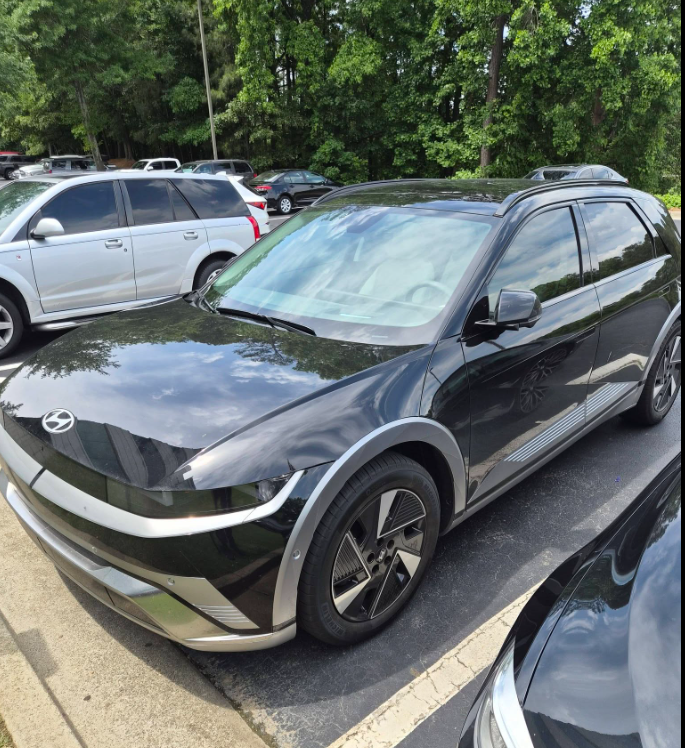
Canada’s revived electric vehicle subsidy program has seen a wave of early uptake with nearly $122 million in rebates claimed in just its first few months yet the rollout hasn’t been without friction. Car dealerships across the country say they’re still waiting on reimbursements, and some are carrying hundreds of thousands of dollars in costs on the government’s behalf.
Transport Canada released the public database for the Electric Vehicle Affordability Program (EVAP) this week, roughly three months after the program quietly relaunched on February 16. The numbers paint a picture of genuine demand: 24,389 claims filed, and $122 million committed out of a total $2.275 billion budget spread across up to five years.
But buried beneath those headline figures is a more complicated story.
The Canadian Auto Dealers Association isn’t mincing words. While Ottawa has been busy trumpeting EV adoption numbers, dealers on the ground say the promised reimbursements haven’t been flowing quickly enough. Some dealerships are sitting on more than $200,000 in rebates they’ve already passed along to buyers and are now waiting to recover.
“The commitment to pay dealers in a timely manner has not happened in the early days of the program,” said Huw Williams, the association’s spokesperson. “There does not seem to be an appreciation that the timelines for repayment are hurting business cash flow. This is money we are advancing on behalf of the federal government.”
The program’s structure puts dealers in an awkward position: they apply the rebate directly to a customer’s purchase price and then seek reimbursement from Ottawa. It’s a system that works when payments come through. When they don’t, it’s the dealer absorbing the hit.
Adding insult to injury, some claims have been rejected outright due to minor administrative errors a wrong sale date here, a typo there. And there’s currently no appeal mechanism in place for denied claims, leaving dealers with little recourse.
Transport Canada acknowledged the frustrations. The department said it is reviewing cases where administrative errors may have resulted in rejected claims, and stressed that legitimate, validated submissions continue to be processed. “There is no hold on repayments,” it said in a statement. But it also acknowledged that processing timelines can vary.
This isn’t the first time Canada’s EV rebate program has stumbled at the seams. The original federal incentive, launched in 2019 and repeatedly refunded, was shut down in January 2025 after its final allocation was exhausted. The effect on the market was swift and telling EV sales as a share of total new vehicle purchases dropped from roughly 18 percent in the program’s final months to below 10 percent almost immediately after it lapsed.
When EVAP launched again in February, the rebound was equally dramatic. March sales jumped more than 80 percent compared to February a spike that underscored just how price-sensitive EV buyers remain.
But dealers still carry the scars from the previous program’s chaotic finale. “All dealers lost a degree of confidence since the massive iZEV program delays last year,” Williams noted. “We want this program to succeed and we have made that clear to the government.”
The most popular model under the new program so far has been the Toyota bZ4X, racking up 4,088 claims. The Chevrolet Equinox EV followed at 3,065. Canadian-built vehicles currently limited to the Dodge Charger and Chrysler Pacifica are exempt from the program’s $50,000 price cap and have seen modest uptake, with 59 and 14 claims respectively.
Notably absent from the list: Tesla. Chinese-manufactured EVs a category that includes most Teslas sold in Canada are ineligible for the rebate under a rule restricting the program to vehicles from countries with which Canada has free-trade agreements. That’s a striking exclusion given that Teslas accounted for roughly 30 percent of all rebates under the old iZEV program between October and November 2025.
The new program offers up to $5,000 toward a new battery-electric vehicle and $2,500 toward plug-in hybrids, with eligibility limited to models under $50,000. Rebate amounts are set to shrink each year until the program winds down in 2030 or until the funding runs dry, whichever comes first.
Ottawa’s stated goal is to get 840,000 new EVs onto Canadian roads. At the current pace, the math is workable but only if the system behind the scenes can keep up with the demand in front of it.

