
Canada has made it clear that it will not pay a reported US$1 billion fee to join the proposed “Board of Peace,” a new entity announced by U.S. President Donald Trump to oversee the stabilization and reconstruction of the Gaza Strip.
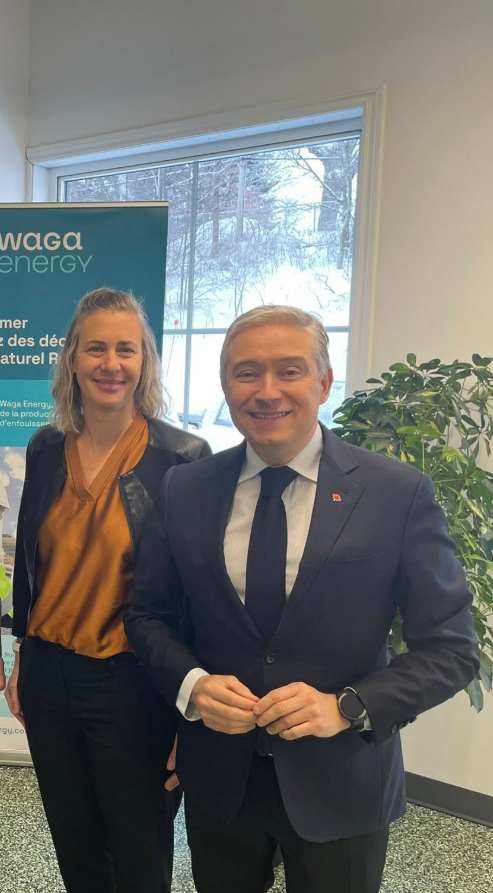
Speaking to reporters on Jan. 20 at the World Economic Forum (WEF) annual meeting in Davos, Finance Minister François-Philippe Champagne said Ottawa’s position is firm on the issue of funding.
“There’s a lot of details to be worked out, but one thing which is clear is that Canada is not going to pay if we were to join the Board,” Champagne said.
While official details of the Board of Peace have yet to be released, a U.S. official indicated that countries seeking a permanent seat would be required to contribute $1 billion, with the funds earmarked for Gaza’s reconstruction. Nations may also participate without paying the fee, but only for a three-year term.
Prime Minister Mark Carney addressed the issue earlier the same day but stopped short of ruling out financial contributions altogether. Asked whether Canada would pay the entry fee, Carney said Canada would support Gaza through other means.
“We would write cheques and deliver in kind to improve the welfare of the people” of Gaza, he said following a speech at the WEF.
The proposed board has drawn a mix of international reactions. Russian President Vladimir Putin has reportedly been offered a seat, while Belarusian leader Alexander Lukashenko has said he has officially joined. Asked whether Canada would still participate if Russia is involved, Champagne said discussions are ongoing.
“There’s a lot to be worked out,” he said, adding that Carney believes it is important for Canada’s voice to be heard internationally. “The prime minister will have to make the final decision when all the facts are known and all the details have been hammered out, whether this is in the best interest of Canada to be part of.”
Several Trump allies, including Argentine President Javier Milei and Hungarian Prime Minister Viktor Orbán, have accepted invitations to join the Board. Milei later shared Trump’s invitation letter on social media, suggesting the body could eventually address broader global conflicts beyond Gaza.
France, however, has been hesitant. Paris is among eight European countries Trump has threatened with tariffs over their opposition to a U.S. takeover of Greenland. Trump has also warned he could impose 200 percent tariffs on French wines to pressure President Emmanuel Macron into joining the Board.
During a visit to Qatar on Jan. 18, Carney said Trump had invited him to join the Board weeks earlier and that he had accepted the offer “in principle.”
Trump formally announced the launch of the Board of Peace on Jan. 15, naming founding executive members that include U.S. Secretary of State Marco Rubio, senior White House advisers, and former British prime minister Tony Blair.
The announcement coincides with the second phase of Trump’s 20-point peace plan for Gaza. On Jan. 16, the White House said Palestinian official Ali Shaath would lead a transitional technocratic administration in the Strip, while U.S. Major General Jasper Jeffers would command the International Stabilization Force.
These developments follow a ceasefire agreement reached between Israel and Hamas in October, ending two years of war that began after Hamas launched raids inside Israel in October 2023.
Following his Davos speech, Carney welcomed the recent moves related to Gaza and the creation of the Board of Peace, calling it “a positive vehicle.”
“Our view is, we need to work on the actual structure of the vehicle,” he said.
Carney also said Canada currently sees the Board as focused on Gaza, citing United Nations Security Council Resolution 2803, which references such a body for the territory. However, he acknowledged it could evolve over time.
“Is it for Gaza? … That’s where we see it becoming immediately operative,” Carney said, adding that it should be designed first to meet Gaza’s urgent needs.
Trump has described the Board of Peace as a “bold new approach” to resolving global conflicts, positioning it as an alternative to international organizations such as the United Nations, which he has frequently criticized for what he sees as ineffective conflict resolution.

