
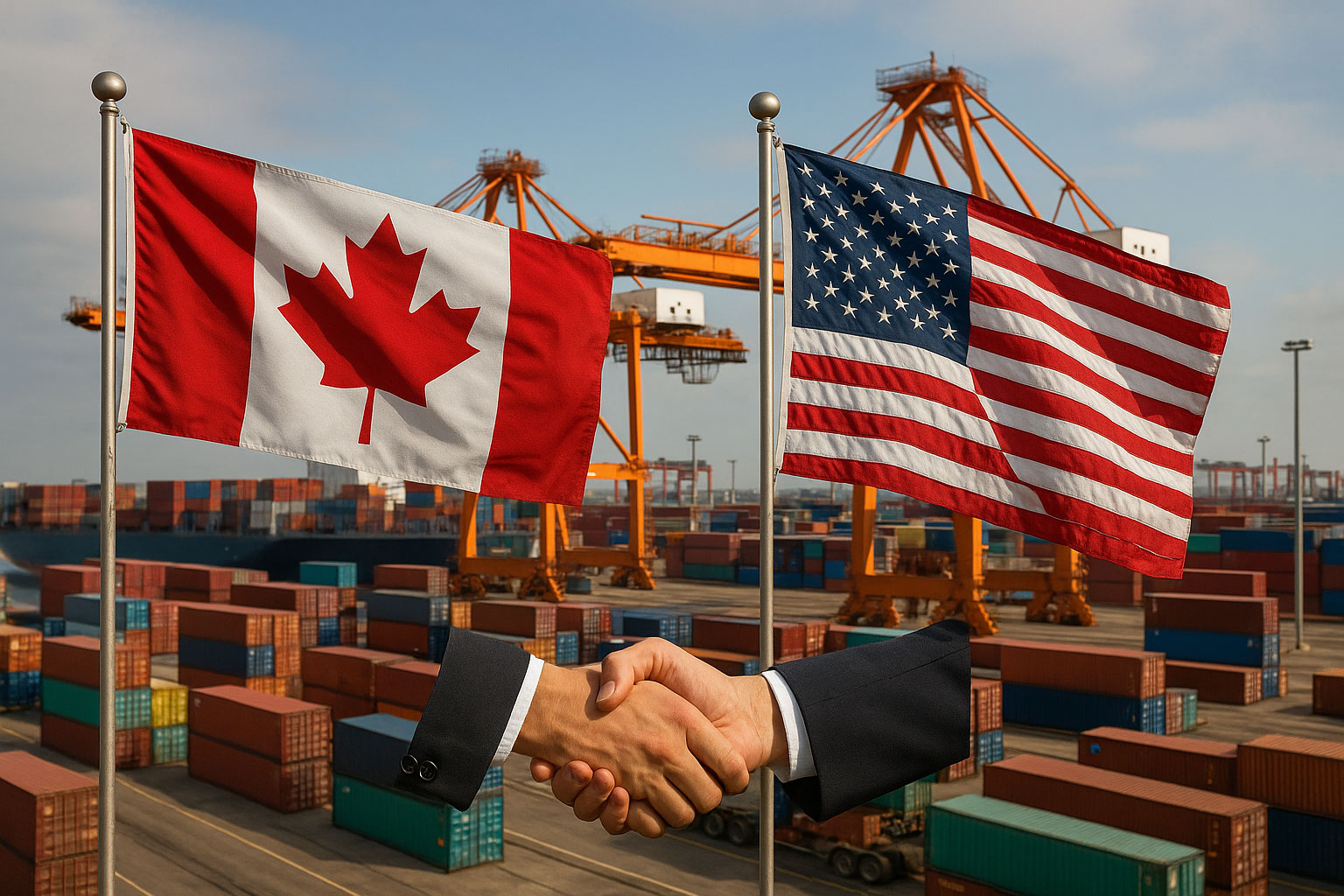
Canadians are aware of the souring tone of Canada-U.S. trade relations. But when former Prime Minister Stephen Harper long a staunch advocate for deepening ties with Washington begins urging the current Liberal government to look elsewhere, it signals something bigger than a momentary policy spat. It’s a fundamental shift in how Canada must navigate the global economy.
Speaking candidly at a Canada-U.S. relations conference in Saskatoon on July 28, Harper said something that would’ve seemed unthinkable a year ago: Canada needs to reduce its economic dependence on the United States. This from a former Conservative leader whose entire political philosophy leaned heavily on the North American alliance. Times, as they say, have changed.
Harper acknowledged that just a year ago, his advice would’ve been the opposite. Then, there was a clear opening to strengthen economic and security ties with the U.S. But now, with Trump’s aggressive and unpredictable tariff regime from 50 percent tariffs on steel and aluminium to looming 35 percent duties on a variety of Canadian exports it’s clear the relationship has taken a hard turn.
Harper isn’t throwing in the towel on the U.S. entirely. He wisely noted the need to hammer out a short-term agreement with the Trump administration. But he’s also sounding a necessary alarm: Canada’s trade and investment are “grossly overweight” in the U.S. market. Geography may make it tempting, but dependency has become a vulnerability.
And he’s right. For too long, Canada’s economy has leaned heavily on one customer a customer that’s now openly hostile, leveraging tariffs as weapons and threatening to walk away from trade deals at will. This is not a stable partner. It’s a reminder that proximity does not equal reliability.
Harper’s call to action is timely. Canada has already signed trade agreements with Europe (CETA) and Asia (CPTPP). These deals are opportunities waiting to be seized. And yet, Canadian exports to these regions remain modest. If we’re serious about economic sovereignty and resilience, it’s time to start using these agreements as more than symbolic wins.
To their credit, the Liberal government seems to be listening at least in part. Measures to reduce interprovincial trade barriers and fast-track infrastructure projects show an awareness that we can’t just wait around for the U.S. to play nice. Prime Minister Mark Carney, newly installed and facing one of the toughest files on his desk, has taken a firm tone in negotiations, insisting on protections for supply management and language rights principles that define the Canadian economic and cultural landscape.
But these negotiations won’t be easy. Trump has made clear he’s willing to play hardball. His July 10 letter threatening a new wave of 35 percent tariffs if a deal isn’t reached by August 1 only deepened the tension. Carney, wisely, extended the deadline likely recognizing that rushing a flawed deal serves no one.
What’s needed now is a two-track strategy: finalize a short-term resolution to reduce immediate economic harm and aggressively pivot toward broader global trade opportunities. That means supporting Canadian businesses in expanding into Europe, Asia, and beyond. It means creating incentives to innovate at home and open doors abroad.
Harper’s shift in perspective from “lean in to the U.S.” to “look beyond the U.S.” reflects more than political calculation. It reflects the new reality facing this country. Canada can no longer afford to put all its economic eggs in one increasingly hostile basket.
The sooner we act on that, the stronger we’ll be.

