
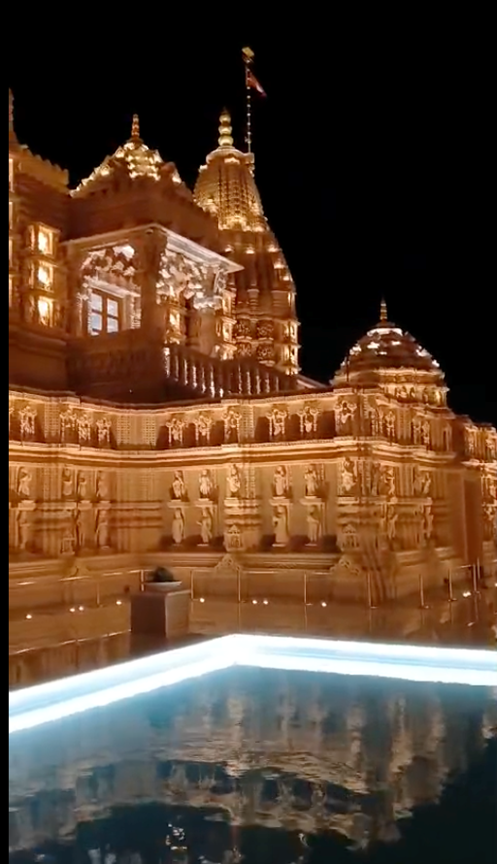
The Abu Dhabi Hindu Temple in the United Arab Emirates was built by the BAPS Swaminarayan Sanstha of India. It was established with the cooperation of the UAE Tolerance and Coexistence Ministry. In August 2015, the Crown Prince of Abu Dhabi, Sheikh Mohammed bin Zayed, made a government announcement gifting 27 acres of land for the temple. Today, this temple stands as a symbol of unity among all religions, castes, and races in the world. It will significantly strengthen the cordial relations between the people of India and the United Arab Emirates, and will serve as a shining example of tolerance and coexistence among all nations and religions, thus opening the limitless doors of world peace.
The temple is considered a symbol of interfaith harmony by all communities. It will represent the strong relations between the people of the United Arab Emirates and India in fostering understanding, acceptance, and unity among people from different religious backgrounds. Accordingly, the carved art and symbols of the temple include not only the stories of the Ramayana, Bhagavatam, Mahabharata, and the lives of ancient Indian sages, but also the stories of Arab, Egyptian, Mesopotamian, Native American, and other civilizations. The temple complex includes a traditional temple, a visitor center, a prayer hall, exhibitions, the informative and educational ‘The Fairy Tail Show’, a children’s play area, themed gardens, water features on either side of the temple, a high-quality food court, and a gift shop.
The temple houses a marble statue of Krishna (an avatar of Vishnu) with his consort Radha. There are also marble statues dedicated to Ram, his consort Sita, and his brother Lakshman. A marble statue of Shiva, the principal deity of Hindu tradition, is located alongside his consort Parvati (the goddess of power and energy) and their two sons, Ganesha and Kartikeya.
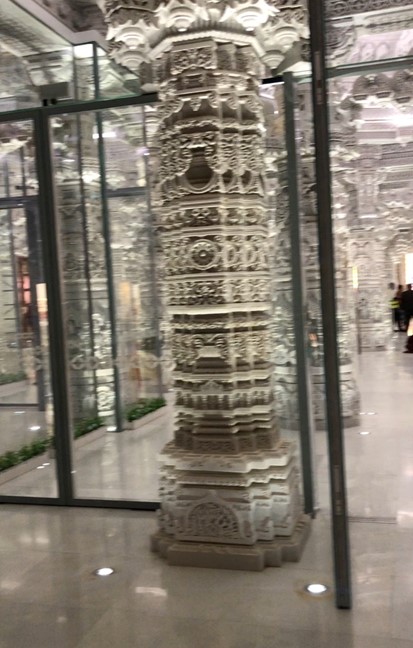
Similarly, there are many amazing works of art carved on the marble stones from other civilizations of the world. In particular, there are various architectural marble carvings based on the stories of Islamic traditions, including falcons, camels and palm trees to represent the United Arab Emirates.
Entry Process:
The door of the temple is open to all irrespective of caste, creed, caste, free of charge and unconditionally. With the support of all, harmony and peace can be significantly advanced, it is the hope of the temple.
However, the routine security at the time of entering the temple is conducted at Airport security level. Besides registration before entry, assistants at the gate are ready to lend a helping hand.
‘The Fairy Tail Show’ (An immersive show.) :
Recognizing Abu Dhabi as the ‘Epicenter of Harmony’, the show represents the values of tolerance and harmony, supporting the global message of the Temple of Harmony, which has already generated over 67 billion positive digital impressions. The temple is bringing together cultures, communities and nations, reflecting the global appreciation for this extraordinary place of worship
‘The Fairy Tail Show’, not only celebrates Temple’s incredible journey, but also everyone’s inner journey. The love, support and harmony we experienced in the UAE inspired us to create this spiritual oasis for global harmony. This new immersive show will encourage every viewer to become true ambassadors of harmony by spreading more harmony at home, at work, and greatly inspire them in society through interactions and actions, to fulfill their personal good intentions.”
The temple has helped change the mindset of visitors, who feel that “a world of co-existence, love and harmony is possible.”
Guest Experience:
Chairman of Abu Dhabi Community Development Department H.E. Dr. Mughir Khamis Al Khaili, who inaugurated the program along with Brahmaviharidas Swami, expressed that, “This immersive experience truly epitomizes the values of tolerance and harmony that are so dear to our nation and so important in this world. It is incredible, inspiring and extraordinary. , the temple in Abu Dhabi is a shining example of how harmony occurs and how it helps coexistence.”
“A state-of-the-art production, which will be a soul-healing experience for the eyes and heart of the audience.”
Fatima Al Bloushi, one of the curators of The Louvre Abu-Dhabi Museum, said, “I enjoyed the immersive experience that brought the story of the temple to life. It was so illuminating that it gave a deep insight into its history and the importance of harmony.”
Asma Al Menhali, a UAE citizen said: “It was truly a privilege to experience such a magical event. The show embodies harmony, which is necessary to make the world a better place and to grow as human beings. It can help anchor us in a world full of harmony and peace instead of conflict. We have to open new doors, try to move forward like this.
Temple Construction:
The temple started construction in December 2019, on 27 acres of land. The site is located near the Al Rahba area near the Dubai-Abu Dhabi Sheikh Zayed Highway.
Sandstone provides a solid foundation for the temple, ensuring exceptional stability. The pink sandstone was brought to Abu Dhabi from the northern Indian state of Rajasthan. More than 2,000 artisans worked on the intricate stone carvings in Rajasthan. To reduce the carbon footprint, fly ash was used in the foundation’s concrete mix, resulting in a 55% reduction in cement content. The durable pink stones were chosen for the temple’s exterior due to their ability to withstand Abu Dhabi’s scorching summer temperatures. Special Italian marble of various colors was used to build the interior of the temple.
Architecture:
The temple is built according to the ancient Hindu text Shilpa Shastra. The Hindu temple in Abu Dhabi is the largest temple in West Asia and the first traditional stone temple in the Middle East. The height of the temple is 108 feet, length is 262 feet and width is 180 feet. Other architectural features include seven pyramidal domes symbolizing the seven emirates of the United Arab Emirates.
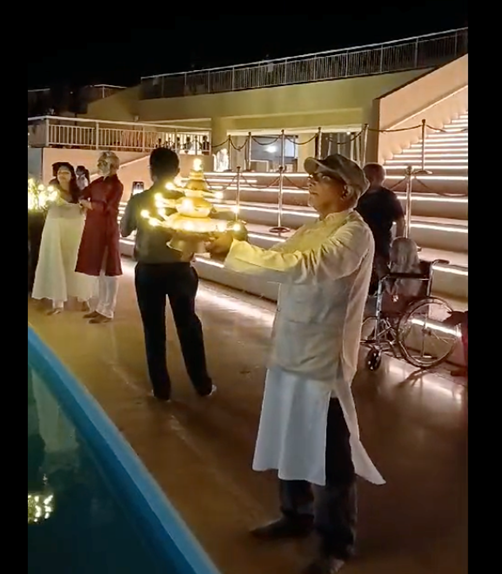
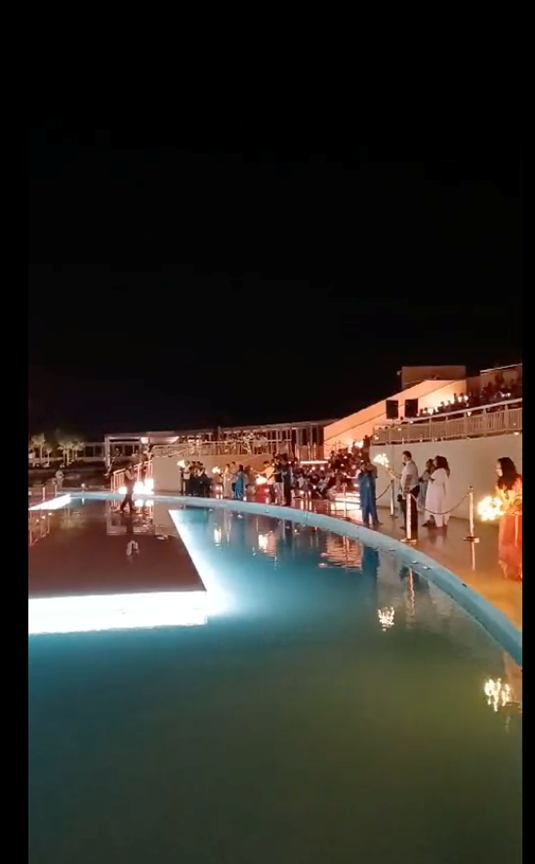
A water channel has been built on either side of the temple, where the reflection of the dome in the night light makes it look like the temple is standing on the banks of a river. It is an aesthetically pleasing sight, and every evening Aarti is performed on the banks of the channel to the tune of music.
The temple is made up of over 25,000 stone fragments. Each dome has carvings of stories from Ramayana, Shiva Purana, Bhagavatam, Mahabharata. The ‘Domes of Harmony’ display the five natural elements – earth, water, fire, air and space. There are also carvings of animals such as horses, falcons and camels that represent the UAE, each carved in a unique way. The temple is also designed to be earthquake resistant, although no steel is used anywhere. It is the first Hindu heritage temple to be fully digitalized through digital modeling and seismic simulation. It is also noteworthy that people of all religions were involved in the design and construction of the temple.
Interfaith and Cultural Harmony:
The land to build this Hindu temple was donated by a Muslim king, the chief architect of the project was a Catholic Christian, and the construction project was managed by a Sikh, who worked for a Parsi-owned company. The foundation designer was a Buddhist, and the director of the temple is currently a Jain. All the officers and employees of the temple are people of different faiths. This shows the significance of interfaith and cultural harmony in this temple project.
As part of the UAE’s initiative to promote cultural diversity, tolerance and peace, the government held a ceremony in September 2019 and officially granted Hindu temples and 17 other places of worship legal status in the UAE.
The establishment of this temple is a reflection of the UAE’s landscape of tolerance and pluralism. The founding father of UAA, the late Sheikh Zayed bin Sultan Al Nahyan, always believed that coexistence between people of different religious beliefs and nationalities was the only way to achieve international peace. Currently, the late Sheikh Zayed’s children are running the government of UAA, they Determined to reflect father’s ideals and beliefs at all levels.
Last but not least:
The inauguration of the temple is followed by a 12-day long celebration called the “Festival of Harmony”.
On the afternoon of 14 February 2024, Indian Prime Minister Narendra Modi attended to dedicate the temple to the public. Narendra Modi, UAE Minister for Tolerance and Coexistence Sheikh Nahyan bin Mubarak Al Nahyan and spiritual leader of Swaminarayan organization Mahanta Swami Maharaj addressed the inaugural gathering. Narendra Modi said, “This temple will become a symbol of communal harmony and global unity for the whole world. Minister Sheikh Al Nahyan said, “UAE is a tolerant country, where people from different nationalities, religious and ethnic backgrounds live in peace, harmony. , and live in cooperation. The temple will serve as a place of worship and a center of communal harmony. In the days following the inauguration, a series of programs focused on harmony, civility, peace, gratitude, values and inspiration were held.
On 15 February 2024, a rally called “Harmony Day” brought together Hindus, Muslims, Christians, Jews, Sikhs, Buddhists and other religious leaders to commemorate the inauguration of the temple to celebrate interfaith harmony.
The festival of harmony concluded on February 21 with an event organized by women called “Inspiration Day”. The program highlights the contribution of women to society and humanity. More than 2,000 women attended the rally.
The temple opened to the public on Friday, March 1, 2024, and on Sunday, March 3, 2024, more than 65,000 people visited the temple.
My words:
I, the author of the above article, last September visited Abu Dhabi and Dubai on the final leg of my 2024 travel itinerary, where the main attraction was to visit the Abu Dhabi Hindu Temple, a symbol of interfaith harmony. I was overwhelmed with emotions and feelings after visiting. I have welcomed such an initiative of the Ministry of Tolerance and coexistence of the United Arab Emirates government in the hope of world peace.
Toronto, Canada

