
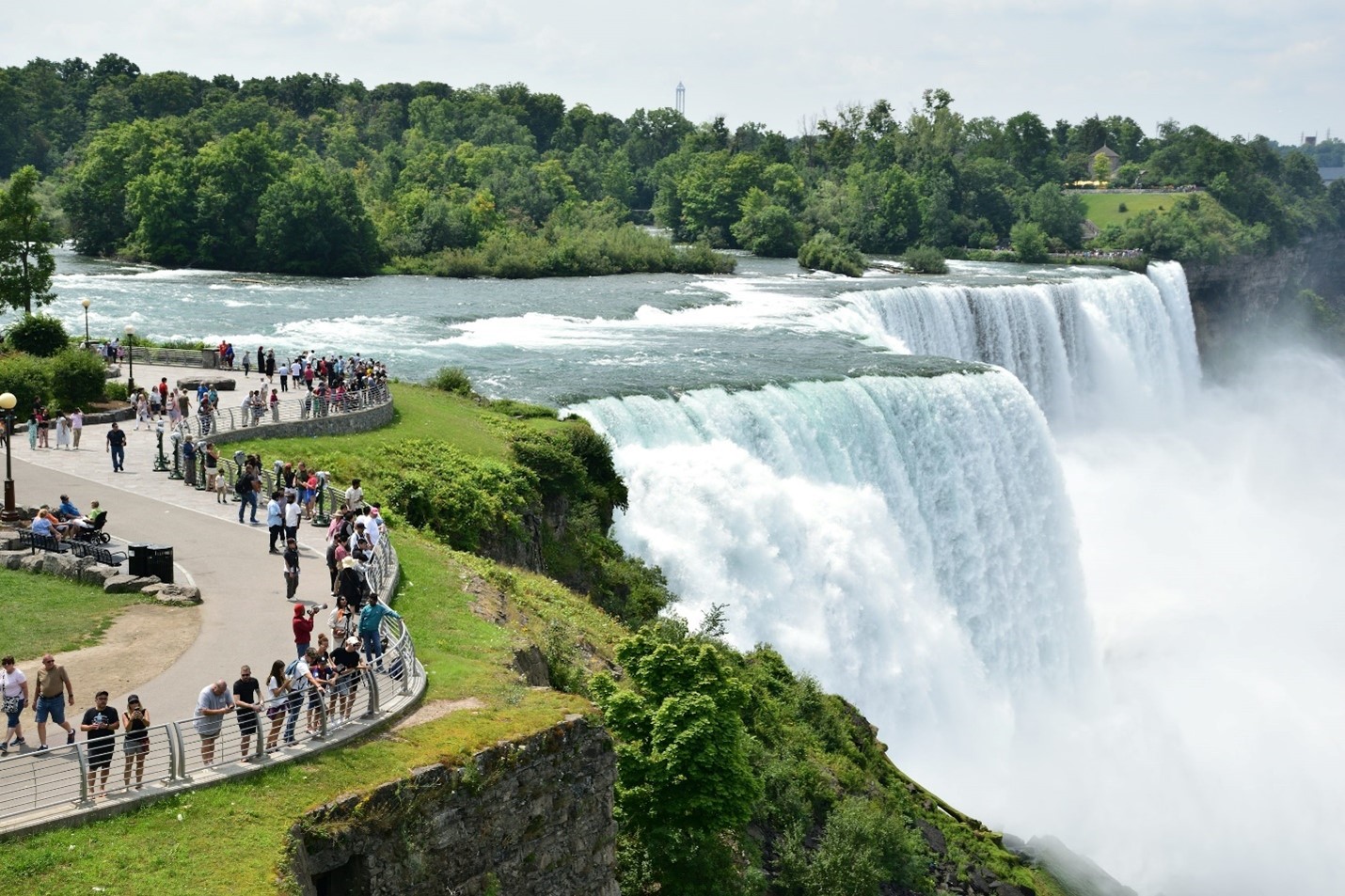
Niagara Falls, one of the world’s largest and oldest waterfalls, came into existence nearly 10,000 years ago. Straddling the border between the United States (New York state) and Canada (Ontario), approximately two-thirds of the falls are located in Canada and one-third in the United States. The US portion is known as the American Falls, while the Canadian side is referred to as the Horseshoe Falls.
I recently had the opportunity to visit the American Falls. Although the Canadian Horseshoe Falls are much larger and more spectacular, due to time constraints, I was unable to cross the border this time. I’ve been to Niagara Falls many times before and am always awestruck by its unparalleled natural beauty. Seeing the falls again after so many years, with fresh eyes and a renewed sense of wonder, was a truly breathtaking experience.
The world is full of stunning natural wonders, and Niagara Falls is undoubtedly one of the most captivating. Every year, nearly 30 million tourists flock to witness this magnificent creation of nature. Its sheer size and power are truly awe-inspiring.
This waterfall isn’t a single cascade but a collection of three nearby waterfalls. It was formed approximately 11,000 years ago when the Niagara River, along with the Great Lakes like Erie and Ontario, was covered in ice. Over time, as the Earth’s temperature increased, the glacial ice began to melt. The immense flow of meltwater from this ice created this magnificent waterfall.
The American Falls is approximately 70 feet high and 1600 feet wide. Around 4 million cubic feet of water plummets over this fall every minute. The sheer size and force of the water make the fall both terrifying and beautiful. The name ‘Niagara’ originates from an ancient word and is believed to mean ‘thunder of waters.’ Indeed, the thundering roar of this waterfall fills the entire region with a constant symphony of water. Aside from its visual beauty, this massive waterfall also serves a crucial purpose. The flow of Niagara’s water is harnessed to generate electricity in hydroelectric power plants. The electricity produced here is supplied to New York, USA, and Ontario, Canada.
To experience this magnificent waterfall up close, I took a small boat tour. The ‘Maid of the Mist’ boat on the Niagara River took us very close to its awe-inspiring beauty. As the boat moved closer to the falls, the deafening roar of the water and the huge waves made it feel like we were caught in a tumultuous ocean storm. Holding my bag and camera in one hand and gripping the railing tightly with the other, I feared I might be swept away by the massive waves. Though I wanted to stand still and enjoy the wet beauty, it was quite difficult; and my glasses were fogging up, so I couldn’t take proper videos or pictures at that moment.
The turbulent, sparkling cascade of the waterfall, the damp, gusty wind, the swaying boat, and the excited chatter of tourists combined to create a thrilling and exhilarating experience, a blend of fear and delight. After about a 40-minute boat ride, the vessel gently docked. The next adventure involved trekking closer to the waterfall. Or rather, descending a long, winding red wooden staircase to a point where the waterfall’s waters, splashing over ancient, moss-covered rocks, merged with the Niagara River. Our goal was to get drenched and feel the cool spray of the magnificent waterfall up close.
Standing on the wooden steps, I was awestruck by the massive volume of crystal-clear water plummeting from about 60-70 feet, relentlessly cascading into the Niagara River day and night. In winter, the flow is significantly reduced and frozen solid. During the summer and spring, however, the water is turbulent and dynamic, and the area is teeming with nature-loving tourists.
I was completely captivated by the sight of such a massive waterfall up close. It was an indescribable feeling. The spray drenched everything around us, including ourselves, but it didn’t matter. We had all discarded our old yellow plastic ponchos and donned new ones. However, the intense spray and the turbulent wind made it difficult to keep the thin plastic garments on. Nevertheless, I was determined to capture this beautiful moment in photos and videos. Despite the limitations of still images, I managed to capture several short clips and still photos.

