
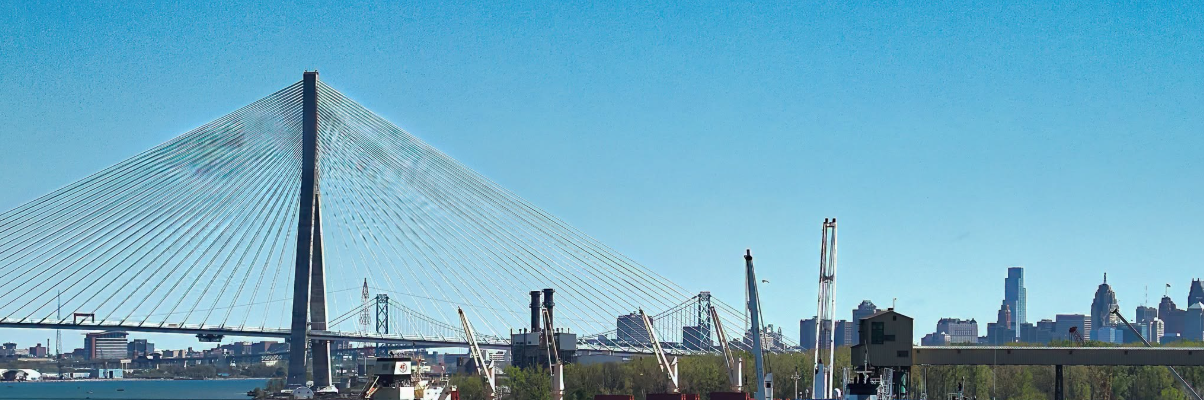
After years of construction delays and a last-minute diplomatic standoff, the United States and Canada have finally cleared the path for one of North America’s most anticipated infrastructure projects. The two nations reached an agreement on July 10 to open the Gordie Howe International Bridge the massive six-lane crossing linking Detroit, Michigan with Windsor, Ontario to public traffic on July 27.
The announcement brings an end to months of uncertainty that had stalled what was originally planned as a June opening. The holdup stemmed from the Trump administration’s objections to the financial terms of the existing agreement, with President Trump calling the original deal “unacceptable” and threatening to block the bridge from opening altogether. In a Truth Social post following the new agreement, Trump claimed credit for renegotiating the terms, writing that he was able to secure a “MUCH BETTER DEAL for America.”
Canada’s Ministry of Infrastructure confirmed that the revised agreement includes a set of cooperative measures around toll governance and transparency. A newly established 15-year economic development fund, tied to a share of the bridge’s operational profits, will channel investments into the border region. The Windsor-Detroit Bridge Authority a Canadian federal Crown corporation that owns and operates the bridge will also work alongside the U.S. government on future toll-rate decisions, with certain non-market adjustments requiring mutual agreement from both sides.
For Canada, the project carries a deep sense of national pride. Canadian Housing and Infrastructure Minister Gregor Robertson called it a “nation-building project,” saying the bridge represents what the country can achieve with a shared vision and long-term commitment. Prime Minister Mark Carney, who in June had characterized the delay as a matter of working through “technical aspects,” has watched the negotiations come to a successful close just weeks before the scheduled opening.
Michigan Governor Gretchen Whitmer was equally enthusiastic, emphasizing the tangible benefits for her state. She pointed to thousands of Michigan workers who helped construct the bridge and highlighted what she sees as a wide-reaching economic upside faster auto production timelines, reduced transportation costs, and stronger agricultural trade. For a state whose economy is deeply tied to cross-border manufacturing, the bridge could not have come at a more critical time.
The bridge itself is named after Gordie Howe, the legendary Detroit Red Wings hockey player revered on both sides of the border a fitting tribute to a crossing that is meant to symbolize the close ties between two neighboring nations. Under the original 2012 Canada-Michigan Crossing Agreement, the structure is jointly owned by Canada and Michigan, though Canada fronted the entire cost of construction and will recoup its investment through toll revenue before eventually sharing profits with the state.
With opening day less than two weeks away, the attention now turns from diplomacy to logistics. For commuters, freight carriers, and auto manufacturers who have long relied on the Ambassador Bridge as the sole crossing in the region, a second option can’t come soon enough.

