
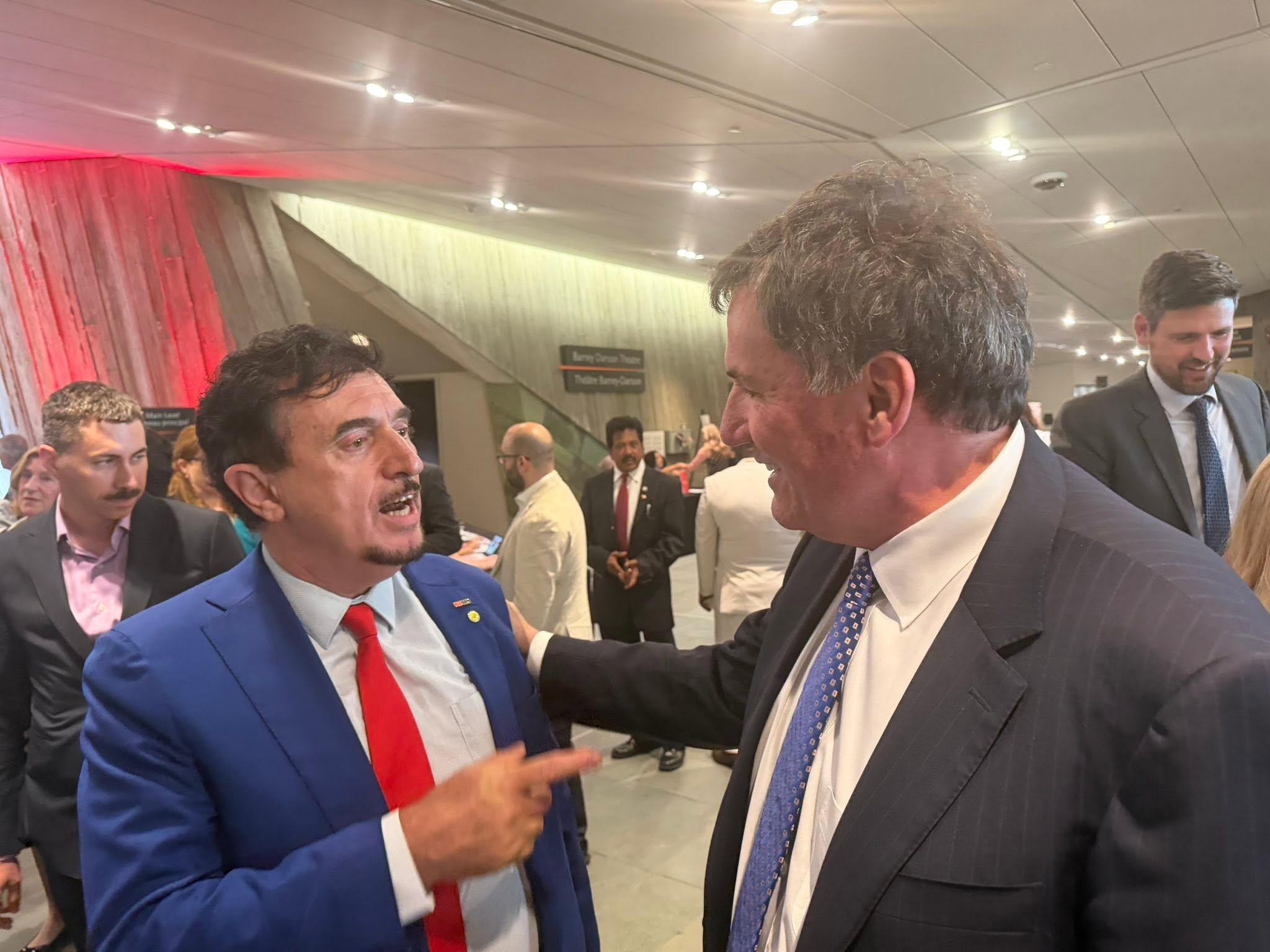
Canadian Prime Minister Mark Carney acknowledged Thursday what many trade observers have long suspected that U.S. President Donald Trump has little enthusiasm for the Canada–United States–Mexico Agreement but insisted the two leaders still found common ground on the sidelines of the G7 summit.
Speaking to reporters on June 18, Carney said it is “no secret” that Trump has not been the deal’s biggest champion, but emphasized that specific areas of cooperation between the two countries remain very much on the table.
His remarks came a day after Trump told journalists at the G7 that he would sooner let CUSMA die than sign a renewal, saying the United States actually fares better without a formal agreement in place. The president noted he was not closing the door entirely, but his preference was clear.
Despite the headline-grabbing comments, Carney said substantive work is continuing behind the scenes. Canada–U.S. Trade Minister Dominic LeBlanc and U.S. Trade Representative Jamieson Greer have been working through a series of interconnected issues, and Carney said he personally held seven or eight informal conversations with Trump throughout the summit covering everything from artificial intelligence to Ukraine and Iran even without a formal bilateral meeting scheduled.
Carney played down the absence of a sit-down meeting, saying there was “no message” in the omission.
On the trade deal itself, Carney offered reassurance that the sky is not yet falling. He pointed to comments from Greer indicating that the fundamental architecture of CUSMA remains intact, and that roughly 85 percent of Canadian exports to the United States continue to flow under its provisions. Without any deliberate action from any party, the deal is set to remain in force through 2036.
The three countries Canada, the United States, and Mexico are currently negotiating ahead of a joint review tied to the agreement’s sixth anniversary on July 1. Canada and Mexico have both publicly backed a 16-year extension that would keep the deal alive past 2042. Washington has stayed quiet about its preferred outcome.
LeBlanc struck a measured tone earlier this month, reminding observers that July 1 is “not a cliff.” Even if no extension is agreed upon, annual reviews would simply kick in for the remainder of the original 16-year term. He also floated the possibility of bilateral arrangements running alongside a broader trilateral framework a sign that Canadian officials are already thinking through contingency plans.
Under the agreement’s existing terms, any country can withdraw with just six months’ notice. If one nation exits, the deal would continue to bind the remaining two, leaving room for separate bilateral negotiations.
The president has made no secret of his disdain for the broader architecture of North American trade. He has repeatedly invoked his decision to replace NAFTA which he has called the worst trade agreement ever made with CUSMA during his first term, and claimed he deliberately inserted a six-year termination clause into the new deal as an exit mechanism.
Trump told reporters at the G7 that Canadian and Mexican officials had quietly hoped he would not be back in office when that clause became relevant. He now finds himself in exactly the position to act on it.
Whether he will remains the central question hanging over North American trade relations as the July 1 deadline approaches.

