
Prime Minister Mark Carney stood amid the scaffolding and restoration crews of the Library of Parliament this week and reached for a metaphor. Canada, he said, is a lot like this building heritage-rich, in the middle of a painstaking renovation, and stronger for the work being done on it. Alberta, he insisted, sits at the very centre of that project.
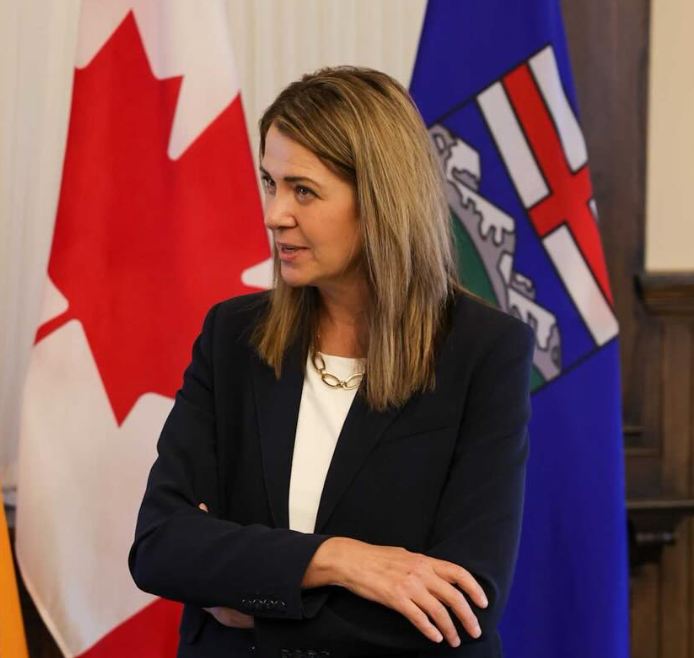
The remarks were carefully chosen. Hours earlier, Alberta Premier Danielle Smith had announced she would place a loaded question on October’s referendum ballot: should Alberta begin the constitutional process toward separation from Canada?
Carney did not address the referendum directly. Instead, he pivoted to the language of belonging praising former prime ministers Stephen Harper and Joe Clark, saluting Alberta’s contributions to music, science, sport, and literature. “Canada is the greatest country in the world,” he told reporters, “but it can be better, and we’re working with Alberta on making it better.”
It was a message of warmth, carefully calibrated to avoid handing separatists a confrontation they might use as further fuel.
Smith, for her part, insists she intends to vote against separation. But she argues that putting the question on the ballot is the most legitimate outlet for Albertans who feel chronically ignored by Ottawa. The referendum, scheduled for October 19, will ask voters: “Should Alberta remain a province of Canada, or should the Government of Alberta commence the legal process required under the Canadian Constitution to hold a binding provincial referendum on whether Alberta should separate?”
The question arrives partly because of a legal setback. A separatist petition drive by Stay Free Alberta which claimed over 300,000 eligible signatures, well above the 177,732 required by provincial law was struck down by a court that found organizers had failed to properly consult First Nations communities. Smith has vowed to appeal all the way to the Supreme Court if necessary, but acknowledged the legal road is long. “This means that it is unlikely the courts will permit Elections Alberta to hold a binding provincial referendum on separation until this incorrect ruling is overturned,” she said in a televised address.
The separation movement is not operating in a vacuum, however. Federalists have mobilised with equal energy. The “Forever Canadian” campaign, led by former Alberta Deputy Premier Thomas Lukaszuk, says it has validated more than 400,000 voter signatures from Albertans who want to stay in Confederation a number that outpaces the separatist petition by a significant margin.
What October’s non-binding referendum will ultimately mean legally, politically, and symbolically remains deeply uncertain. But the question is on the ballot. And for the first time in a generation, Canadians are watching a sitting premier hand her province a formal mechanism to voice, however preliminarily, a desire to leave.
Carney’s renovation metaphor may prove more apt than he intended. The work on Parliament’s library has taken years longer than planned, cost more than projected, and left the building closed to the public through the process. The question now is whether Canada’s repair work on its relationship with its westernmost heartland moves faster and with more visible results before October arrives.

