
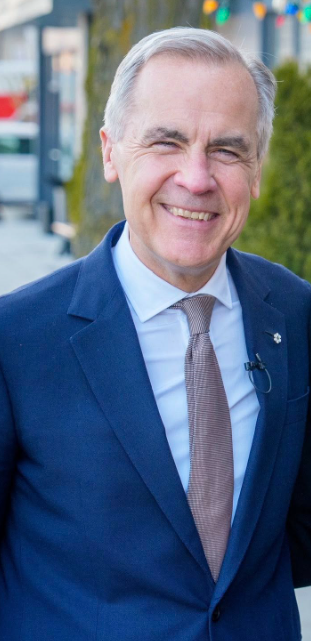
Prime Minister Mark Carney has set the wheels in motion to appoint a new justice to Canada’s highest court, following the announcement that Supreme Court Justice Sheilah Martin will step down at the end of May years before she is required to do so.
Martin, who was appointed to the bench in December 2017, will officially retire on May 30, just ahead of her 70th birthday. The mandatory retirement age for Supreme Court justices is 75, making her departure notably early. Carney took the occasion to honor her contributions, praising her “leadership, excellence, and dedication” to the court over the past eight years.
Born in Montreal, Martin carved out a distinguished legal career that crossed the country’s two legal traditions civil law and common law before relocating to Alberta, where she built her reputation as an educator, practicing lawyer, and eventually a judge, rising all the way to the nation’s top court.
Prospective candidates have until April 27 to put their names forward, according to a statement from the Prime Minister’s Office issued March 30. To be eligible, applicants must either be sitting superior court judges or hold at least a decade’s standing at a provincial or territorial bar.
Geography matters in this appointment. Given that Martin’s seat falls within the regional allocation for western Canada and the territories, candidates must have ties to British Columbia, Alberta, Saskatchewan, Manitoba, Yukon, the Northwest Territories, or Nunavut. That connection can be established through bar membership, a judicial appointment, or other demonstrable links to the region.
From the pool of applicants, the Independent Advisory Board for Supreme Court of Canada Judicial Appointments will assemble a shortlist for the prime minister’s consideration. Beyond raw qualifications, the board is tasked with ensuring that shortlisted candidates are functionally bilingual and reflective of Canada’s diversity.
Carney framed the appointment in broad democratic terms. “The Supreme Court of Canada is a pillar of our democracy,” he said. “As Canada’s highest judicial body, the court and the judges who serve on it carry profound responsibilities and the values of integrity, independence, and the rule of law.”
The vacancy is arriving at a politically charged moment. Four provincial premiers Alberta’s Danielle Smith, Ontario’s Doug Ford, Saskatchewan’s Scott Moe, and Quebec’s François Legault sent a joint letter to Carney on March 23, asking that the appointment process be overhauled to give provinces a formal, mandatory role.
Under the existing federal framework, the justice minister may consult with provincial counterparts, but there is no requirement to do so. The premiers argue this discretionary arrangement falls short of the cooperative spirit that federalism demands.
“The current model does not address the significant deficit of federal legitimacy of the superior court appointment process,” the premiers wrote, contending that deeper provincial involvement would better capture the diversity of Canada’s regions and strengthen public trust in the justice system.
Justice Minister Sean Fraser wasn’t moved by the argument. Speaking to reporters a day after the letter became public, he maintained that the current process is working as intended and that the federal government already reaches out to provinces after reviewing recommendations from judicial advisory committees.
“We haven’t changed our point of view that we believe that the judicial appointments process is functioning,” Fraser said, adding that Ottawa actively seeks provincial input on candidates under consideration just not in the formal, institutionalized way the premiers are demanding.
The standoff reflects a long-running tension over who holds sway in shaping the courts that interpret federal and provincial law alike. For now, the appointment process moves forward on Ottawa’s terms, with a new Supreme Court justice expected to be named before Justice Martin walks out of the courtroom for the last time at the end of May.

