
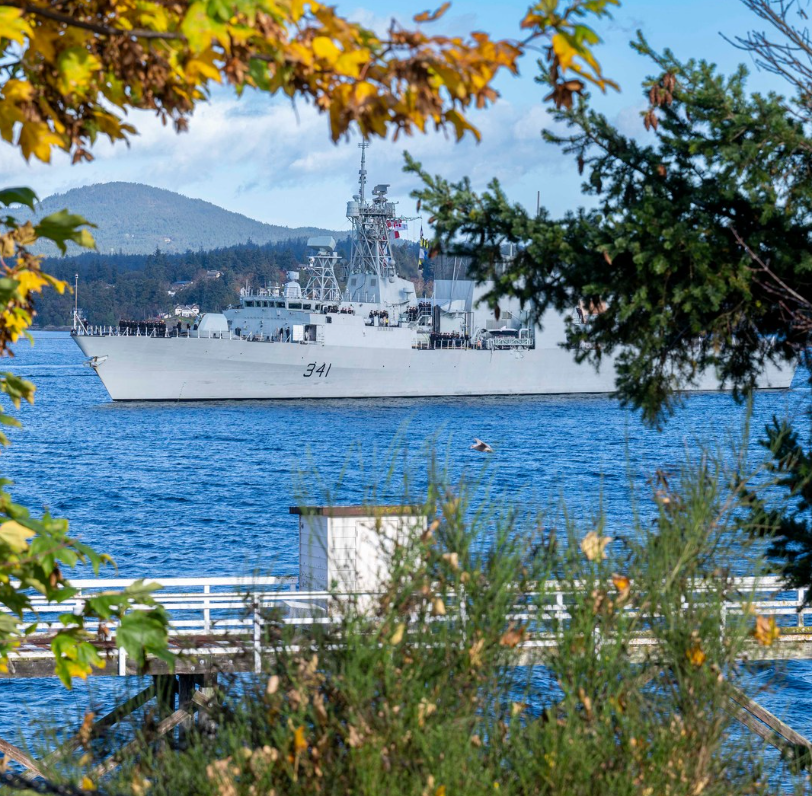
The Royal Canadian Navy’s Halifax-class frigate HMCS Charlottetown has departed its home port of Halifax, embarking on a six-month deployment to the Indo-Pacific aimed at supporting international security and strengthening alliances, the Department of National Defence announced this weekend.
The warship set sail on February 1 with a crew of about 240 sailors and aviators, beginning a mission that combines sanctions enforcement against North Korea with broader regional engagement alongside allied navies.
According to National Defence, the deployment includes participation in Operation Neon, Canada’s contribution to a United Nations Security Council effort to monitor and enforce sanctions on North Korea. As part of this mission, Charlottetown will conduct surveillance to help detect and deter illegal maritime activities, including prohibited ship-to-ship transfers of fuel and other restricted goods.
At the same time, the frigate will operate under Operation Horizon, a Canadian Armed Forces initiative focused on deepening military cooperation with partners in the Indo-Pacific. The operation emphasizes joint training and multilateral naval exercises designed to improve interoperability and maintain a credible military presence in a region of growing strategic importance.
“The ship’s company of HMCS Charlottetown has been working hard to prepare for both Operation Horizon and Operation Neon,” said Commanding Officer Commander Jonathan Maurice in a statement. “They are proud to represent Canada internationally and contribute to a safer, more stable region. I have full confidence in their professionalism and performance at sea.”
The Indo-Pacific spans a vast area from the eastern coast of Africa to the western shores of the Americas, encompassing Southeast Asia, South Asia, Northeast Asia, and Oceania. The region includes several of the world’s largest economies and plays a central role in global trade, security, and geopolitics. Canadian officials note that many of Canada’s key trading partners are located there, making stability in the region a national interest.
Rear Admiral Josée Kurtz, Commander of Maritime Forces Atlantic, highlighted the broader significance of the deployment, saying the Indo-Pacific is increasingly shaping issues that matter directly to Canadians.
“The Indo-Pacific is quickly becoming the global centre of economic growth and strategic influence,” Kurtz said. “From national security and economic prosperity to human rights and environmental protection, Canada’s interests are closely linked to our relationships in this region. That is why the Royal Canadian Navy deploys ships there every year to work with allies and partners.”
Defence officials said the crew has spent months preparing for the mission through intensive training. The deployment also includes an embarked air detachment, with aviators operating the ship’s CH-148 Cyclone maritime helicopter to support surveillance and maritime operations.
Commissioned in 1995, HMCS Charlottetown has remained in active service for nearly three decades. The frigate participated in NATO’s Steadfast Defender exercise in 2024, the alliance’s largest military exercise in more than 30 years, and has been involved in a wide range of operations from counterterrorism patrols and narcotics interdictions to humanitarian assistance and evacuations of Canadians during international crises.
The current deployment marks another chapter in the vessel’s long operational history, as it carries Canada’s flag across the Indo-Pacific in support of international law, regional stability, and allied cooperation.

