
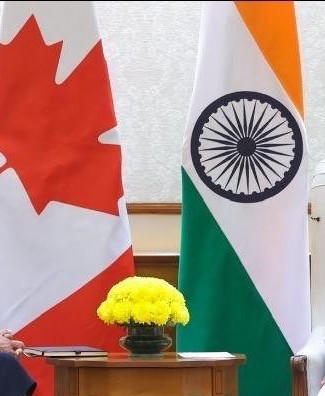
After years of diplomatic frost, allegations, and suspended negotiations, Canada and India are finally trying to hit the reset button. Prime Minister Mark Carney and Indian Prime Minister Narendra Modi have agreed to revive the long-delayed Comprehensive Economic Partnership Agreement (CEPA) a trade pact that has been drifting in limbo since 2010.
On the surface, it looks like just another announcement squeezed out of a G20 summit. In reality, it signals something far more important: both countries have realized that despite political turbulence, their long-term economic futures are too intertwined to ignore.
Foreign Affairs Minister Anita Anand’s words “the two leaders agreed to formally launch negotiations” may sound bureaucratic, but they reflect a necessary acknowledgment of reality. India is one of the world’s fastest-growing major economies, and Canada, despite its recent political uncertainties, remains a stable, innovation-driven partner with deep investment potential.
The proposed CEPA is not a modest agreement. It’s a sweeping plan covering goods, services, agriculture, digital trade, labour mobility, and even sustainable development. In other words, it’s the kind of deal countries pursue when they’re thinking long-term, not election-cycle short-term.
When talks began in 2010, the global landscape was entirely different. China was seen as the unstoppable manufacturing hub, the U.S. hadn’t yet entered a period of geopolitical whiplash, and AI was still something tech conferences debated more than governments.
Now?
The geopolitical order is shifting faster than countries can update their policy papers. Canada and India both feel the pressure to build reliable alliances economically and technologically.
This explains why Carney and Modi spent valuable meeting time discussing artificial intelligence. Both countries see AI as a strategic frontier, and cooperation especially through the newly joined trilateral partnership with Australia signals that neither wants to be left behind.
Let’s not pretend the relationship is smooth. Canada’s 2023 allegations regarding the killing of a Sikh activist sent relations tumbling into their deepest crisis in decades. Ottawa suspended talks. Trust faded. Public sentiment hardened.
Carney, to his credit, acknowledged this head-on: “We have to remain vigilant we are vigilant.”
This is diplomatic code for: We’re watching closely, but we can’t afford to cut ties.
Both governments seem to have accepted the uncomfortable truth that security tensions and economic cooperation will have to coexist for now. The world’s great powers do this all the time why not mid-powers like Canada and India?
Anand’s projection doubling two-way trade to US$50 billion by 2030 is ambitious. But ambition is precisely what’s been missing from this relationship.
India is Canada’s seventh-largest trade partner. Canadian pension funds and investors pour billions into India’s infrastructure, tech, and energy sectors. Indian students form one of the largest international communities in Canada. The ties already exist; they just haven’t been strategically harnessed.
Carney is likely to visit India next year, possibly for the February AI summit in New Delhi. A symbolic moment, perhaps, but symbols matter in diplomacy. Especially after a bruising period like the one both countries just navigated.
This renewed push for a CEPA isn’t just about trade. It’s about two countries admitting that the world is moving, and they must move with it or be left behind. In a time when geopolitical volatility is becoming the new normal, Canada and India are rediscovering that cooperating is simply smarter than drifting apart.
If they succeed, this could be the most consequential trade relationship either country builds this decade. If they fail, both risks being sidelined in a world that is rapidly reorganizing itself.
Either way, the attempt is not only welcome it’s long overdue.

