
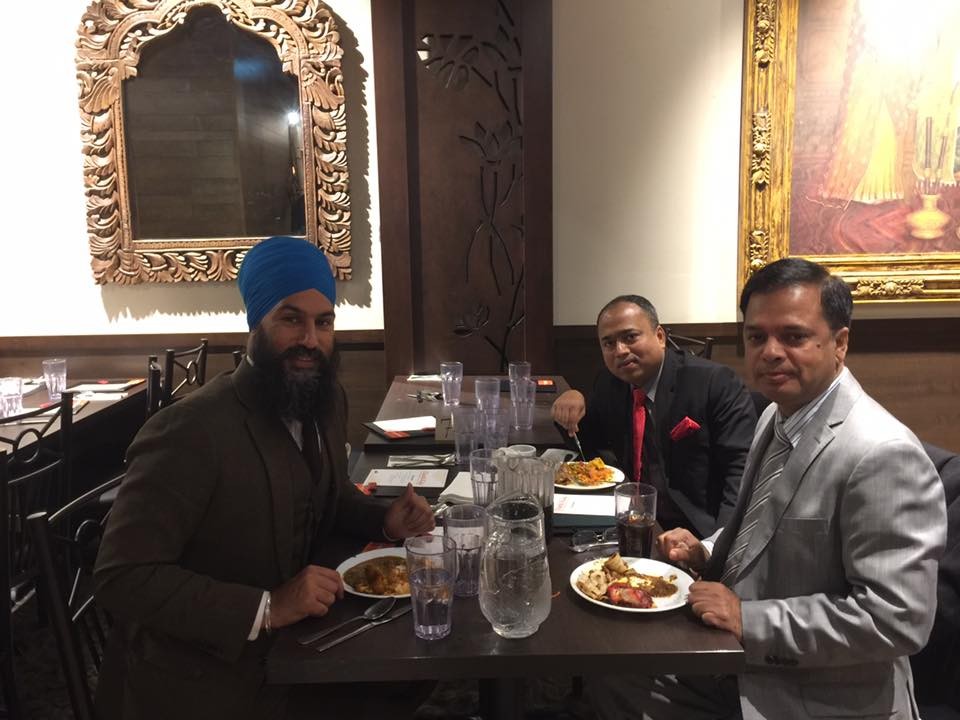
By any measure, the resignation of Jagmeet Singh as NDP leader is the closing chapter of one of the most consequential — and complicated — tenures in the party’s history.
Singh didn’t just lead the New Democratic Party. For nearly a decade, he was its face, its voice, and, at times, its conscience. But in politics, good intentions and big ideas aren’t always enough to survive the brutal math of elections. The NDP’s crushing defeat on April 28 — dropping from 25 seats in 2021 to a projected seven — made Singh’s departure inevitable, even if bittersweet.
The symbolic blow was Singh losing his own seat in Burnaby Central. That result alone underscored just how dramatically the political tides had turned. In a riding that once gave him a comfortable mandate, Singh placed a distant third. It was a stunning fall for a leader who once offered so much promise.
Still, Singh’s resignation speech showed the grace and poise that earned him widespread respect, even among critics. He congratulated his rivals, including Prime Minister Mark Carney — whose victory signaled a Liberal revival few predicted a year ago — and reiterated his deep belief in unity and hope. “New Democrats built the best of Canada,” he said. And he’s right. The NDP has often been the engine behind some of Canada’s most progressive policies. But this election showed that being morally right doesn’t always mean you win votes.
Singh’s legacy will likely be tied to the supply-and-confidence agreement with the Liberals — a calculated gamble that bought policy wins like national dental care but may have cost the party its political momentum. Critics argued it blurred the lines between the Liberals and the NDP, weakening the latter’s identity. Singh defended the move until the end, insisting it was done for the country’s interest, not political gain. And perhaps that’s true. But when voters went to the polls, few rewarded him for that sacrifice.
Timing also played a brutal role. Singh delayed triggering an election to avoid handing Pierre Poilievre a majority — a move he admitted cost the NDP potential seats. But again, it was made, he claimed, out of a fear of what a Conservative majority could do. It was a gamble that didn’t pay off, politically or numerically.
There’s also no ignoring the larger shifts in Canadian politics. For most of 2024, the Conservatives looked unstoppable. Then Donald Trump opened his mouth. His comments about Canada becoming part of the United States — and Carney’s steady leadership in response — shifted the narrative. The Liberals surged, the Conservatives stumbled, and the NDP got squeezed out of relevance in a race that became hyper-polarized.
But Singh deserves credit. He modernized the party’s image, drew in younger and more diverse voters, and brought attention to issues like systemic racism, housing, and affordability long before others followed. His authenticity, charisma, and moral clarity were refreshing in a cynical political landscape.
The tragedy is that in trying to play the long game — focusing on policy, compromise, and stability — Singh underestimated how impatient the electorate could be. And in doing so, he left the NDP with fewer seats, a diminished national voice, and a leadership vacuum.
As the NDP prepares to choose a new leader, it faces a stark question: Does it double down on Singh’s legacy and the values he championed, or does it pivot toward something entirely new? One thing is clear — Singh’s departure isn’t just the end of a leadership era. It’s a reckoning for a party still searching for how to turn principles into power.

