
The sudden change in leadership in Venezuela and talk of reviving its oil sector has rattled markets and reignited a familiar anxiety in Canada: what happens if the United States, our biggest oil customer, finds cheaper crude elsewhere?
The jitters were visible almost immediately. On Jan. 5, the first trading day after U.S. forces captured Venezuela’s leadership, several major Canadian oil stocks slid sharply, with companies like Canadian Natural Resources and Cenovus down about five percent. The fear was clear if Venezuelan oil flows back to the U.S. Gulf Coast, does Canada lose its privileged position?
In my view, that fear is overstated. What the Venezuela story really highlights is not Canada’s weakness, but our tendency to underinvest in our own long-term export capacity.
Yes, Venezuela holds the world’s largest proven oil reserves an astonishing 303 billion barrels. And yes, its geography offers advantages: warmer temperatures, oil closer to tidewater, and heavy crude well suited to Gulf Coast refineries. But reserves on paper are not barrels in pipelines. Venezuela’s oil sector has been hollowed out over decades of mismanagement, corruption, sanctions, and political instability. Undoing that damage will not happen quickly, cheaply, or smoothly.
Experts like Richard Masson from the University of Calgary point out that it will take years likely decades—and tens or even hundreds of billions of dollars to restore Venezuelan production meaningfully. Even now, there are no scheduled Venezuelan oil tankers leaving the country because sanctions remain in place. Political change alone does not rebuild infrastructure, restore investor confidence, or retrain a depleted workforce.
This is why comparisons with Canada need context. Venezuela produced roughly 1.1 million barrels per day late last year. Canada produces nearly five times that. More importantly, Canada has something Venezuela lacks: stability. Our oil may be more expensive to extract, but we are a predictable, rule-of-law supplier. That matters enormously to refiners and investors.
The U.S. Gulf Coast refineries were originally designed for heavy crude from Venezuela and Mexico. When Venezuelan exports collapsed and Mexico redirected supply to Asia, Canada stepped in. That relationship didn’t happen by accident it was built on reliability. Even if some Venezuelan barrels return, Canada is unlikely to be displaced as a core supplier to the U.S.
Where the concern becomes valid is not competition from Venezuela, but Canada’s own policy paralysis. As Masson bluntly notes, Canada has missed major opportunities. Had Keystone XL been approved, another million barrels a day of Canadian crude would already be flowing south. Instead, we remain overly dependent on a single market while limiting our ability to reach others.
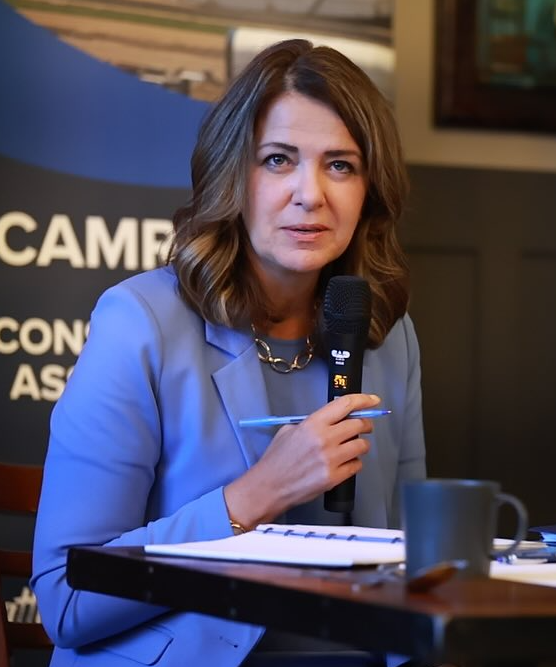
That’s why Alberta Premier Danielle Smith’s comments resonate. The events in Venezuela underline a basic truth: diversification is not optional. If Canada wants to protect its oil industry jobs, revenues, and geopolitical leverage we need more pipelines, not fewer. Trans Mountain is a start, but it is not enough. Access to Asian markets through additional west coast infrastructure would fundamentally strengthen Canada’s position, regardless of what happens in Venezuela, the U.S., or global politics.
Heather Exner-Pirot put it well when she said that “capital is cowardly.” Investors will not rush into Venezuela anytime soon, given its long history of nationalization and instability. But that same capital will also hesitate if Canada continues to send mixed signals about energy development.
In the end, Venezuela’s potential oil revival is not a looming catastrophe for Canada. It’s a reminder. A reminder that energy markets are competitive, geopolitical, and unforgiving of complacency. Canada still has a strong hand but only if we choose to play it wisely.

