
A substantial portion of federal funding allocated to Canada’s former Vaccine Injury Support Program (VISP) was directed toward administrative expenses rather than direct compensation for claimants, according to newly released government records.
The program, introduced in June 2021, was initially backed by a five-year budget of $111.4 million. As of now, $67.6 million has been spent, but only $21.7 million has reached individuals who filed claims for vaccine-related injuries. The figures were disclosed in an April 13 response from Health Canada to a parliamentary inquiry submitted by Conservative MP Leslyn Lewis.
Lewis had formally requested a breakdown of how much funding was used for operational costs compared to compensation payments. The data suggests that more than one-third of the total expenditures went toward administration.
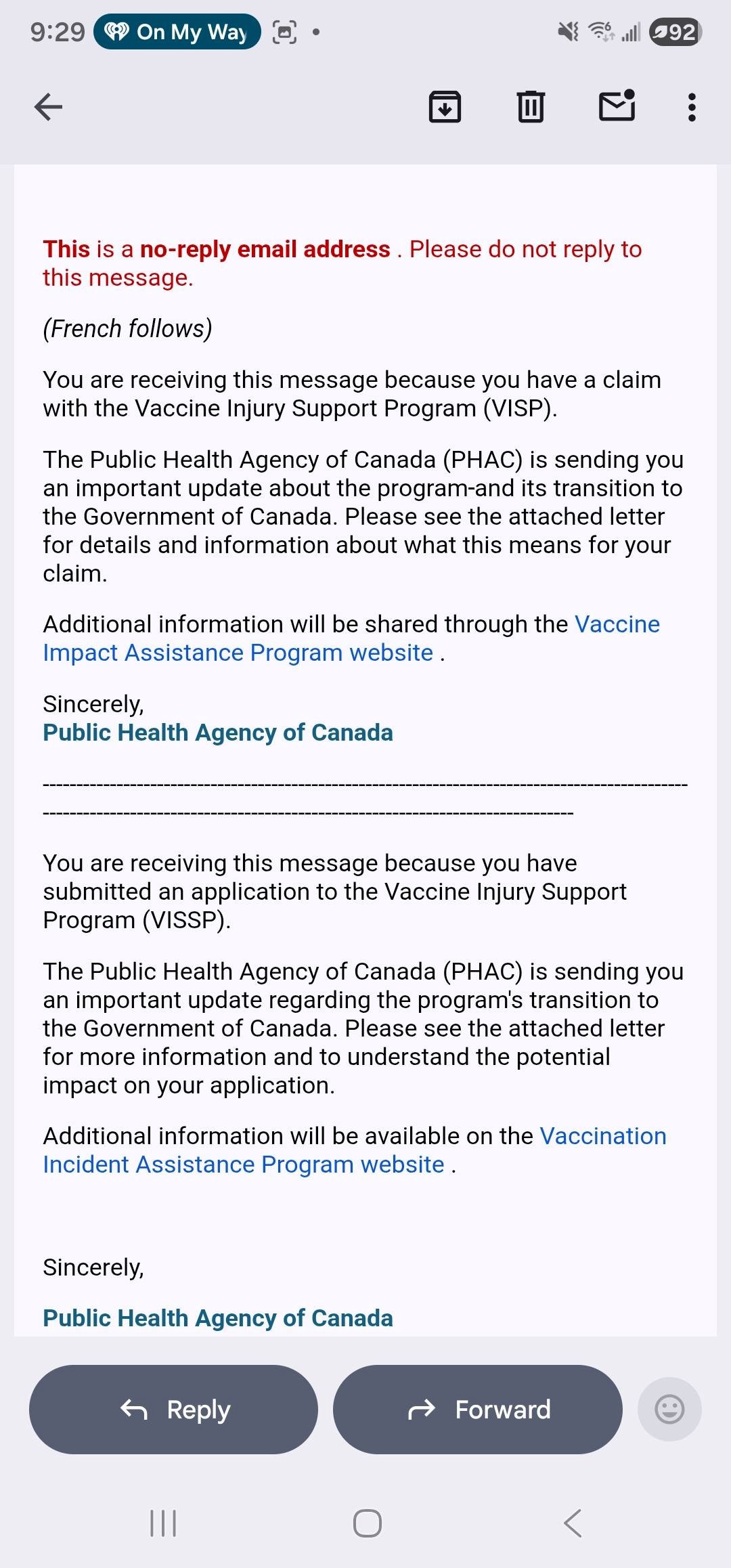
Earlier this month, responsibility for the program shifted to the Public Health Agency of Canada (PHAC), which has relaunched it under a new name the Vaccine Impact Assistance Program (VIAP). The updated initiative continues to offer financial support to Canadians who experienced serious and lasting side effects following vaccination with a Health Canada-approved vaccine administered after December 8, 2020.
PHAC has stated that its immediate priorities include clearing a backlog of applications and improving how claims are handled. The agency also indicated it intends to incorporate lessons learned from VISP, along with best practices observed in similar programs in Quebec and other G7 nations.
VISP had originally been administered by a third-party contractor, Oxaro, which came under scrutiny over its handling of the program. Reports pointed to challenges such as an inability to manage the unexpectedly high number of applications. Initial projections estimated roughly 40 claims annually, later revised to 400 valid claims per year. However, the actual number far exceeded expectations, with more than 3,300 applications submitted.
Investigations conducted in recent years highlighted additional concerns. A 2025 report found that a large portion of the funds paid to Oxaro approximately $33.7 million out of $50.6 million was spent on administrative operations. Meanwhile, claimants reported long processing delays, inconsistent communication, and dissatisfaction with compensation amounts.
Program representatives previously stated that claim processing times varied due to the complexity of individual cases and emphasized that all claims undergo review by medical professionals.
The issue also drew political attention. Conservative members of the House of Commons health committee attempted to initiate a special review of the program in mid-2025, though the proposal did not move forward. Some opposition MPs later accused the government of preventing further scrutiny into the program’s management.
With the transition to VIAP now underway, federal officials face mounting pressure to improve efficiency, transparency, and the balance between administrative spending and direct support for affected Canadians.

