
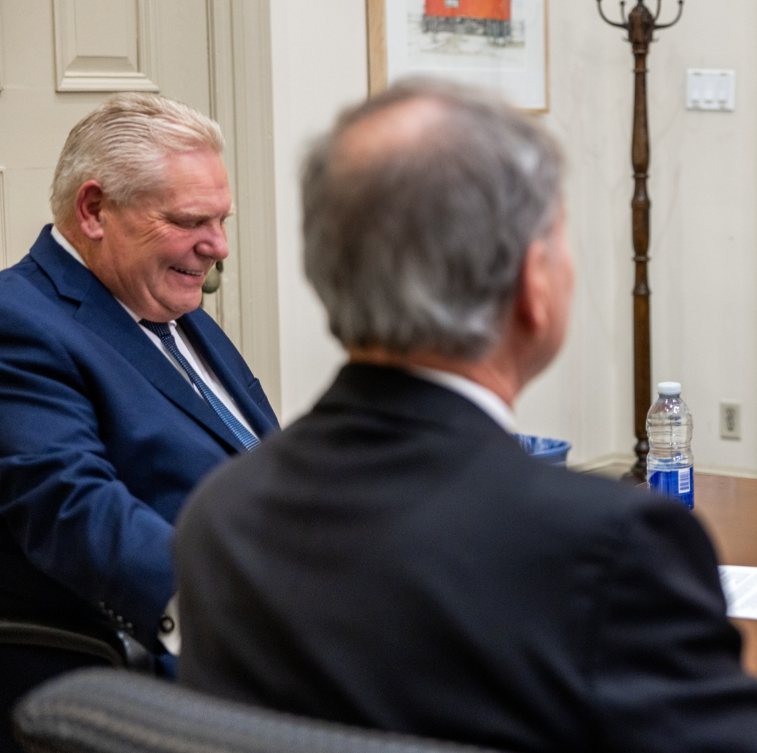
Premier Doug Ford’s vow to pull Crown Royal whiskey from Ontario-run liquor stores may play well as a headline-grabbing show of defiance, but it raises a bigger question: is this about protecting Ontario workers, or about making a political statement with a bottle in hand?
Ford has been clear almost gleefully so that he is “100 percent” committed to removing Crown Royal from LCBO shelves once Diageo closes its nearly century-old bottling plant in Amherstburg. His message to consumers was blunt: “You better stock up.” It’s a line that sounds less like economic strategy and more like political theatre.
There’s no doubt the closure of the Amherstburg plant is painful. The loss of 170 jobs in a small community near the Detroit River is not a minor blow, and the ripple effects on the local economy will be felt for years. Diageo’s decision to shift bottling operations to the United States and Quebec in the name of “efficiency” is exactly the kind of corporate move that fuels public anger and rightly so.
But the question remains: will pulling Crown Royal off LCBO shelves help the workers who are losing their livelihoods?
Ford’s frustration with Diageo has been visible from the start. Dumping a bottle of Crown Royal onto the ground at a press conference last September sent a clear message of outrage, but it also signaled a governing style that leans heavily on symbolism. Threatening a targeted boycott of one of Canada’s most recognizable whisky brands may feel satisfying, yet it risks oversimplifying a complex economic reality.
Ontario is not powerless when it comes to defending workers, but liquor boycotts are a blunt instrument. Diageo is a global giant with a portfolio that includes Smirnoff, Guinness, Baileys, and Captain Morgan. Focusing “just on Crown Royal for now,” as Ford put it, may hurt brand visibility in Ontario, but it is unlikely to force a multinational corporation to reverse a decision already tied to long-term global restructuring.
At the same time, the premier’s comments about “interested parties” potentially taking over the Amherstburg facility offer a glimmer of hope. If a new operator can indeed rehire former Diageo employees, that outcome would matter far more than any symbolic removal of bottles from store shelves. Workers don’t need political statements they need stable jobs.
Ford often points to the earlier boycott of American alcohol as proof that these tactics work. According to him, Ontario wine sales jumped 76 percent, benefiting grape growers and local wineries. That success story, however, came in the context of a broader trade dispute and a sweeping policy shift. Singling out one brand owned by one company is a very different strategy, with far less certain results.
In the end, Ford’s Crown Royal crusade feels less like a carefully calibrated economic response and more like a message to voters: Ontario will fight back, loudly and publicly, when companies pull out. That message has emotional appeal, especially in communities facing job losses. But if the goal is real economic security for workers in Amherstburg, the focus should be on transition plans, investment incentives, and long-term industrial strategy not just what’s missing from LCBO shelves.
Politics, like whiskey, is best when it has depth and balance. Right now, this moves risks leaving Ontario with a hangover and very little to show for it.

