
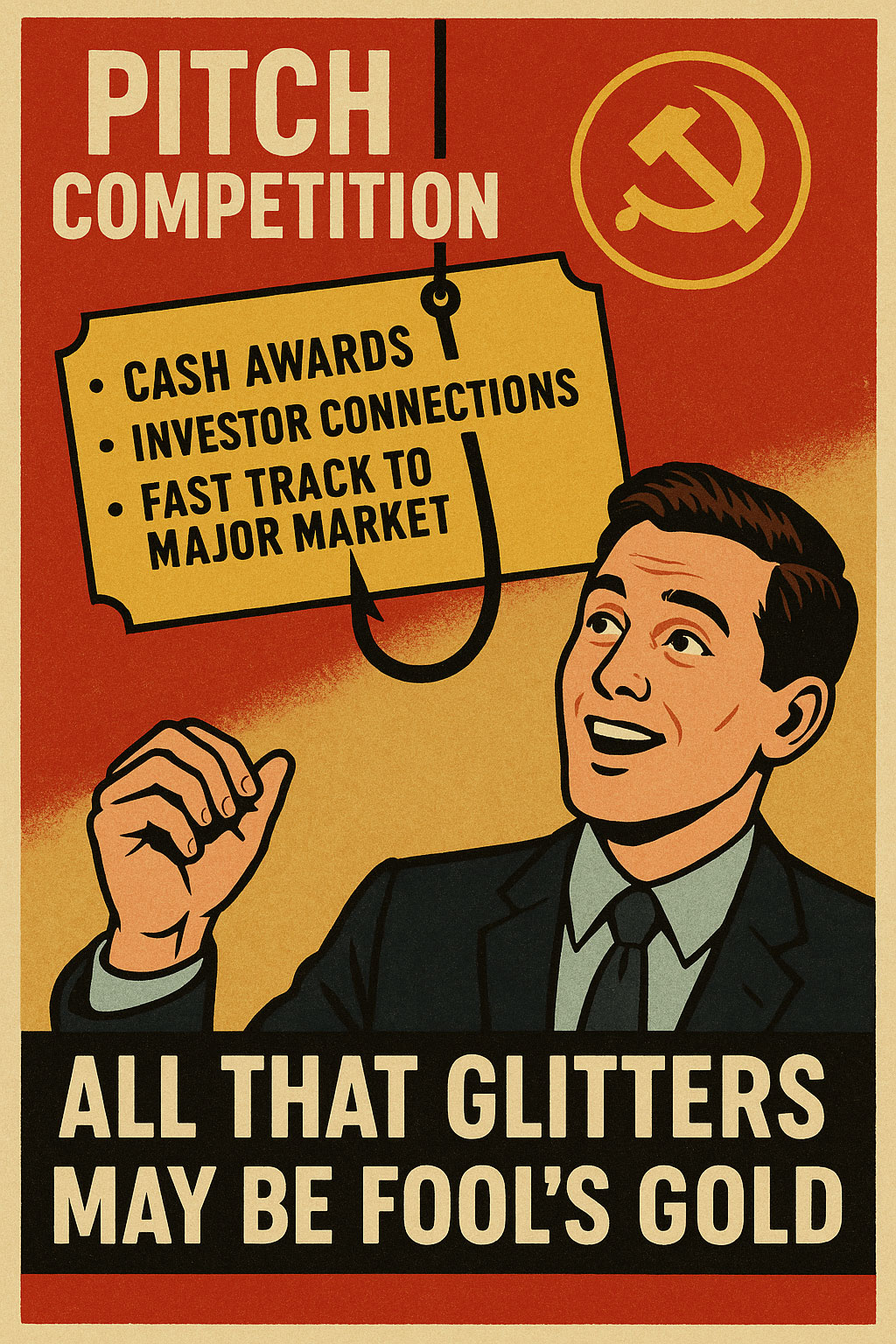
The lure is undeniable: a well-funded international pitch competition promising cash awards, investor connections, and a fast track into one of the world’s largest markets. For cash-strapped technology startups, these events can look like a golden ticket. But as the recent joint bulletin from the Canadian Security Intelligence Service (CSIS) and several U.S. intelligence partners makes clear, what glitters in these competitions especially those tied to China’s Communist Party may be fool’s gold.
The Sept. 4 advisory warns that many of these “lucrative opportunities” are anything but benign. Behind the glitzy stages and investor panels lies a more calculated ambition: to siphon Western innovation and talent to advance China’s economic and military goals. Evidence shows that competitions organized or funded by Chinese regime entities often require startups to reveal sensitive data—patent details, business strategies, even proprietary marketing plans. Some winners find their rewards contingent upon setting up shop in China, where local laws give authorities sweeping access to corporate data and intellectual property.
This isn’t mere paranoia. The Chinese government has a well-documented strategy of acquiring foreign technology through both licit and illicit means. For a startup, even a small leak of proprietary information can spell disaster. A rival company using stolen IP can beat you to market, erode your competitive edge, and drain the very value investors once saw in you.
Yes, global exposure is critical for growth. But exposure should not mean vulnerability. Startups must recognize that these competitions are not neutral ground they can be hunting grounds for states eager to leapfrog technological development. The old adage applies: if something seems too good to be true, it probably is.
Founders should treat every pitch like a potential security risk. That means doing serious due diligence on organizers and investors, understanding the legal environment in which their data might be shared, and filing for patent protection before revealing anything of substance. Non-disclosure agreements are not window dressing; they’re armor. So are clear internal “red lines” about what can and cannot be discussed in public forums.
This is not an argument for isolationism. Innovation thrives on international collaboration. But collaboration must be built on trust and enforceable protections, not on the naïve belief that every outstretched hand is a friend.
For Canada, the United States, and other Western nations, the message is equally clear: supporting homegrown startups isn’t just about funding and incubators. It’s about shielding our innovators from foreign exploitation that could undermine both economic vitality and national security.
Startups are the lifeblood of the modern economy. They deserve opportunities to shine, but they also deserve the truth. When it comes to China-linked pitch competitions, that truth is sobering: the biggest prize might be the one you lose if you’re not careful your own innovation.

