
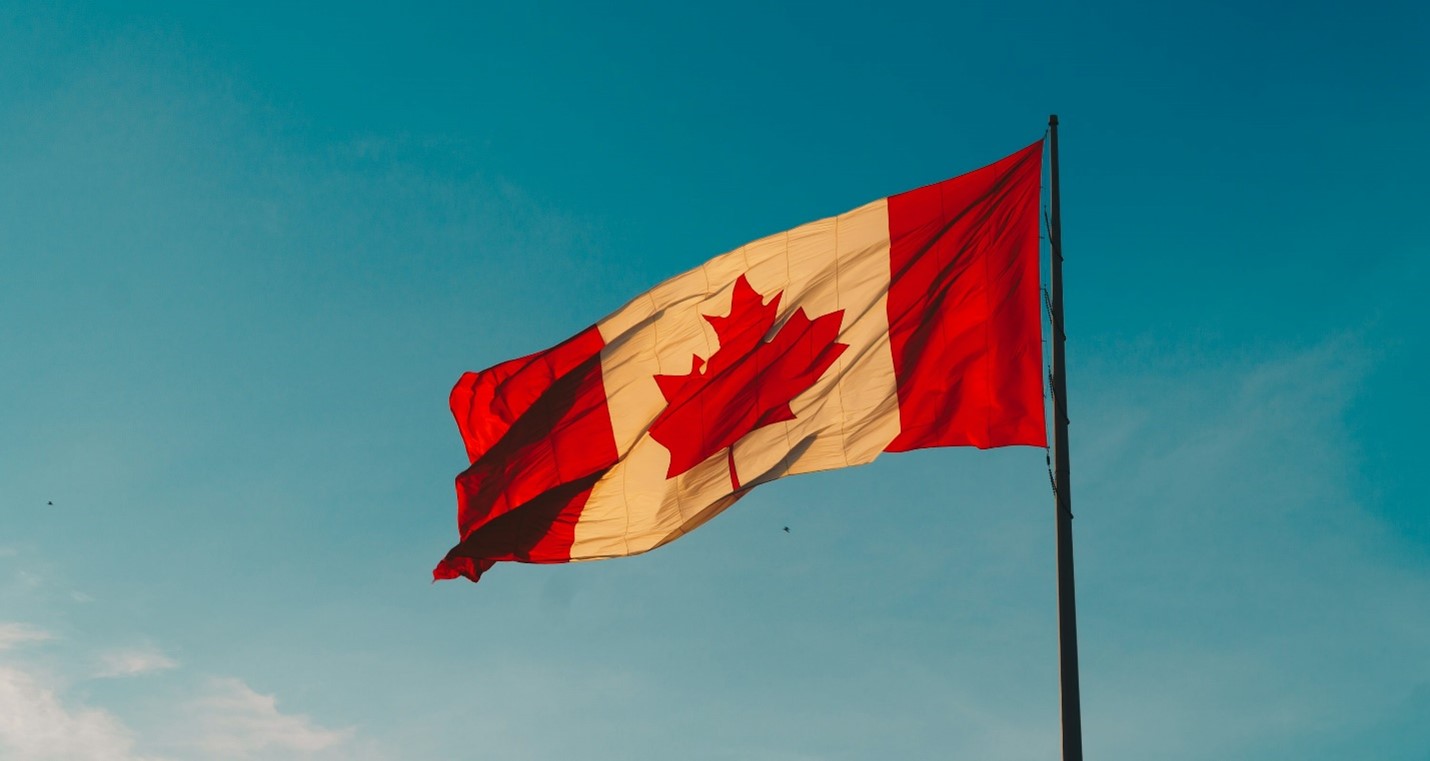
The clock is never the same across countries. Because each country adheres to the specific time standards of that place. When we travel from one country to another, we have to fix the watch. From northernmost Nunavut, Yukon to southernmost Prince Edward Island, St. John’s Islands, Newfoundland. We are talking about Canada, the white daughter of the Atlantic Ocean.
His boundaries extend so far that he has to obey the six times unceasingly. Canada, second only to Russia in size, is on the same time scale as the United States. There are also six different clocks. Russia has the most time difference – a total of eleven times you’ll have to change clocks when visiting the country.
Ten provinces and three provincial territories are under the dominion of our Shubhrakanya. We all know these names. But still today I will go back to those days of re-reading after exams as a child.
Ten provinces – Ontario, Quebec, British Columbia, Alberta, Manitoba, Saskatchewan, Nova Scotia, New Brunswick, Prince Edward Island, Newfoundland and Labrador and the Northwest Territories, Nunavut, and Yukon.
Conspiracy:
The main discussion is about the calculation of time. So let’s get to the point – looking at the time zone from west to east we see Pacific, Mountain, Central, Eastern, Atlantic and Newfoundland.
Of the six clocks, only the southernmost Newfoundland has its own time. This is called Newfoundland Time Zone. The Atlantic Time Zone is basically Nova Scotia time, the Eastern Time Zone is Ontario time, the Central Time Zone is Manitoba time, the Mountain is Alberta time, and the Pacific is British Columbia time.
We follow two times in Canada – Coordinated Universal Time and Daylight Saving Time.
From the pages of history:
The creator of this current standard is Scottish Canadian railway engineer Sir Standford Fleming, who is one of the promoters of clock time as 24 hours and based on his proposal, Coordinated Universal Time was introduced, which we also know as Greenwich Time (Coordinated Universal Time). Not only that, he is also one of the creators of the Earth’s original meridian.
He also designed Canada’s first postage stamp and founded the Canadian Institute in Toronto. He is particularly remembered as a pioneer in the early stages of Canada’s present-day railways.
In 1879 Stanford Fleming (1827–1915) was a leading engineer on the Intercolonial Railway. He was then busy preparing survey reports for the newly started railways. When surveying mountainous areas, he was particularly concerned with timing the journeys of places that moved progressively westward. A night waiting for a train before he became a railway engineer certainly helped Fleming’s later thoughts on this subject. While it was clear what should be done during the survey, no consensus could be reached on how to do it. Fleming then wrote down his ideas to solve the problem and published them on his own initiative. In the summer of 1878, he was invited to Dublin to attend a conference organized by the British Association but declined to speak. Later in the winter of that year he published the following year after a thorough re-study of the entire document. In his paper entitled “Time-Reckoning”, he showed the rotation of the entire Earth as a clock, citing the artificial and arbitrary timing of sunrise and sunset. If the period is determined by dividing the daily rotation of the Earth’s axis into 24 equal parts along the prime meridian, then it is defined as a better standard of time.
In 1884, North American Railways adopted Fleming’s invented time standard as standard. This historic event took place at an international conference organized in Washington DC.
Time Shift:
Coordinated Universal Time is currently written as UTC. Greenwich Observatory time in Britain is officially called Coordinated Universal Time. Type of writing – UTC- _ h. For example, winter time in British Columbia is written as UTC – 8h, meaning their time is eight hours behind UTC time. At the same time in Newfoundland and Labrador it is written UTC -3h30. That means the time there is three hours and three minutes behind.
At two special times of the year, clocks move forward and backward by one hour for daylight saving time. It starts every year on the second Sunday of March at two o’clock in the morning and returns to its former state on the first Sunday of November. Previously, the daylight savings period started on the first Sunday of April and lasted until the last Sunday of October. But in 2006 the constitutional amendment is changing the current rules.
Different place names and abbreviations change with the names of the light conservation periods. For example – Eastern Standard Time (EST) changes to Eastern Daylight Time (EDT). DST is not used in some parts of Canada. Fort St. Jones, Charlie Lake, Taylor and Dawson Creek in British Columbia, Creston in the East Kootenays, and most of Saskatchewan (except Dennery Beach and Craigton). Residents of the Yukon follow Pacific Time.
Three places have different times in Canada. The first is the province of Saskatchewan. Daylight savings time is not used there because Central Time Zone time is observed throughout the year. Then Newfoundland and Labrador. Two time periods are followed – Newfoundland Time on the island of Newfoundland and Atlantic Time on Labrador, which is originally from Nova Scotia.
In 2011, Newfoundland and Labrador adopted a special law amending the period. In the present law they follow their own timetable because the inhabitants have ruled in favor of such a law and are thus accustomed to observe the time. There used to be daylight savings time swapped with the original time by one minute.
Mainly because of Canada’s huge size, we adhere to six different time zones. If we look at the map, we will notice that it extends from 52 degrees to 141 degrees west. A time standard measures 15 degrees, so Canada has to observe six different times. Almost all provinces have to change time by one hour and only Newfoundland and Labrador by half an hour.
Daylight Savings Time in History:
We observe DST mainly from March to November. Turning the pages of history, we can see that in 1918, the central government first issued this policy. During the First World War (1914–1918) initiatives were taken to implement such time calculations as a means of increasing arms production. Similar laws were enacted in Germany and Britain.
Currently we move the clock forward one hour from the second Sunday in March. Again on the first Sunday of November we take it back an hour to the previous place. This is mainly done as part of saving time during the day and an extra hour is available in the afternoon. The days seem a little longer this time of year.
Most of the times we think of a completely different time when we think of a different country. From there we follow six different landings in Canada and two in the same province. All in all, Canada is comparatively fair and a very attractive destination for all.
Finally, the calculation of so many different times is mainly done to unify a country rather than divide it.
Some more information:
• East Quebec at 63 degrees west longitude adheres to the Atlantic Time Zone throughout the year.
• Western Ontario operates as the Central Time Zone at 90° W and changes between two days and nights.
• Most of Saskatchewan observes Central Time Zone time throughout the year. Exceptionally, the Lloydminster area believes in Alberta’s imitation of Mountain Time clocks.
• Residents of Nunavut follow a three time standard and the time changes occur at two o’clock at night. Although Eastern or Ontario clocks run year-round on Southampton Island.
• From 2020 Yukon follows Coordinated Universal Time – 7h or Yukon Local Time.
References:
- https://nrc.canada.ca/en/certifications-evaluations-standards/canadas-official-time/time-zones-daylight-saving-time
- https://www.timetemperature.com/canada/canada_time_zone.shtml
- https://www.worldtimeserver.com/learn/why-does-canada-have-6-different-time-zones/
- https://www.thecanadianencyclopedia.ca/en/article/time-zones-and-legal-time

