
Prime Minister Mark Carney met with Chinese Foreign Affairs Minister Wang Yi in Ottawa on Thursday in a meeting that drew criticism over limited media access, even as both countries signaled a push to strengthen bilateral relations.
The meeting’s optics raised eyebrows from the start. According to the itinerary released by the Prime Minister’s Office, only official photographers were originally scheduled to document the encounter. Following objections from the Parliamentary Press Gallery, journalists were eventually allowed into Carney’s Parliament Hill office but only long enough to capture a handshake. Cameras were ushered out in under 30 seconds by a cabinet press secretary, and neither leader made any statement to reporters. No press conference was held.
The Prime Minister’s Office did not respond to requests for comment.
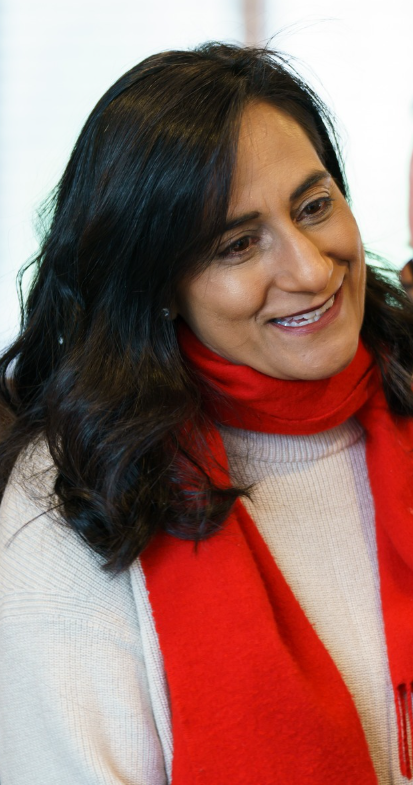
The restricted access stood in contrast to the broader diplomatic ambitions on display elsewhere that day. Earlier, Wang had traveled to Global Affairs Canada headquarters to meet Foreign Affairs Minister Anita Anand, where both officials delivered public opening remarks.
Anand said Ottawa is seeking to deepen ties with Beijing “responsibly,” with a goal of boosting Canadian exports to China by 50 percent while, she added, protecting Canada’s “economic and national security interests and values.” She stopped short of publicly raising concerns over foreign interference or human rights, though she noted that both nations “must address critical issues and priorities to ensure the safety and security of our peoples.”
Wang, for his part, acknowledged the relationship had seen “ups and downs” and said both sides had drawn important lessons from those experiences. He urged that ties be guided by “mutual respect” and “strategic independence,” and suggested that if the relationship continues on its current trajectory, Canada could double its exports to China. He also extended an invitation for Carney to attend the Asia-Pacific Economic Cooperation summit in China this November.
The visit marks a notable turn in a relationship that had been strained for years. The 2018 arrest of Huawei executive Meng Wanzhou carried out by Canada in compliance with a U.S. extradition request triggered a sharp deterioration in ties. Beijing responded by detaining Canadian citizens Michael Kovrig and Michael Spavor for more than 1,000 days in what was widely condemned as political hostage-taking.
In the years that followed, the Trudeau government grew increasingly cautious about Chinese influence, barring Huawei from Canada’s 5G networks and eventually calling for a public inquiry into foreign interference. That inquiry concluded that China was the primary foreign actor meddling in Canadian democracy, with potential riding-level impact in both the 2019 and 2021 federal elections.
As recently as the 2025 election campaign, Carney himself described China as Canada’s foremost security threat due to that interference.
Yet geopolitics have a way of reshaping priorities. With the Trump administration’s tariffs squeezing Canadian exporters, Ottawa has moved to diversify its trade relationships and Beijing represents an obvious destination. Carney traveled to China in January, describing the outcome as a “new strategic partnership.” Wang’s Ottawa visit, according to Global Affairs Canada, is aimed at advancing that partnership’s implementation.
It is the first visit by a Chinese foreign affairs minister to Canada since 2016 the same year Wang drew controversy by publicly rebuking a Canadian journalist who asked about human rights during a press conference with then-Foreign Affairs Minister Stéphane Dion.
How Canada intends to balance its security concerns with its new economic courtship of Beijing remains an open question and judging by Thursday’s carefully stage-managed encounter, one the government is not yet ready to answer publicly.

