
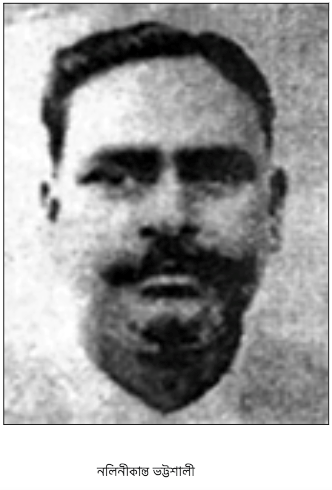
Nalinikanta Bhattasali (1888 – 1947) was a renowned archaeologist, historian, numismatist, epigraphist, writer, and researcher on ancient studies in Bangladesh. He was the founder of the Dhaka Museum, which later became the Bangladesh National Museum.
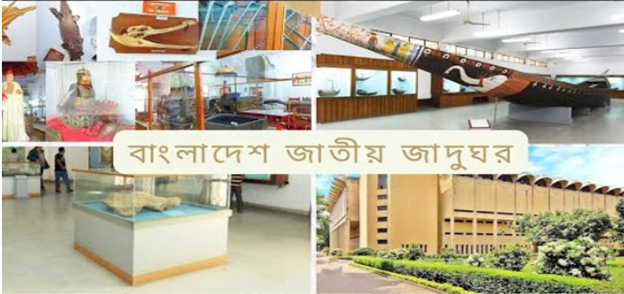
In 1912, during a meeting at the then Northbrook Hall in Dhaka, Nalinikanta delivered a speech in front of Lord Carmichael, emphasizing the urgent need to establish a museum in Dhaka. Impressed by Bhattasali’s speech, Carmichael immediately handed over two thousand rupees for the museum’s establishment. This marked the foundation of the Dhaka Museum, which was later reestablished as the Bangladesh National Museum.
Nalinikanta Bhattasali was born on January 24, 1888, into an educated and cultured family in Bikrampur, Munshiganj District. His father was Rohinikanta Bhattasali, and his mother was Saratkamini Devi.
Education and Career: Orphaned at the age of four, young Bhattasali was raised under the guardianship of his uncle, Akshaykanta, a schoolteacher. Moving from one school to another in East Bengal alongside his uncle, Bhattasali grew up amidst serene rural landscapes. This exposure to various places sparked his interest and passion for the history and heritage of his land. He earned his Master’s degree in History from the University of Calcutta in 1912. Even as a student, his literary talent became evident as he gained recognition through his writings in handwritten magazines.
Bhattasali began his career as a history teacher at Comilla Victoria College. In 1914, he was appointed as the curator of the newly founded Dhaka Museum. He laid the institutional foundation of the museum and served in various capacities for 33 years until his death on February 6, 1947. His golden days were spent within the museum premises, where his dedication and work ethic transformed the provincial museum into an institution of national and international repute. Under British colonial rule, Bhattasali made the Dhaka Museum a distinguished establishment through his tireless efforts. Bhattasali and the Dhaka Museum became inseparable; his personal supervision and attention were vital to the museum’s growth and development.
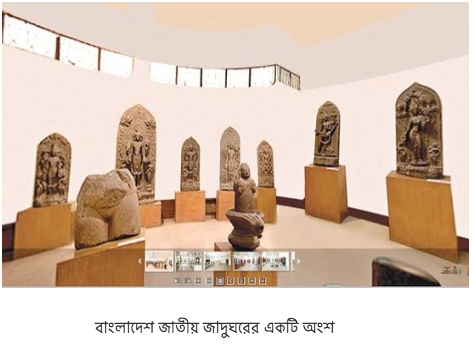
He tirelessly traveled across rural Bengal, collecting rare and valuable artifacts, photographing them, and documenting their details. He organized excavation projects and exhibitions, raising public interest and awareness about cultural heritage preservation.
While working at the museum, he continued writing on literature and history, demonstrating exceptional intellectual prowess. Though he began with literature, his true recognition and acclaim came from archaeology. The Dhaka Museum remained the focal point of his work. Bhattasali’s enthusiasm for archaeological excavation was boundless. Despite not being a professional archaeologist, he understood that excavations were indispensable for gathering information on ancient history. His passion for collecting artifacts became legendary.
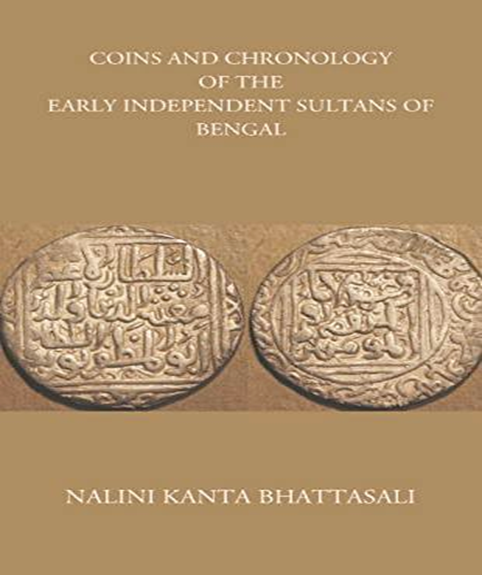
Beyond collecting and displaying artifacts, Bhattasali published four original books based on his research. His meticulous study of Muslim-era coins in the museum’s collection earned him widespread recognition as an expert numismatist. His book, “Coins and Chronology of the Early Independent Sultans of Bengal” (1922), is an authoritative work in this field. Another landmark publication is “Iconography of Buddhist Sculpture in the Dhaka Museum” (1929). Bhattasali did not limit his research to Hindu and Buddhist cultures; he also explored Muslim history and numismatics.
His monograph, prepared for the Royal Asiatic Society, faced publication delays due to financial constraints. Despite his financial difficulties, Bhattasali published the work at his own expense. His research article titled “Bengal Chiefs’ Struggle for Independence in the Reigns of Akbar and Jahangir,” published in “Bengal Past and Present” (Volumes 35, 36, and 38, 1918-1929), opened a new dimension in the study of the feudal lords of Bengal.
Bhattasali authored over a hundred articles on various aspects of history and heritage. Before the establishment of the University of Dhaka in 1921, the Dhaka Museum had already become a center for historical studies and research, thanks to his efforts. After the university’s establishment, he served as a part-time lecturer in History and Bengali Literature.
It was due to Bhattasali’s efforts that a center for the collection of Bengali and Sanskrit manuscripts was established at the University of Dhaka. Within a year, 300 invaluable manuscripts were acquired through donations and purchases. He also collected rare manuscripts for the Dhaka Museum, including those written on palm leaves, birch bark, wood, and handmade paper. Bhattasali edited and deciphered several manuscripts, such as “Moinamoti’s Songs,” “Meenchotona,” and “Gopichandrer Sannyas.”
Contributions: Bhattasali sent the manuscript of “Meenchotona” to Rabindranath Tagore, who responded with admiration, stating, “I am gratified to receive the book ‘Meenchotona.’ I have a natural curiosity regarding the philology of the Bengali language. Therefore, this book is particularly valuable to me. Dhaka Sahitya Parishad has earned distinction through such discoveries and publications, and I express my gratitude on behalf of the nation for your excellence in this endeavor.”
Bhattasali’s edited manuscripts were included in the curriculum of the University of Calcutta. He made significant contributions to the history and archaeology of Bengal and India.
The historic ‘Bibi Mariam Cannon,’ a Mughal-era artifact used to deter bandits, was named during British rule. In 1925, at Bhattasali’s initiative, the cannon was rescued from near ruin and relocated to Sadarghat. It was later moved several times, including to Gulistan and Dhaka Gate, before finally being placed in front of the Osmani Memorial Auditorium.
Awards and Achievements: In 1922, Nalinikanta Bhattasali was honored with the prestigious Griffith Prize by the University of Calcutta for his book “Coins and Chronology of the Early Independent Sultans of Bengal.” The book was later published by Cambridge as well. This research work remains a valuable resource for archaeologists to this day.
In recognition of his research on the history, archaeology, and art of Bengal, the University of Dhaka awarded him a Ph.D. degree in 1934. He was also honored as a member of the Numismatic Society and the editorial board of Dhaka Sahitya Parishad.
Today, the main gallery of the Bangladesh National Museum in Dhaka is named the “Nalinikanta Bhattasali Gallery,” symbolizing the deep respect and admiration he commands among scholars.
Nalinikanta Bhattasali remains an invaluable source of inspiration for future archaeologists. By following his footsteps, researchers can continue to unearth and enrich Bangladesh’s history and heritage. We pay our humble tribute to this root-seeking scholar of Bengal.

